




«Ant-Man 3»: too big an ambition for such a small hero

antman
Marvel's smallest hero returns for a third adventure, this time with his family, in the quantum world. Wasn't such a large-scale project for such an anecdotal hero a little dangerous?
After the events in’Avengers: Endgame (Anthony and Joe Russo, 2019), including the five-year leap, Ant-Man is no longer really relevant. He's saved the world, written a book and quit his job selling coffee. But... his daughter has recently built a portal to the quantum world into which the whole family is being sucked. There, a new enemy seems to need our hero to return to Earth and conquer it.
A film too big for him
If this summary seems vague and haphazard, that's because the film is. Indeed, it's interesting to analyze its case: the film is symptomatic of Disney's problem in its «phase four» (productions released since Avengers: Endgame). Stuck in the position of «not important enough» to spearhead, but too «committed» to the studio's overall plan to benefit from more than sporadic appearances. The result is a bastardized feature that never knows where it stands. Just like its protagonist.
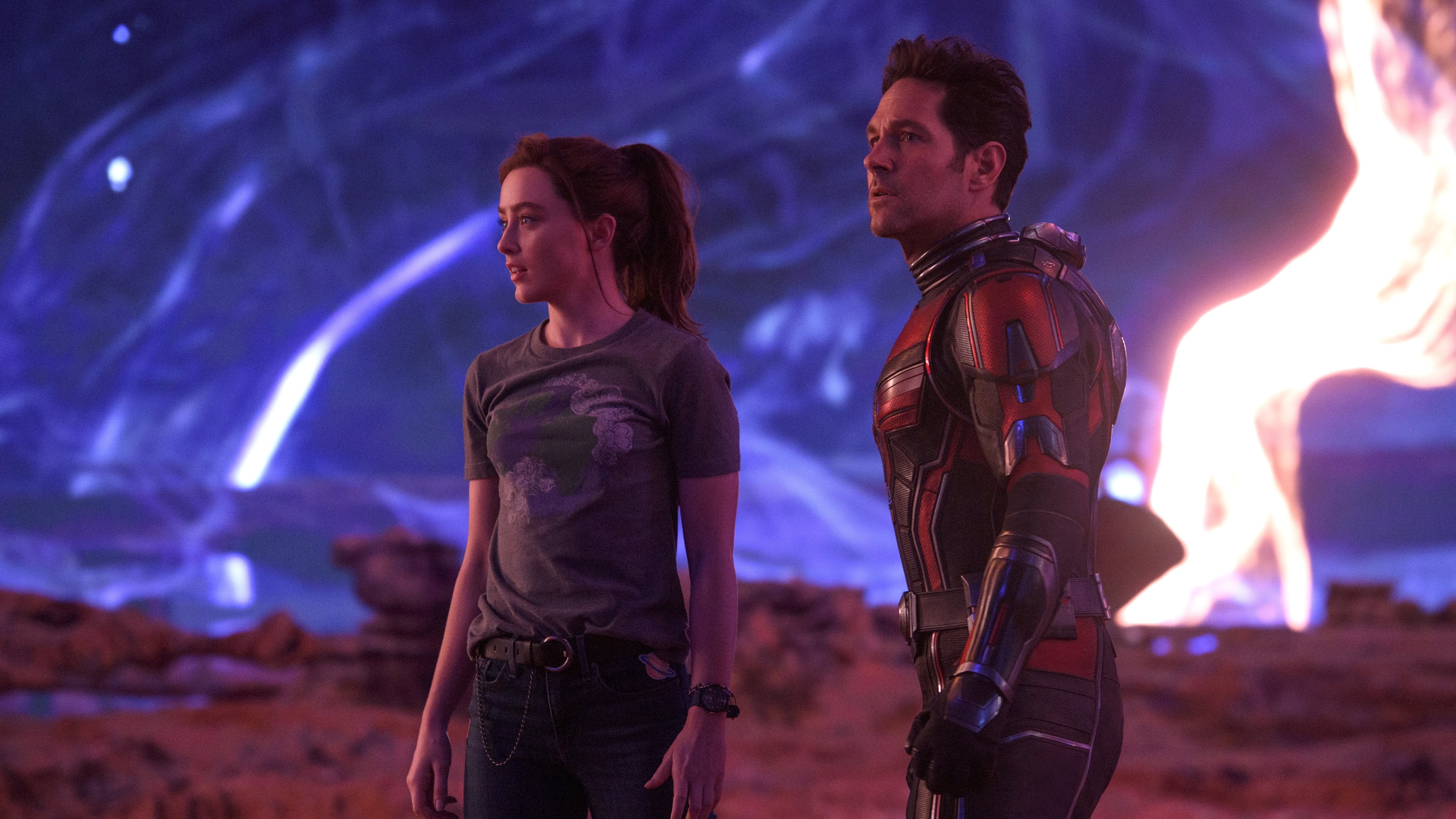
Ant-Man and the Wasp Quantumania Marvel Studios
Ant-Man is clearly not a hero that appeals to young and old alike; he's not famous or powerful enough, he doesn't have a compelling story, and only the features of his actor (Paul Rudd) are recognizable. As a result, Disney quickly surrounded him with two well-known performers (Michael Douglas and Michelle Pfeiffer), packed the scripts with humor and, above all, took such a step back from his character, realizing his «ridiculousness», that he became a mere backstage joke. In fact, the film begins with a summary of his hero's latest deeds, but this is pointless for fans and too vague for neophytes. In fact, this worked as long as the franchise was content with minor stories, but it's not enough. Quantumania aims to present the future big bad for the next five years, and therein lies the rub.
A villain engrossed
The film's antagonist, Kang the Conqueror, is a familiar face to comic book fans. He is indeed a very powerful enemy, mastering time and parallel universes. Except that, here, it's hard to sell him as such, while at the same time making him wear the «generic enemy» hat so typical of this kind of film. As a result, Kang's costume is too small: sometimes too powerful, sometimes too weak. His power, though originally excessive, is so blurred here that it's used as an ongoing plot device. And if this is possible, it's because he's not introduced at all: the viewer knows neither the extent nor the limits of his powers, nor his past, nor his purpose.
This serious breach in the script means that Disney never has to worry too much about the use of its character. And the whole film works this way. If a situation seems illogical, it's because it can be explained off-screen. This is what underlies, for example, the total lack of explanation for Ant-Man's daughter, who appears three minutes into another film, suddenly able to create portals to other worlds. Since the film has never expressed this before, it's much simpler to say that it's «possible». And this poses a huge screenplay concern: the suspension of disbelief.

Ant-Man and the Wasp Quantumania Marvel Studios
Suspension of disbelief is a concept named in 1817 by Samuel Coleridge, describing the mental operation performed by the audience in consenting to put aside their skepticism for the duration of the work of fiction they are consuming. That's why no one cries "unreal" when Ant-Man shrinks - it's a bias you have to accept when you enter the theater. On the other hand, if a character has never been shown performing an action and, for the sake of the story, is suddenly able to do so without explanation, that's beyond suspension of disbelief. And the whole film, as well as almost all the latest Marvel movies, works this way.
A film useful for all apprentice scriptwriters
If Ant-Man and the Wasp: Quantumania does have one advantage, and that's that it lists many of the things that are lacking in today's mainstream productions. Because, in addition to the suspension of disbelief, the film suffers from writing facilities that are too cumbersome to accept. The heroes seem lost? A phenomenon out of the hat comes to their rescue (a concept called the Deus ex machina). Is a situation too dramatic? Add a joke to lighten the mood. In the end, even the appearance of an antagonist expected by fans is so absurd and ridiculous that it feels like a parody.
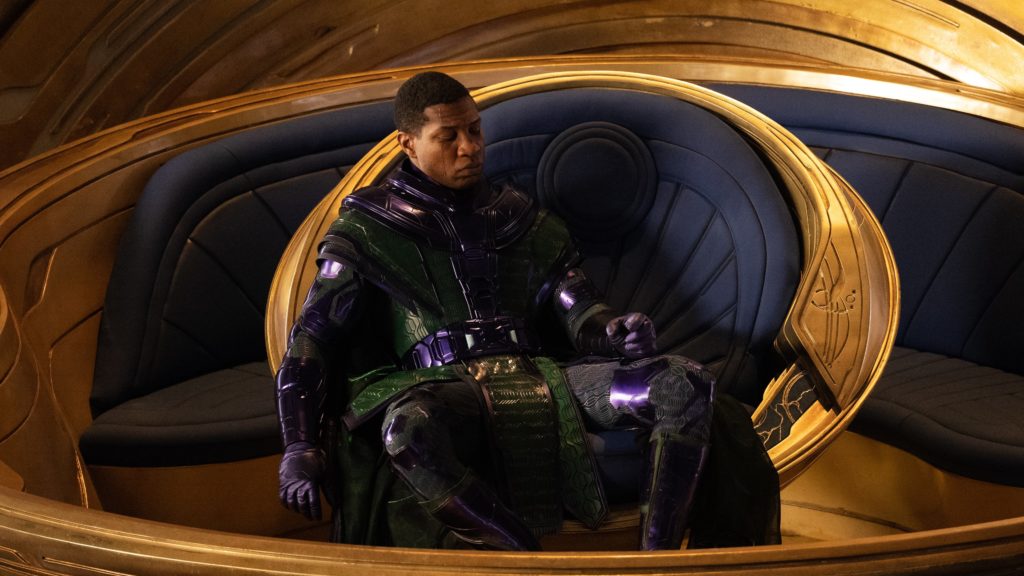
Ant-Man and the Wasp Quantumania Marvel Studios
But if the film is constructed in this way, it's also because it cruelly lacks an auteur at its helm. Peyton Reed, director of the Ant-Man trilogy, is what is commonly known as a «yes man». Having started out with light comedies (La Rupture in 2006 and, ironically, Yes Man in 2009), the man is a doer who follows the studio's direction without building any visual coherence in his work or imposing any real style. As a result, the film is a mishmash of ugly special effects and inlays, and its actors (all of whom look good on paper) are a shambles. The only saving grace are Jonathan Majors and William Jackson Harper, seen rowing with their score, and Paul Rudd, whose timing can save a joke or two.
It's a poor, uninteresting film that Marvel offers us for the beginning of 2023. It's all the more regrettable in that it opens the studio's «phase five», introduces an important newcomer among the antagonists and a new world, and probably serves to set up the future of the franchise, which we hope is now over.
Write to the author: [email protected]
You've just read an open-access review. Debates, analysis, cultural news: subscribe to support us and get access to all our content!
You'll also like



 French
  German
  English
Leave a comment