



In the Face of Extremes: The Swiss Antidote
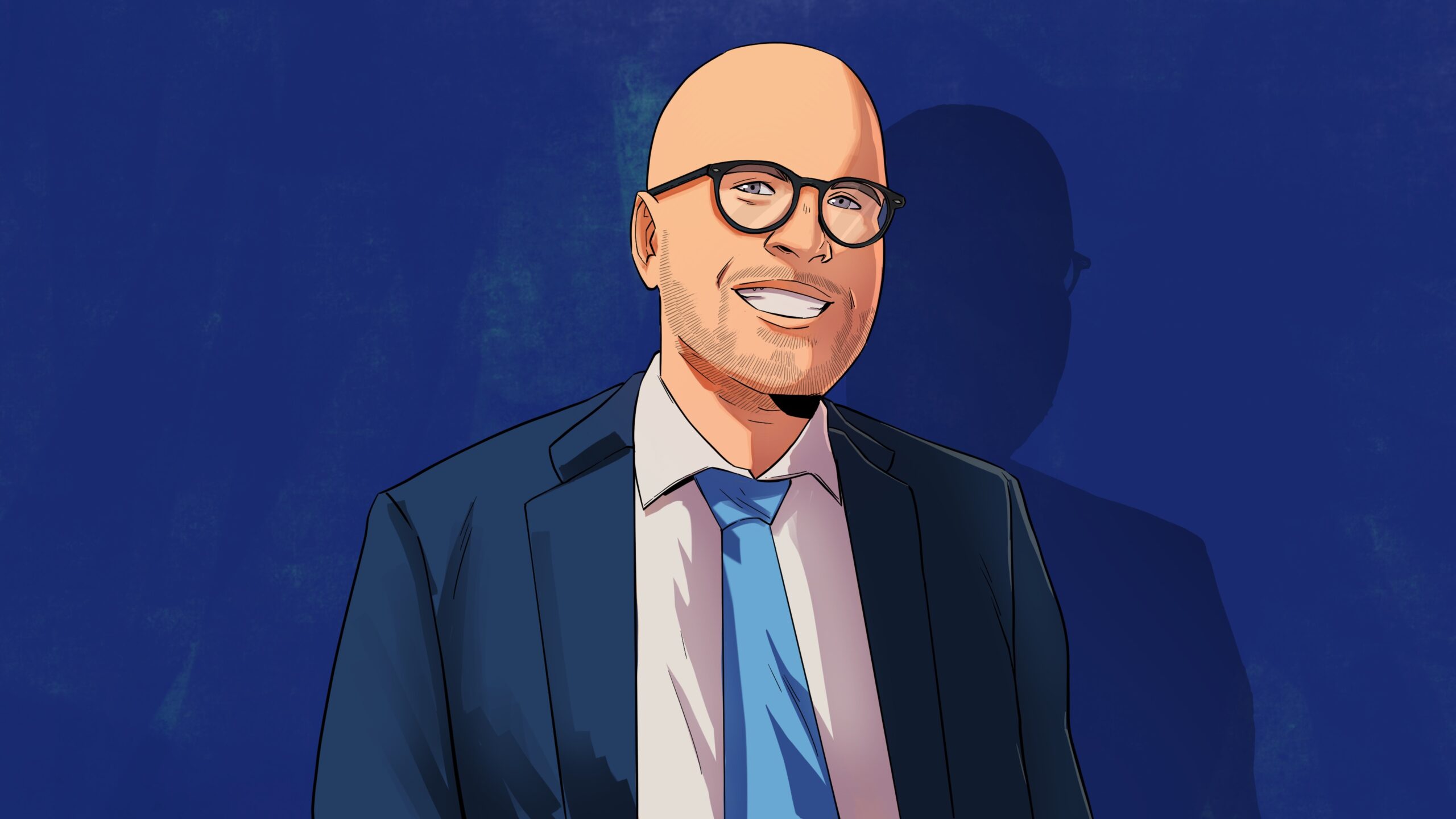
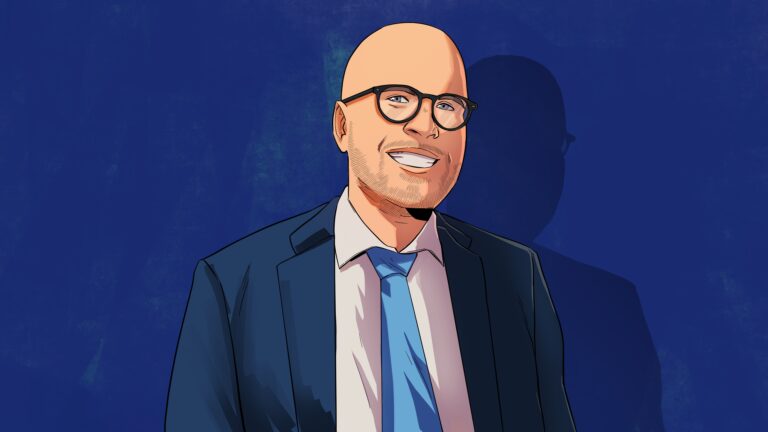
Romain Clivaz. Illustration by Nathanaël Schmid for *Le Regard Libre*
In the face of the rise of radical forces in France and Germany, exclusionary strategies are showing their limitations. The Swiss model offers an alternative path, based on direct democracy, dialogue, and the inclusion of the major political forces.
When observing the deterioration of the political and social climate in France and Germany, one might, as a first instinct, be tempted to express a bit of schadenfreude—that famous Schadenfreude in German. Let’s leave that sentiment, however, to soccer and the always welcome and delightful defeats of Les Bleus or the Mannschaft. Objectively speaking, our country has no interest in seeing its neighbors weakened and destabilized.
In the north, the political landscape is undergoing a tectonic shift, the outcome of which remains uncertain. The most dramatic changes are taking place in the States of the former German Democratic Republic (GDR). Two recent examples: in Saxony-Anhalt, the Alternative für Deutschland (AfD) came in first in September, coming close to an absolute majority of seats in the Landtag with more than 44% of the vote; in Mecklenburg-Western Pomerania, it also came in first.
In Berlin, this party—to the right of which stands the wall—climbed to third place. Die Linke, a party to the left of which there is also a wall, more than doubled its share of the vote to win 25% of the vote. There’s a whiff of real socialism on the banks of the Spree. And this radicalization isn’t unique to the former GDR. This spring, the AfD doubled its share of the vote in Baden-Württemberg, approaching 20% and climbing to third place.
In France, the polls also reveal a strong sentiment of «anti-establishment» sentiment, whether from La France Insoumise or the National Rally. Election after election, the National Rally (RN) is gaining ground, to the point where it now has a caucus in the Senate for the first time. When it comes to growth and radicalism, «La France Insoumise» led by “Comandante” Mélenchon is no slouch, whether in the legislative chambers or on the streets.
Le fossé entre les élites parisiennes et le pays réel se creuse inexorablement. Les violences se multiplient à chaque occasion: matchs, concerts ou encore manifestations de lycéens. A l’exception notable de la visite du pape Léon XIV. Symbole ultime dans la région de Nantes: l’incendie volontaire du lycée… Nelson Mandela, du nom de l’homme qui incarne le dialogue et du pardon en Afrique du Sud post-apartheid.
Peut-on vraiment comparer ce qui se passe au nord et à l’ouest de la Suisse? A l’évidence, oui. Au cœur de cette poussée des extrêmes se trouve l’incapacité des dirigeants à admettre que les problèmes portés par des forces émergentes peuvent êtres réels. Le refus de les mettre à l’agenda politique. S’y ajoute un réflexe cartellaire drapé de morale: jamais ces formations ne doivent arriver au pouvoir.
Faced with the threat they pose, the solution would be to erect a «cordon sanitaire» or a «Brandmauer,» or «firewall.» Alarmist statements, electoral mismatches, an incomprehensible electoral system: anything goes—say whatever you want.
In Berlin, as in Paris, it wouldn’t hurt to take a look beyond the Jura Mountains or across the Rhine. Over time, the Swiss system has been able to absorb political shocks and tensions, thanks to direct democracy and the integration of the main political forces right into the heart of the system—the Federal Council. Our founding fathers and their wise descendants took this gamble—one based on dialogue, even when heated, popular sovereignty, and subsidiarity.
We often hear that Switzerland is an exception and that in a larger country, the experiment would be too risky. In a democracy, however, it is not size that matters, but civic culture. The Swiss aren’t any smarter than their Germanic or Gallic neighbors; they simply got a head start on the referendum process: taxation, pensions, crime, neutrality, energy, security… These are all issues on which they’ve had their say! Fixed ideas—sometimes coming from the far left, the far right, or the very center—have been put to a vote.
Citizens have sometimes said yes, sometimes said no. All of this without a «cordon sanitaire» or a «Brandmauer.» Given the results, we can say—without misplaced chauvinism—that our ancestors succeeded in their democratic gamble and that our neighbors should take up the challenge as well.
After joining the board, Romain Clivaz served as a correspondent in Bern and Brussels (RTS and 24 Heures/Tribune de Genève), launched the podcast «Sous la coupole» (Le Temps) and served as a personal aide to a federal councilor.
You have just read an open-access article published in our print edition (Le Regard Libre No. 131). Debates, analyses, cultural news: subscribe to support us and get access to all our content!

You'll also like

 French
 German
 English
Leave a comment