




«A Forgotten Man»: neutrality under strain
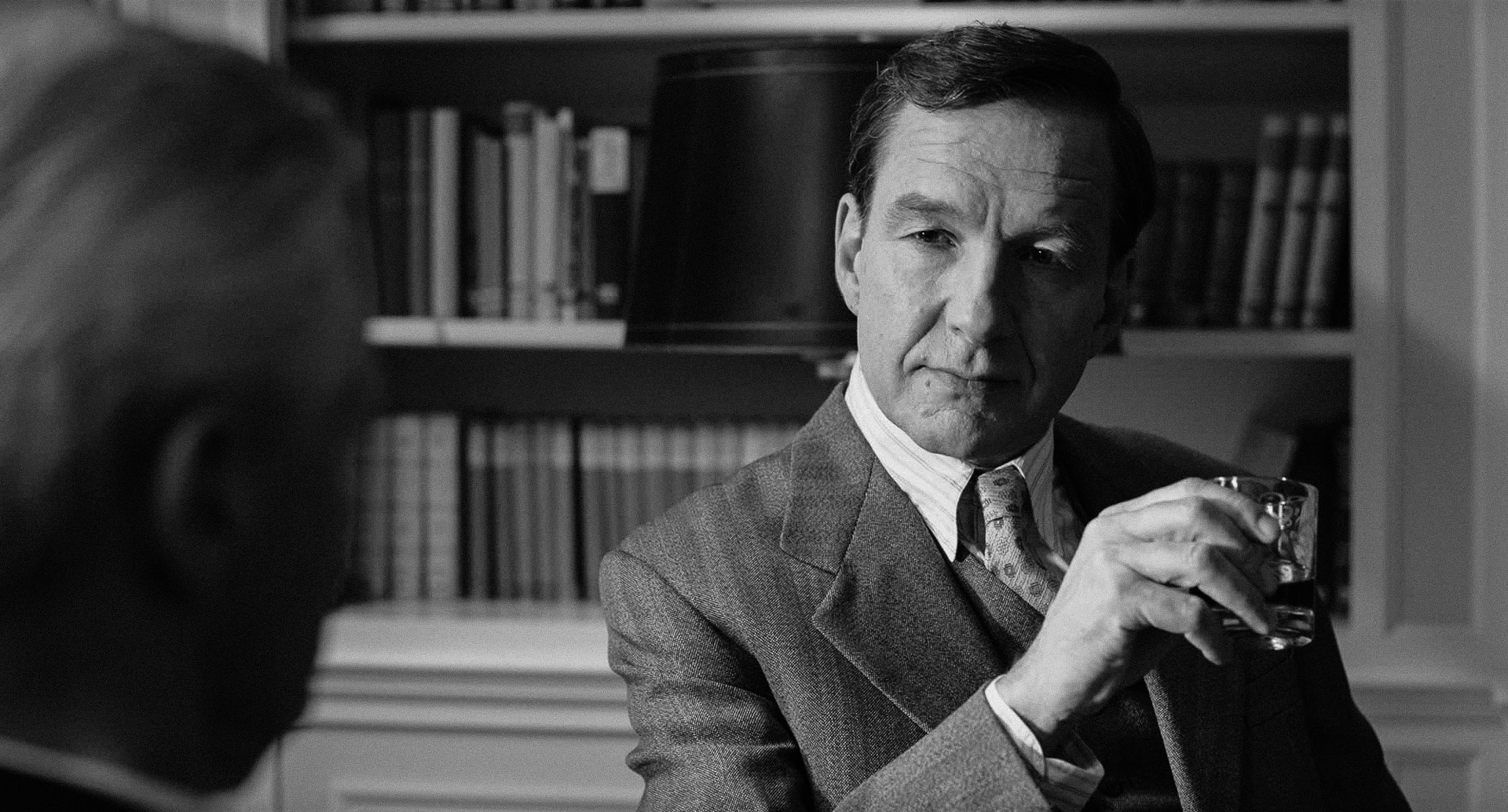
A Forgotten Man (2022) by Laurent Nègre © Bord Cadre films
Cinema is doubly an art of light. It sculpts images, movement and rhythm. And it creates characters to embody, underline and concretize ideas and characters. With A Forgotten Man, Laurent Nègre's fourth film, this light becomes history, in a limpid and sublime form.
Heinrich Zwygart (Michael Neuenschwander), Swiss ambassador to Germany, leaves his post after the fall of Hitler. Back with his family, he aspires to a seat on the Federal Council. But to do so, he must take responsibility for his past choices and confront his own demons.
History incarnate
Historical fiction, often much more than documentary, has the advantage of showing the importance of narrative in telling the facts. Yet the genre is sometimes criticized for twisting history, for forcing it to fit into the imperatives of the narrative, and thus for betraying it. It's only natural to protest against the betrayal of truth at a time when the man who was once the most powerful man in the world is inventing the concept of «alternative truth». However, we must also take into account the importance of the art of the "truth" in today's world. storytelling. At a time when screens are multiplying and we can access information with the flick of a thumb, the challenge is to know how to interest the public. With A Forgotten Man, Swiss director Laurent Nègre has understood this: he has made his story exciting and his production charming.
The film presents itself as a political thriller, sometimes borrowing from the historical narrative, sometimes from the investigative film, in order to energize the story it tells. Most of the time, it adopts Heinrich Zwygart's point of view, without ever seeking to shed full light on the nature of his actions. Above all, the character often embodies Switzerland's choices regarding its position during the war. Heinrich's questionable choices become those of a country that decides to remain neutral when its neighbors commit the worst of atrocities. The Forgotten Man is also a dark part of Swiss history kept in the shadows.
Film à charge?
No false suspense: A Forgotten Man is not a film for the prosecution. Or at least, not directly. While it does use a historical event to condemn the ambassador's decisions, the rest floats in a constant blur. This pact is made from the very first images of the film, where the most important documents are burned, one by one. From then on, we can never confront the authors, only suspect, with the frustration of not being able to decide.
The film's intelligent approach is to convey the full complexity of the situation through this historical fiction. Its aim is not to condemn, but to demonstrate the difficulties of shedding light on these well-kept secrets. Potential culprits are multiplied, but no decision is ever taken: did the government give orders not to repatriate certain prisoners? Did the ambassador want to protect Switzerland or his post? Did the choice not to offend Hitler save the country, or did it destroy a people? These are all questions the film chooses not to answer. What's more, it encourages us not to answer them ourselves. A game of ambiguity is built up between the man, the ambassador and the government. The audience is not invited to find out who did it. All we can do is condemn the times.
A story in black and white
If the political thriller works like this, it's also - and above all - thanks to its cinematographic qualities, which are sometimes overlooked with this kind of film. Here, we must salute the very well-directed cast, starting with Michael Neuenschwander, who manages to make us feel disgust as well as admiration, empathy as well as hatred. He embodies all the historical tensions of a country that resisted without being exemplary.
The rest of the cast is also to be commended, such as the young Fribourg-born Yann Philipona, who appears in a second role as a banal son-in-law before rising to power and surprising the audience. Peter Wyssbrod's presence is also worthy of mention, as he lends his age to an ex-serviceman nostalgic for the rifle.
Another quality of this feature-length film is its duration: just 1h30, A Forgotten Man is effective and often to the point, even if we'd have liked to have seen some of the relationships explored in greater depth. Nevertheless, we can regret the choice of staging moments of madness that aren't madness at all. This thread, a little too worn, clashes with the film as a whole and breaks the overall rhythm. Fortunately, the image benefits from modern black-and-white, offering its share of aesthetically pleasing shots, whether of faces or gardens, and occasionally allowing the film to lack pace without this really being detrimental, since it is beautiful.
A Forgotten Man is well worth the trip to the cinema. It has been designed to be accessible, and to distance itself as far as possible from the coldness of a documentary in order to meet its audience. Let's hope this choice pays off, because A Forgotten Man is a disturbing, intelligent and beautiful film, which invites us with astonishing simplicity to become aware of the complexity of history.
Write to the author: [email protected]
You've just read an open-access article. Debates, analysis, cultural news: subscribe to support us and get access to all our content!


You'll also like

 French
  German
  English

Leave a comment