




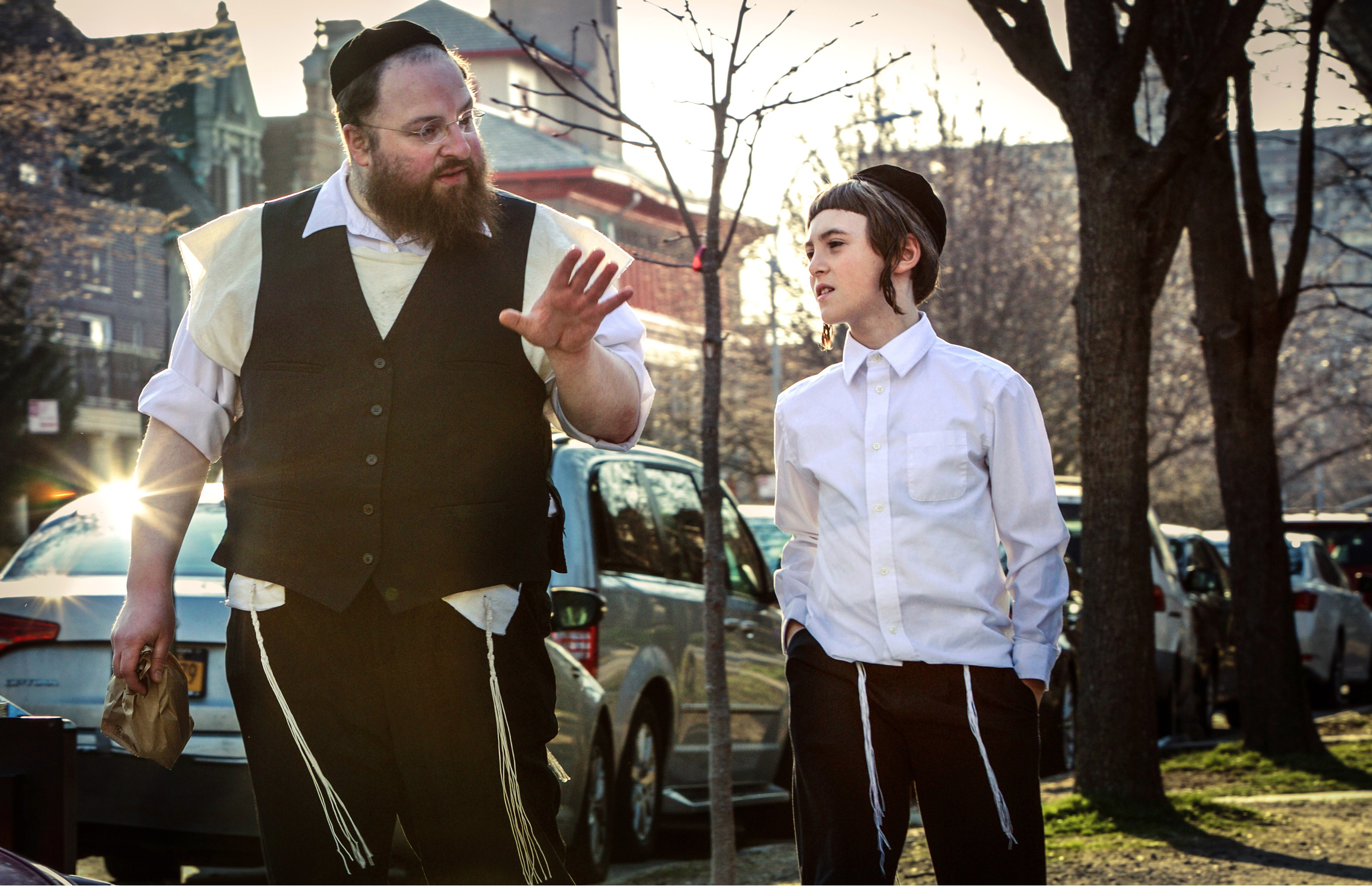
«Brooklyn Yiddish,» a stunning photograph that captures the story of a widower
Cinema Wednesdays - Loris S. Musumeci
«Do rabbis have a say in everything?»
Menashe looks lost. He's walking around his neighborhood without seeming to know where he's going. Yet he's running late, as usual. No sooner had he arrived at the grocery store kosher At work, he receives a reprimand from his supervisor. Furthermore, Menashe has been a widower for a year. Custody of his only son, Rieven, has been entrusted to his late wife’s brother until he finds a new wife. However, he is not particularly eager to remarry. What matters most to him is his son. Out of compassion, the rabbi grants him permission to take Rieven home for a week. The father will go to great lengths to prove that he and the child can be happy together.
A touching story
Joshua Z. Weinstein has delved into his own Jewishness to give an insight into life in a Jewish neighborhood. If Brooklyn Yiddish While it perfectly captures the atmosphere within Brooklyn’s Hasidic community, it actually offers much more. The story tells of a father’s love for his son—a love that is both ordinary and immense. The father may be very clumsy, but the little boy has eyes only for him.
The film also explores the feeling of being an outsider. Menashe is generally looked down upon because he is a widower who has been slow to remarry. On top of that, he doesn’t take care of his appearance, neglecting to wear a hat or a coat. An outsider, he tries to be accepted just as he is within a rather homogeneous group. The character is therefore simply endearing. Despite the tallit katan, black vest, yarmulke With his beard, he embodies all those who seek a life that is unspectacular yet fulfilling.
Sublime photography
The photography is a perfect match for the storyline, which makes Brooklyn Yiddish A complete work. The shots possess a poetic presence that reveals everything Menashe holds in his heart but dares not say. Playing extensively with the profiles of the faces, the director films scenes in which the camera’s position relative to the character conveys his state of mind. The wide shots are no less successful, showing the street filled with women dragging a gaggle of children behind them, or men walking with their backs straight, black hats perched on their heads.
The alternation between sharp focus and blur, enhanced by camera movements that convey a sense of distance or closeness, also contributes to the beauty of the images. It reveals at times the calm solitude of a Jewish man, and at other times the commotion at the table of the shabbat or the swaying of the head in prayer. As for the music, it lets the most beautiful violins resonate, without falling into an excess of melancholy. Fair and temperate, it accompanies Menashe and Rieven's happy journey.
«Menashe, the Torah says, «It is not good for man to be alone.»»
Write to the author : [email protected]
Photo credit: © Federica Valabrega for Look Now!
You'll also like


 French
  German
  English
Leave a comment