




«Flee», when the past meets the present
In the same vein as Waltz with Bashir (2008) and Persepolis (2007), the animated film Flee probes the memory and journey of Amin, a Danish academic in his thirties. His identity is in stark contrast to his life as an Afghan refugee. With an appropriate distance, Jonas Poher Rasmussen, through the intermediary of a complicit dialogue, reconstructs his trajectory. A must watch.
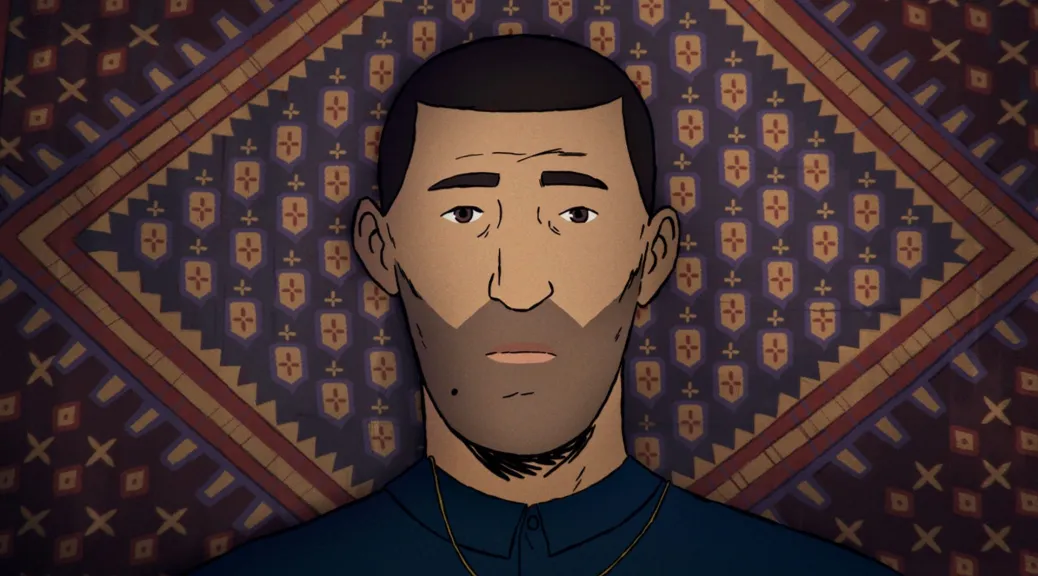
The frame isolates his head. In the background, we can make out a pattern reminiscent of Persian carpets. The expression on his face is not reassuring, and his gaze tries to evade us. With his three-day beard and brown eyes, Amin lies back. The question about to emerge from off-screen will plunge the man into a reality too often repressed. Rasmussen asks his interviewee to recall a childhood memory. We find ourselves in Kabul, where kites floated in the blue sky. Between this memory and the present, a war, Russia and Denmark.
Animation to tell the story of migration
Widely acclaimed by the critics and awarded - notably the Grand Prix for Documentary at Sundance and the Cristal for Feature Film at Annecy - Flee was also nominated three times for an Oscar. And for good reason: through drawings, Rasmussen delves into the past of an Afghan refugee. His reconstruction echoes the present: the trajectory hinders a stable adult life crowned by a more than successful integration.
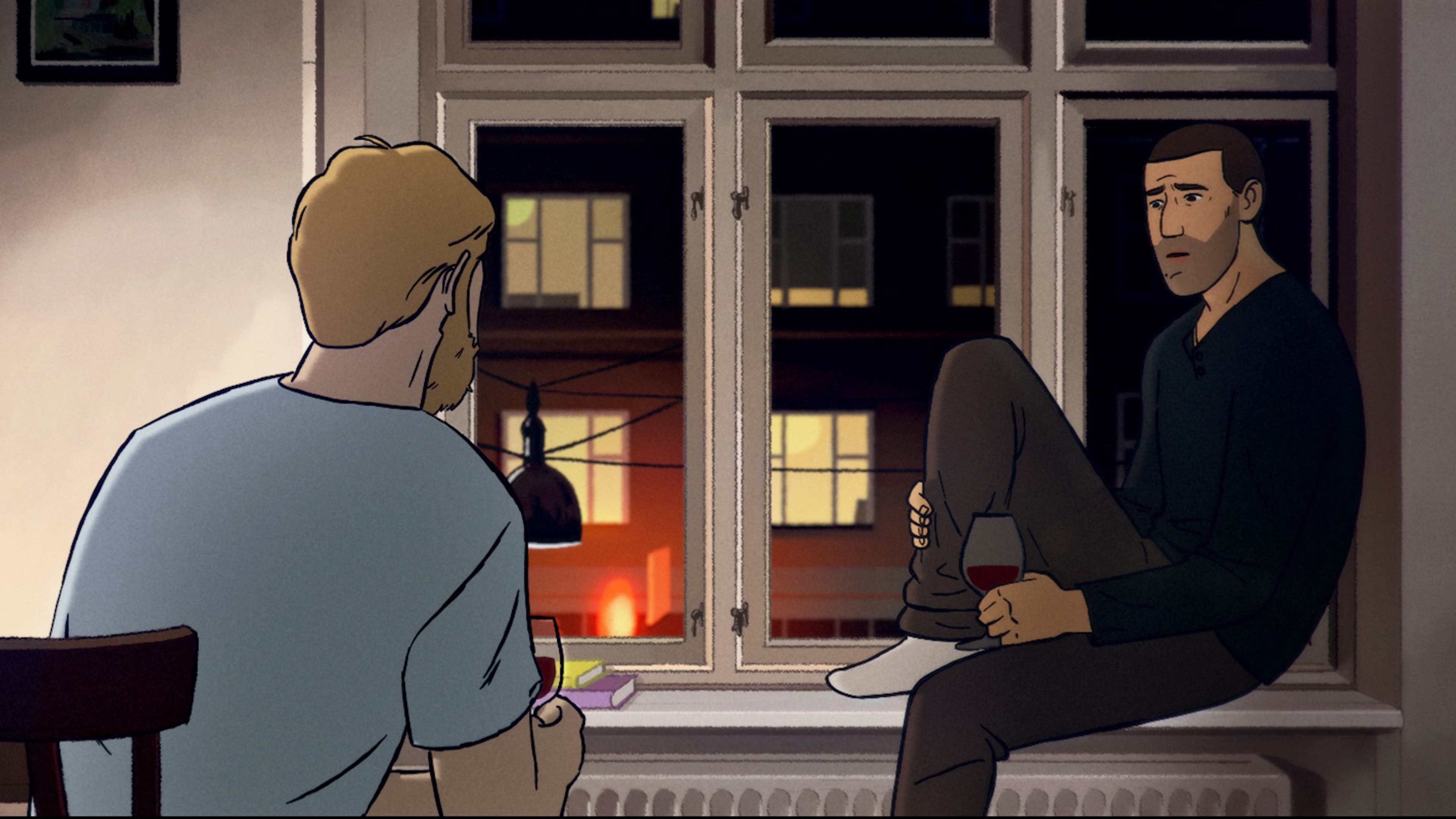
If the aesthetics of the comic strip guarantee its anonymity, this process is distinguished by a second notorious advantage. The sequences are never maudlin or pitiful. A few archive images punctuate Amin's journey, anchoring the story in Afghan history, the Soviet invasion of the country in the 1980s and the Mujahedin. The documentary-like film is constantly moving back and forth between the past and the present. the here and now. Long buried by the academic for his own survival, the truth is reconstructed as the protagonist takes an intimate journey. Defense mechanisms break down, and the obstacles of private life find their source.
Confidence for confidence
During the dialogues, the director is not just a voice-over, but an animated character whose on-screen appearances are frequent. His complicity with Amin is undeniable. The latter doesn't hesitate to confide in us about the difficulties his relationship is going through, and the anguish he feels about his partner's plans to live in the country. The two men grew up in the same neighborhood: before becoming a filmmaker, Jonas lived not far from the foster home where the teenager was placed. They therefore shared common cultural and social references, but one of them had a past he didn't want to talk about. Mediating a story with lingering wounds, the director allows Amin to gradually let go and deliver his tale without restriction.
Through his own experience, Amin describes the process that led him to become what he is today. A social and intimate identity - his homosexuality, which he has not always accepted - that has inevitably been built up through detours and evasions. In the watermark of flashback, The return to the present explains the consequences of flight, but also the duty to the senses that accompanies social success.
Without resorting to hyperbole, Flee reveals a raw, hidden reality. By turning its focus on understanding Amin's personal problems, the film succeeds in bringing to light a story hidden by the instinct to survive. It also proves that crossing from one country to another is just one stage in a mutilated soul, whose marks must be appropriated if we are to move forward.
Write to the author: [email protected]
Photo credit: © Tandem Films
You've just read an open-access article. Debates, analysis, cultural news: subscribe to support us and get access to all our content!

You'll also like


 French
  German
  English
Leave a comment