




«L'ordre divin», when one woman's courage turns into a feminist caricature
Cinema Wednesdays - Loris S. Musumeci
«I don't want to end up in a hole like a housewife!»
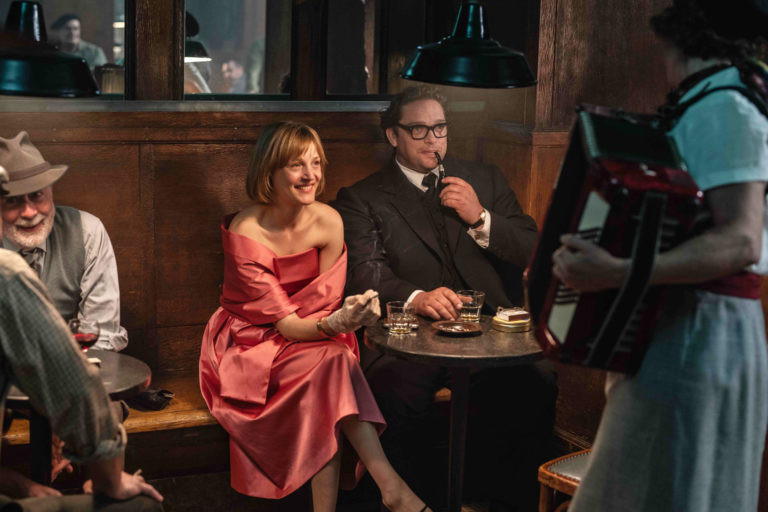
Nora (Marie Leuenberger) leads a flat, submissive existence in a small, isolated village in Eastern Switzerland. Triggered by her niece's teenage rebellion and waves of feminist protests from the city, the mother is increasingly questioning her place in society. «Say, what would you say if I started working again?» she says to her husband, awakened by an advert for a secretary from the Kuoni agency. Her husband's refusal to discuss the matter is accompanied by a «And you can't do anything without my permission. It's the law.»
This law must be changed. Let the fight begin! A small association of women demanding respect is formed in the village, coordinated by Nora. She is joined by her sister-in-law Teresa, who has an unhappy marriage, the eccentric Madame Vroni and Graziella, an Italian immigrant. While their approach is determined, it is not without serious difficulties. The men don't seem ready to upset the «divine order» that sets them up as masters.
To a standing ovation
Director Petra Biondina Volpe is being hailed from all over Switzerland. What courage to dare such a subject," chuckle the proud Germans. A film that tells the story of an important episode in history, and thus becomes part of history, say the most discerning critics. This enthusiasm is confirmed by the standing ovation reserved for The divine order at the Prix du Cinéma Suisse, where he won three major awards, at the Tribeca Film Festival, where he also won three awards, and at the Journées de Soleure.
It's only fair to join this wave of admiration for the choice of theme. Indeed, it is of the highest order. Moreover, Zurich-based Filmcoopi wants to use its new production to pay tribute to all the women who have stood up one day to claim a dignified status and equal rights with men. And yet, quite apart from the philosophical problems posed by feminist ideology per se, this is not only an artistic failure, but also a rather tendentious morality play.
Love your vagina
The film is full of caricatures and excesses. Starting with those displayed at a 1968 demonstration timidly attended by Nora, her sister-in-law and Mrs. Vroni. They shout «Women's rights, human rights! But »Down with patriarchy! Of course! Perhaps we should remind these geese that to do away with patriarchy is to do away with the feminine and maternal authority that goes with it, i.e. matriarchy.
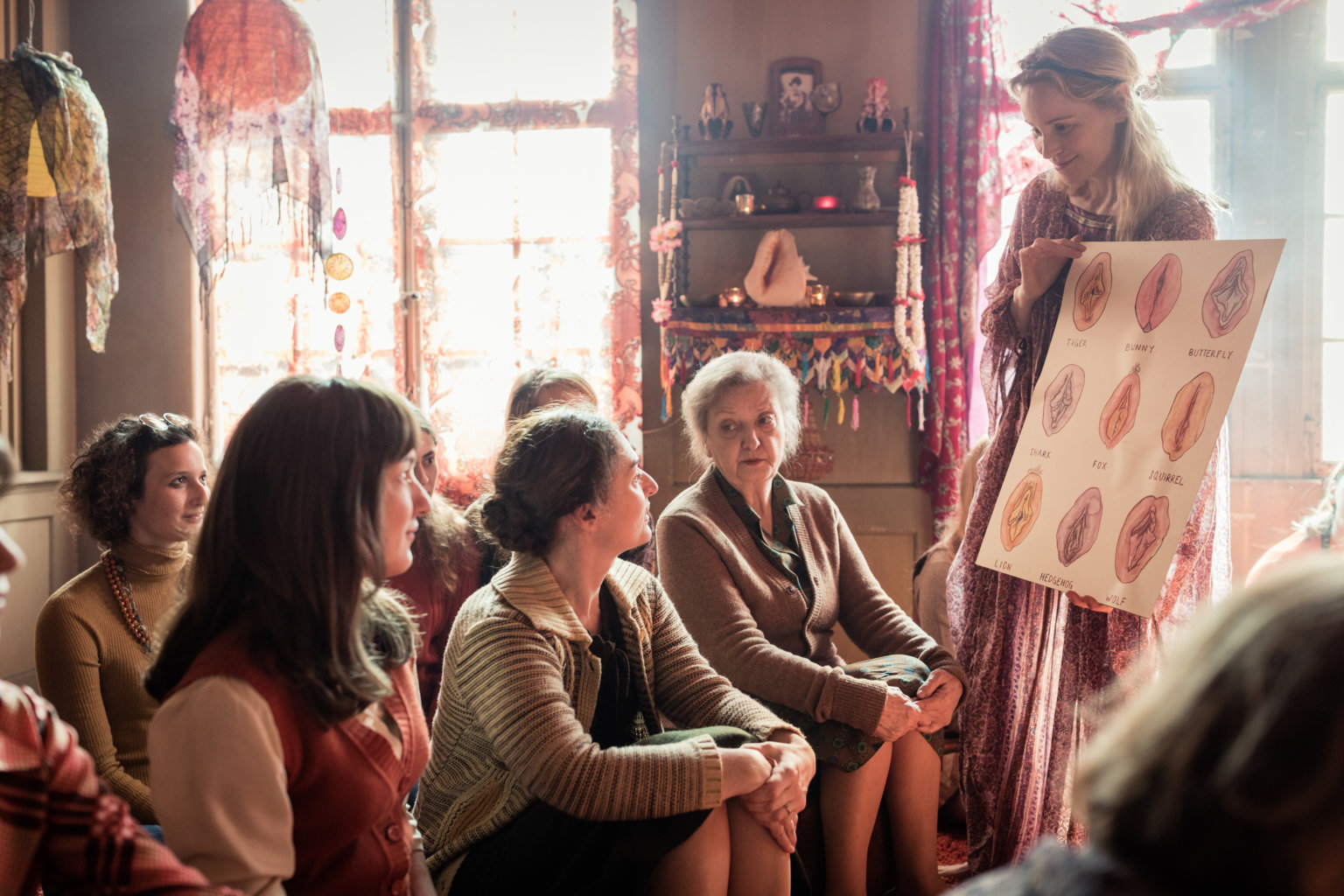
After the street masquerade, the women gather in a room to follow the workshop of a certain Indra, who has come from Sweden to give flesh to the Swiss women. Here, they reach the seventh heaven of the ridiculous. The spiritual guide teaches her disciples that «to know your pussy is to know your pleasure.» This is followed by prophecies such as «Love your vagina and orgasm will come.» Finally, the students are all given a mirror to observe their organ, which of course they'd never seen before, since women of yore are taken for idiots who knew nothing about anything. «Love your vagina», motivates Indra, the Femen before her time. In conclusion, Nora discovers that she has «a tiger between her legs», also known as the «eye of God».
First vote
The male side is not spared this kind of coarseness. Nora's husband, Hans, is also at the height of his liberation from the shackles of society. He rebels against his father, learns to cook and tastes in submission to the tiger of his wife who so kindly offers him the gesture, under the sickening music of the violins. He even ends up eating a nice plate of spaghetti with his family, in a nod to the integration of Italians in Switzerland. A new man, open to difference, with a look of happiness in his eyes. It's so cute!
The divine order sees all its women go from sadness to joy before and after the right to their first vote. If we'd known earlier about the pleasurable virtues of inserting a ballot into a ballot box, we'd have prescribed this civic act as an antidepressant sooner. Once again, the director's talent for filming events with nuance! So talented, in fact, that she prefers to conclude with images from the seventies, showing at least real women, who have real merit in their struggle.
«Your time is up and it's better this way.»
Write to the author: [email protected]
Photo credit: © cinergy.ch
You'll also like


 French
  German
  English
2 comments
Loris S. Musumeci responds in his own name, without committing the rest of the editorial team.
Dear "E.Rosset",
I'll admit that you don't like the article. Its pamphleteering style, its defense of the patriarchy and its criticism of a subject approached in a caricatured way may bother you. In future, however, please have the presence of mind to qualify your comments, preferably by elaborating on them. We're not interested in passionate comments here.
Yours sincerely,
Loris S. Musumeci
I've rarely read such a stupid article.
Leave a comment