




«Pain and glory»: Pedro Almodòvar's first desire
Cinema Wednesdays - Loris S. Musumeci
Salvador Mallo has known glory. Now he knows pain. Asthma, backaches, headaches. Depression too. For the great filmmaker is no longer in a state to create. He withdraws into himself. A reunion he hadn't expected, and a rerun of his 1980s hit, Sabor, However, these events marked a turning point in his life. The turning point was to go beyond the pain to find his way back to glory. To begin again to write a script that tells his story and his malaise, to heal his wounds. To heal his past.
Cinema at its finest
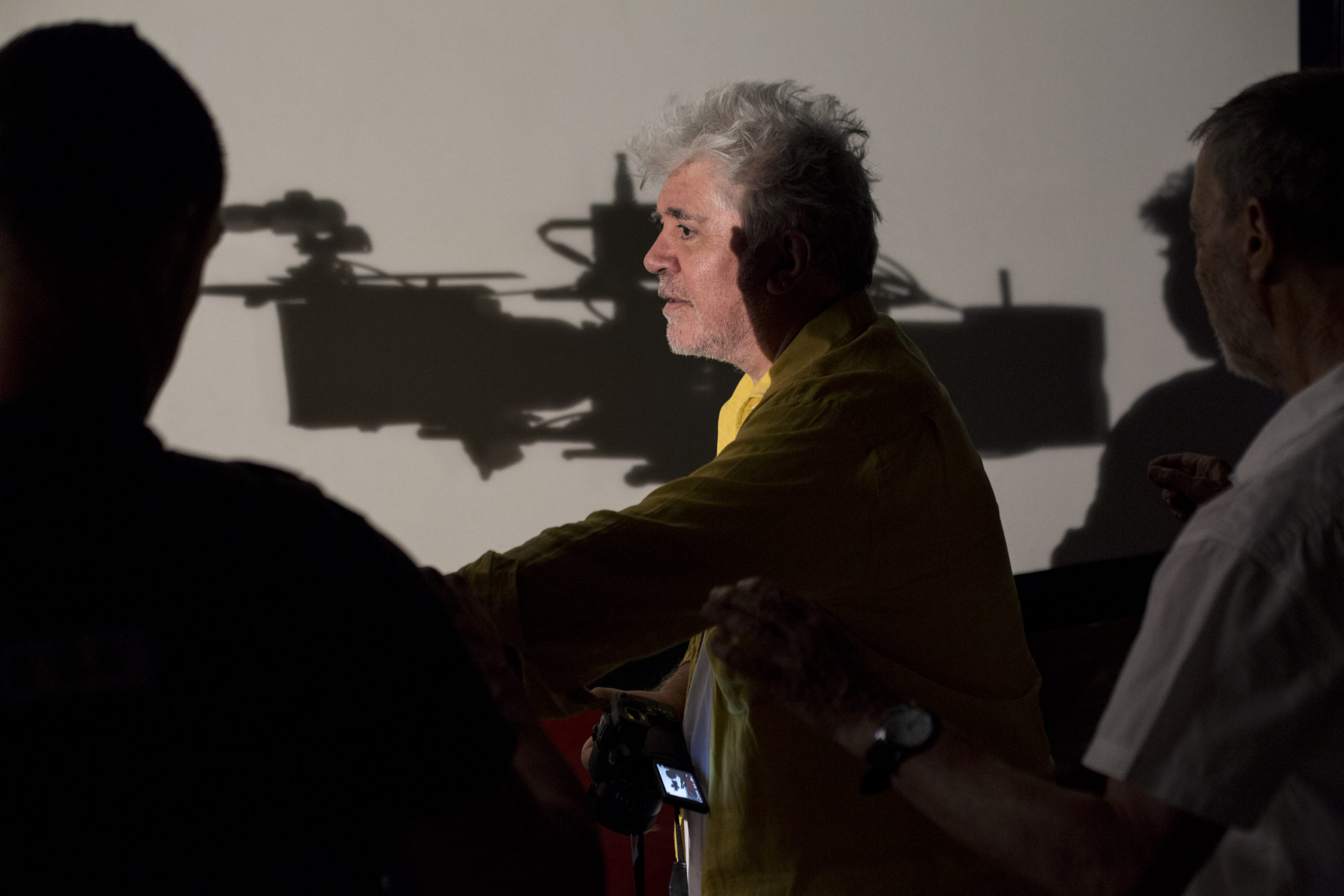
Pain and glory, cinema at its finest. Art-house cinema. The work of a master filmmaker. Pedro Almodóvar This is his most autobiographical work. Through a sensitive and magnificent Antonio Banderas, he recounts his childhood and the meaning he ascribes to cinema—the meaning it holds in his life. So there’s no need to judge. Because Almodóvar isn’t putting on a show, and above all, he has nothing to prove to anyone.
Yet, even though one can recognize the hallmark of a confident and truly artistic film, the movie doesn’t necessarily win you over on every point. To tell the truth, it divides opinion. Not necessarily between those who love it and those who hate it, but rather between the boredom and the passion it evokes. Or between abundance and scarcity. That’s the impression I came away with after leaving the theater.
Passion and Boredom
Adult Salvador is captivating when he takes up writing again, when we follow him into the depths of his torment, and when he reveals his thoughts. Adult Salvador is tedious when he constantly returns to the subject of his mother, when he drags his feet, and when he gets bogged down in somewhat overblown hesitations. As a child, Salvador captures our full attention when he takes us along on his journey of desires, and in particular his first desire. However, *Salvador as a Child* leaves a bitter aftertaste by glossing over details of his childhood that deserved to be explored in greater depth.
On the one hand, we yawn and get bored watching repetitive, whiny, and overly verbose scenes; on the other hand, we’re left wanting more when storylines introduced in the childhood narrative are immediately closed off, only to return to the adult’s pathetic existence. So, it’s complicated. All the more so because certain pseudo-creative scenes, like the animated sequence that lists Salvador’s sufferings, are, in my opinion, pretentious and in poor taste.
Sorry, Pedro
The same goes for the aesthetics of the landscapes and the typically Spanish scenery—typically southern. With sunshine and white walls, flowers, balconies, and sunglasses. As much as I usually enjoy feasting my eyes on this kind of atmosphere… But in this case, I was sickened by the overwhelming amount of sunshine, by these neighborhoods and villages that were too polished. Sorry, Pedro, I wish I could have gone along with it.
Finally, there are two actors whose performances in this film are beyond any negative criticism. They are’Antonio Banderas and Penélope Cruz. Even though the two never appear on screen together—Penélope Cruz plays Salvador’s mother when he was a child—they carry the entire feature film almost single-handedly. One actress’s face conveys all the gentle anger of Spanish mothers, who are at once dictators and overprotective mothers. The other’s face conveys all the tragic depth of Spanish artists steeped in a culture that celebrates both pain and glory.
Write to the author: [email protected]
Photo credit: © Pathé Films
| Pain and Glory |
|---|
| SPAIN, 2019 |
| Production: Pedro Almodóvar |
| Screenplay: Pedro Almodóvar |
| Interpretation: Antonio Banderas, Asier Flores, Penélope Cruz, Asier Etxeandia, Leonardo Sbaraglia, Nora Navas, Julieta Serrano, César Vicente |
| Production: El Deseo |
| Distribution: Pathé Films |
| Duration: 1 hour 52 minutes |
| Output: May 17, 2019 |
You'll also like

 French
  German
  English
Leave a comment