



«Second Tour»: the Dupondel Dupontel twins
Jérôme Prébois
For his huitième film, Albert Dupontel plunges us in a political thriller, while retaining its comedic and poetic habits.étics. A program that promises a high rate of’abstention.
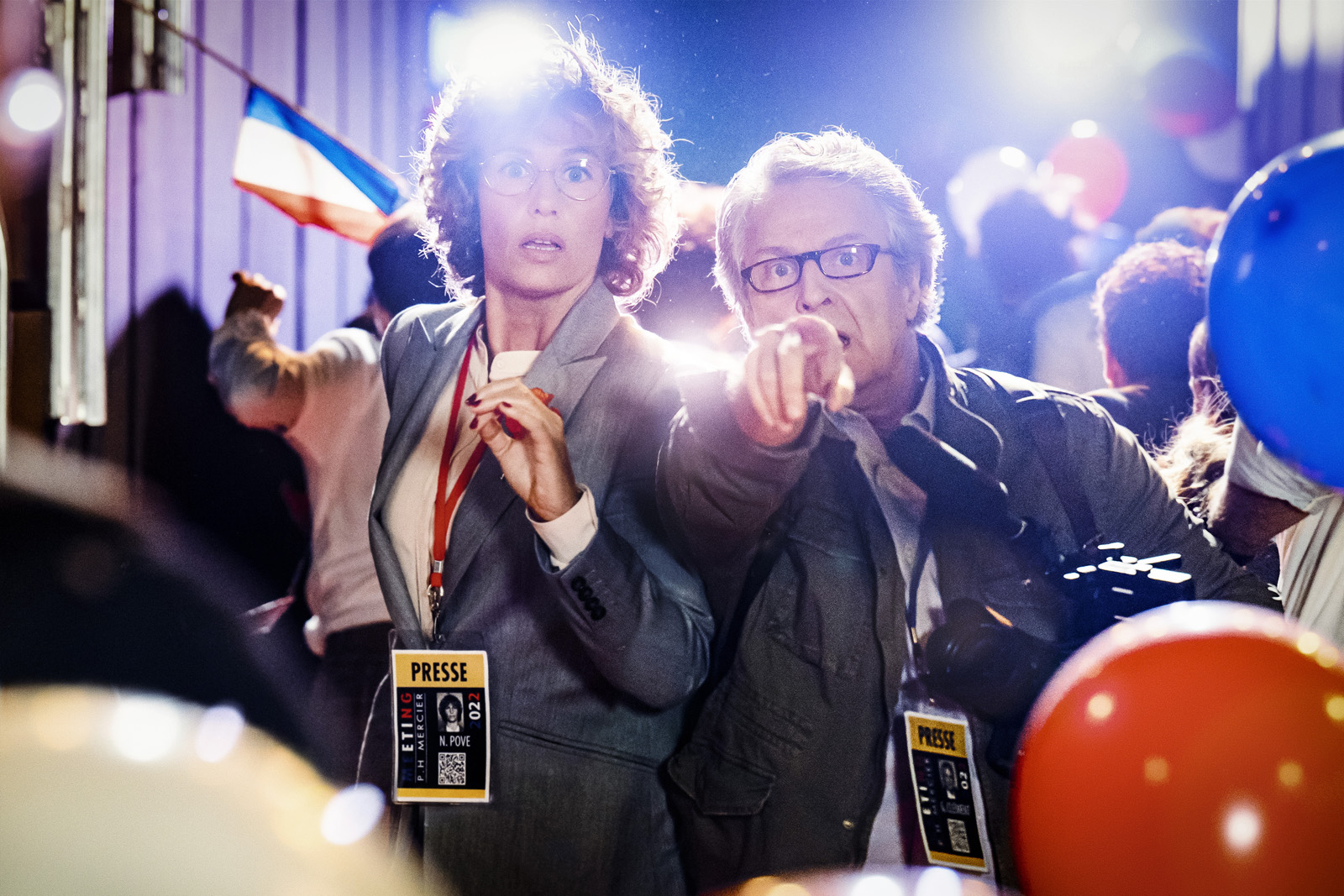
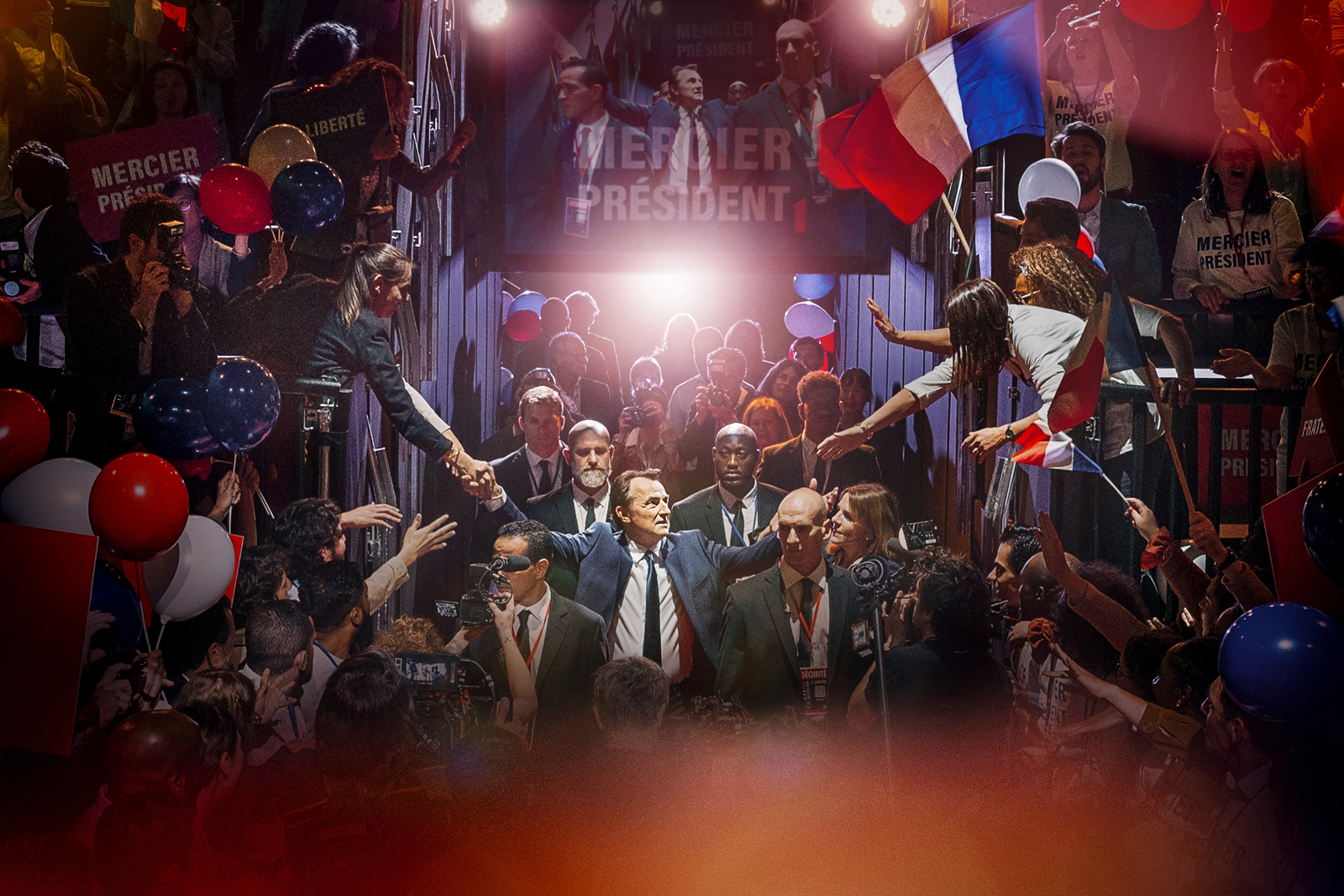
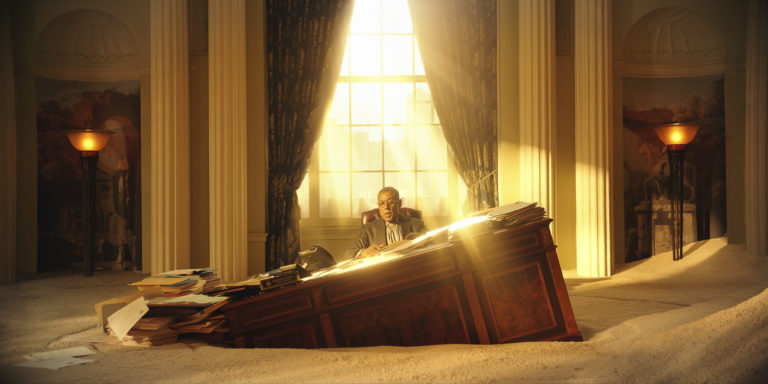
Candidate Pierre-Henry Mercier (Albert Dupontel) looks like any other candidate. But when journalist Pove (Cécile de France) and her cameraman Gus (Nicolas Marié) start looking into his associations, they realize that this election could be a revolution. On that basis, Second Round offers a film rich in twists and turns, as well as a mixture of genres. It multiplies points of view, strong political messages, poetic moments, family dramas and comic moments. All this seems too cramped for an hour-and-a-half film.
Dupontel's moods
Avant tout, le film peine à nous garder. Trop souvent, il suit ses propres intentions, et laisse le public dans sa perplexité. On sait que l’on aura l’explication plus tard, que l’on comprendra l’importance d’un flashback in future scenes, but you can't help feeling that the film isn't what you see. The film is what we'll see later. Everything else is preparation. The way the story is chopped up, punctuated by often unwelcome flashbacks, shows a problem with the writing, especially when the dialogue sinks into embarrassing ecological clichés. Dupontel pushes open doors without really succeeding in arousing the viewer's interest in his subjects.
For some time now, Dupontel has been floating in a parallel world. A Manichean world, where a politician's backers would rather kill him than be betrayed. A paradoxical world where the French have no interest in ecology, but are immediately moved when a politician talks about the disappearance of bees. A strange world, where people can be both black and white, so much so that Dupontel's generalizations seem to depend on his mood. Second Round is sorely in need of a rereading. Or even several.
Convincing the undecided
Despite these weaknesses, Dupontel has one quality to his credit: after thirty years of directing, he continues to enchant us with his imagination. His writing may be a failure, but his directing skills are there for all to see. Admittedly, his proposals are not to everyone's taste. But Dupontel's camera turns its back on French auteurism in favor of American entertainment. This is how Dupontel has fun: his shots seek out reflections, plays of light, original angles. The camera is constantly exploring possibilities. Possibilities now enhanced by digital technology. With this, Dupontel is a better heir to Jean-Pierre Jeunet's cinema than Jean-Pierre Jeunet himself.
Some will say that its direction, with its flashy effects and framing, is ultimately as heavy-handed as its writing. You can't go wrong. But Dupontel's entire cinema is one long quest towards something terribly simple: learning to love. To achieve this, he never focuses on smooth, conventional characters. Dupontel's cinema presents us with marginalized characters, sometimes mean, sometimes stupid, cantankerous, depressive, angry - characters who are always outcast, and who can only be reintegrated through the power of cinema, the power that drives us to empathy.
We've known it since Chaplin's first films, which made his often egotistical and mocking characters sympathetic. We've wanted Tony Montana and many other crooks to escape from the police since 1932, and in 2019, with Les Misérables, We hoped that the police officers trapped in a building would get out too. A high point was reached with The Devil’s Rejects, which made us feel empathy for a family of psychopathic killers. Dupontel doesn't go that far, just makes us love the margins, as he loves cinema.
That's why it's easy to forgive his weaknesses. Despite his blunders, Second Round shows a great deal of sincerity and therefore honesty. He always seeks to amuse us, make us laugh, touch us, surprise us and make us love him. This is how we find ourselves faced with two Dupontels, who, in an authentic metaphysical game, twice stage the actor as twins.
A Dupontel wants to change things. He's integrated the system to achieve this, but has become cynical and disillusioned. Another Dupontel has remained on the bangs, a bit of a dunce, cultivating his honey and retaining his innocence. Second Round features these two characters, as it was written by both of them. This is why the film too often seems confused. Dupontel the author, like Dupontel the character-candidate, has lost himself in a milieu and subject that are beyond him. He's ill at ease, out of his element, as if forced to respond to a Cannes invitation.
What next for Dupontel? He will have to choose between stubbornly fighting against the caricature of the world in a Don Quixote-like impulse, or preserving himself and continuing to bring to the screen what he loves, inviting us in turn to love it. Second Round at least has the merit of offering us an answer to this question, and for that, it's worth seeing. It will remain on the bangs of its author's filmography, but fortunately, he has taught us to love the bangs.
Write to the author: [email protected]
You have just read an open-access article. Debates, analyses, cultural news: subscribe to support us and get access to all our content!


You'll also like

 French
  German
  English

Leave a comment