



The choice of disobedience
A048_C016_0113T4.0001441.tif
Cinema Wednesdays - Virginia Eufemi
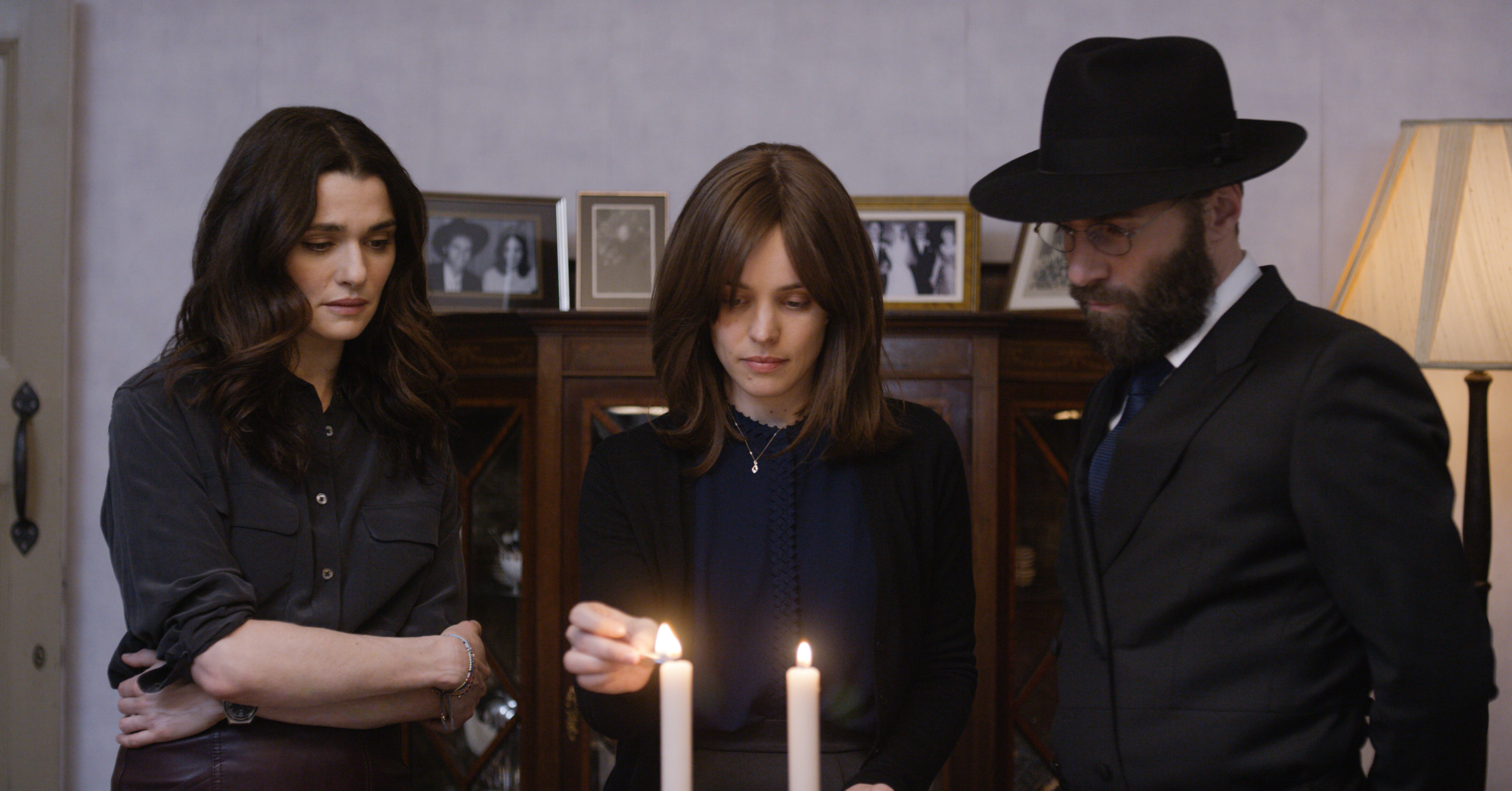
Ronit Krushka (Rachel Weisz), a talented photographer exiled in New York, learns of the death of her father, the rabbi of a large Orthodox Jewish community in London that Ronit has long since left behind. However, Ronit decides to return to England to pay tribute to her father. There she meets up with her childhood friends Esti (Rachel McAdams) and Dovid (Alessandro Nivola), who have since married. However, the community's welcome is cold, even icy, as they reject the New York rebel, blaming her for abandoning her father, the community's leading figure. Indeed, it was Esti who sent for her former friend in the hope of seeing her again and rekindling their old passion, never extinguished in the heart of the pious young woman.
The film by Chilean director Sebastián Lelio is inspired by the book of the same name by English novelist Naomi Alderman, who, like her protagonist, decided to break away from her family’s Orthodox Jewish faith. Ronit is quickly introduced to us as a rebel who doesn’t hesitate to talk back to her uncle or break the community’s dress codes and social norms. However, her temperament stems more from brazenness than from true defiance; the young woman, now in her late thirties, acts like a teenager seeking to assert herself. The woman who disobeys is Esti, defying religious and marital authority in search of her true self. It is therefore not Ronit who acts as an external disruptive force and corrupts the submissive woman, but rather the latter who wishes to rekindle her youthful love and create an opportunity to be herself.
The Price of Disobedience
The film opens with a speech by the rabbi on free will, which is unique to humans: angels, free from evil, follow God’s will, just as animals do nothing but heed their animal instincts. Humans, on the other hand, have a choice between good and evil. Esti, however, did not choose to be born into this community, which viewed her homosexuality as an evil to be cured. Ronit’s return evokes a sense of lost youth, of adolescence left unresolved. Both women behave out of sync with their feelings: they hide behind a wall to kiss, and revisit the places where their past story unfolded. But Esti realizes the absurdity of that love from long ago.
If the feature film doesn't descend into silliness, it's precisely because of the realism of each character's reactions: when Ronit suggests that her friend come with her to New York—which would have been the happy ending perfect—Esti refuses. This isn’t a passing infatuation, nor is it true love: the stakes are higher—it’s the struggle to be oneself, to be free to love whomever one chooses. A deep tenderness binds the two women; their relationship «feels authentic»—it isn’t overplayed; it’s natural. The viewer, immersed from the start in this isolated community, feels a return to reality when the two protagonists go to London. This trip puts their relationship into a new perspective.
The trio, once inseparable, falls apart for good when Esti confesses to her husband Dovid—who is in the running to succeed the late rabbi—that she kissed Ronit. We thus witness a double despair: that of a man betrayed by his wife and that of a rabbi who begins to doubt his faith. Set against a decidedly somber palette and accompanied by a surprising, even offbeat soundtrack—composed by English musician Matthew Herbert—the viewer is drawn into a rich and complex narrative where each theme is handled with sensitivity—and a touch of slowness. Sighs punctuate this deeply human story, which speaks of forbidden love, the search for freedom, and a return to one’s roots. Lovesong (1989) by The Cure, which Ronit and Esti listen to when they get together, sums it up perfectly Disobedience :
«Whenever I'm alone with you"
You make me feel like I'm home again
Whenever I'm alone with you
You make me feel like I'm young again
[...]
No matter how far away
I will always love you
No matter how long I stay
I will always love you
[...]
Whenever I'm alone with you
»You make me feel like I'm free again"
Write to the author : virginia.eufemi@leregardlibre.com
Photo credit: © Pathé Films
You'll also like


 French
  German
  English
Leave a comment