



«White Noise»: a lot of white noise for nothing?
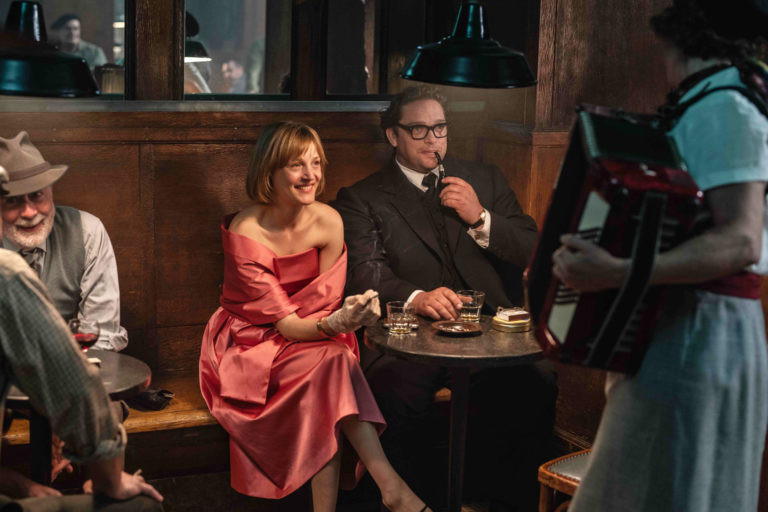
White Noise © Netflix
A leading director of so-called «independent» cinema in the United States, but also a screenwriter for Wes Anderson (Aquatic life, Fantastic Mr. Fox), Noah Baumbach collaborates once again with Netflix and Adam Driver. A first half-hearted adaptation.
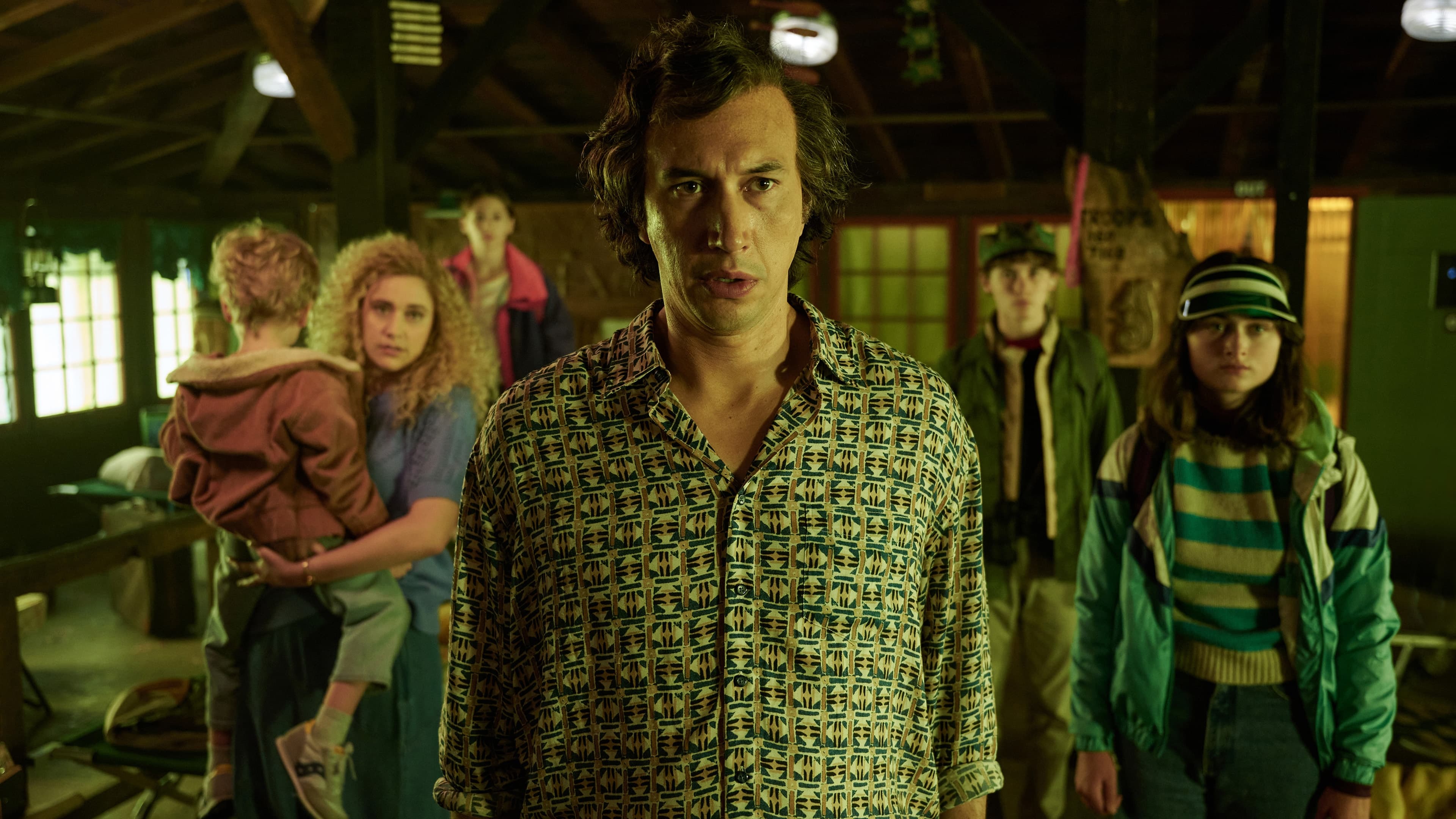
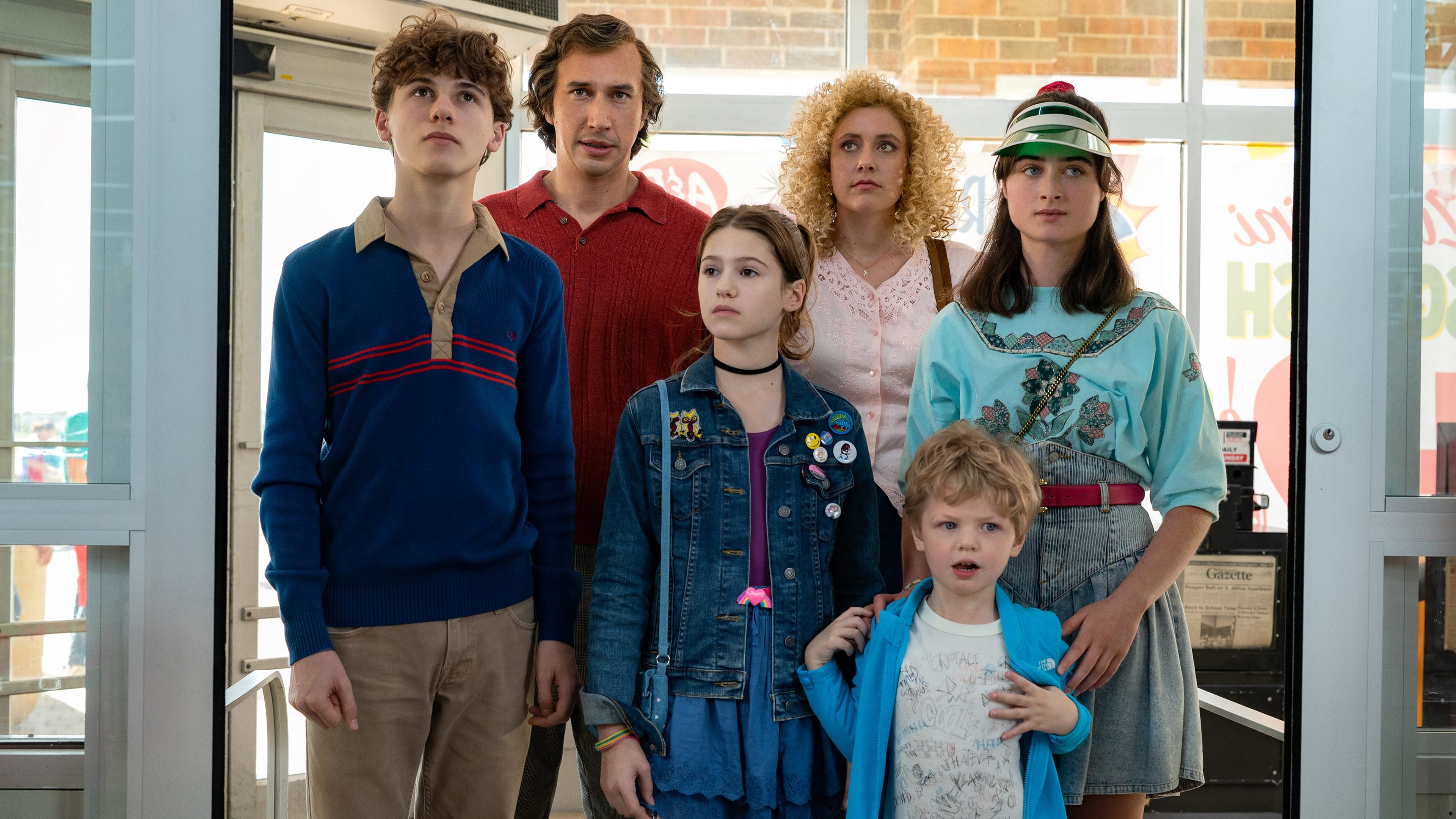
White Noise introduces us to the Gladneys, middle-class Midwesterners caught up in a social storm involving toxic clouds, drug addiction and conspiracy, among other things. The film mainly follows Jack (Adam Driver), the father, a professor of’Hitler studies (a discipline he instituted) at university, married to Babette (Greta Gerwig), his fourth wife, and their many children. One of Jack's main traits is his anxiety about death - his own in particular. The explosion of a chemical truck near his hometown plunges the family into an unprecedented crisis. road trip absurd and crazy.
Adaptation is not reason
White Noise is an adaptation of the novel Background noise by Don DeLillo, released in 1985. This information may seem insignificant, but it's not. In fact, this is the first time Baumbach has adapted a pre-existing work himself. And it shows. The film oozes literature and scholarly dialogue to the point of being barely digestible. Some of the stylistic effects and breaks in the written word just don't work in the cinematic medium. Halfway between theatrical adaptation and advertising pop 80’s, White Noise would have benefited from a lighter text and a more sophisticated staging.
The main problem lies in its inability to convey the complexity and humor of the original novel. You may find yourself smiling at a ridiculous situation (the final revelation), or even one that's downright zany (the Hitler-Elvis debate or the fact that Jack, given his field of study, doesn't speak German), but that's all the script has to offer. The novel was said to be unsuitable for the screen, and this may unfortunately be the case.
Theatrical (amphi)play
If the film struggles with its screenplay and direction, it makes up for it in the performance of its actors. Adam Driver (a little) and Greta Gerwig (especially) deliver a performance that's brilliantly accurate and, at times, brimming with contrasts. Behind her period perm, Gerwig shows that she's not only a talented director and screenwriter, but that she's also capable of displaying a range of emotions when it comes to moving from overworked housewife to anguished pill-popper every third shot. The children are also all fair in their interpretations, but the story unfortunately doesn't allow us to judge their performance fairly, as some are so far behind - and their mother's frequent mistakes when she calls them don't help to memorize them.
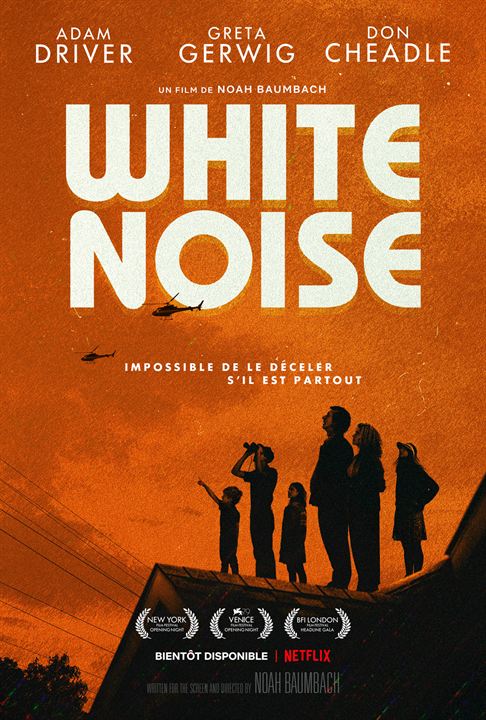
The cast also offers a nice array of secondary roles, including Don Cheadle, Jodie Turner-Smith and André 3000 as Jack's colleagues. However, these are so anecdotal that one wonders why the choice was made to cast well-known faces and treat them like the rest of the faculty: silhouettes in the background. Don Cheadle makes up for it somewhat as a professor of’contemporary studies trying to open a course on Elvis, only to be confronted by another teacher with the same idea. But it has to be said that, had he not been in the script, the film would have unfolded in the same way. This, unfortunately, is how you spot unnecessary roles in a cast.
The staging is too calm for the surrounding madness
In view of the story, we would have expected a fast-paced camerawork, a frantic pace, or even more editing. punchy. But it doesn't. No sooner does a scene with a frenzied crowd in the middle raise hopes of an awakening than the film immediately goes back to sleep. The filmmaker fails to bring his world to life, given that his previous film, Marriage Story (2019), although very «static» in its events, managed to captivate the viewer.
There are, however, a few passages that stand out. The film's final chapter, for example, offers a fine visual tribute to Brian De Palma (whom Baumbach knows well, having devoted a documentary to him in 2015). Another scene adds a surprising and welcome horrific dimension. However, these sequences are islands in a film shot on film in garish pastel colors.
The appearance of the end credits, which make no more sense than the rest of the White Noise, But with this new approach, which pushes the boundaries of nonsense even further, one wonders if we haven't witnessed an immense parody.
Write to the author: [email protected]
Photo credit: White Noise Netflix
You've just read an open-access article. Debates, analysis, cultural news: subscribe to support us and get access to all our content!
You'll also like

 French
  German
  English
Leave a comment