



The Valaisans, a people apart
I don’t want to offer my opinion on the Darbellay affair. I’ll simply note that the uproar surrounding this scandal, though widely covered in the Old Country, seems to have caused more of a stir among our neighbors, in the cantons of Vaud and Geneva. Perhaps because it does not concern us, perhaps because here there is no one to convince—the conservative leader’s view being universally held within his party and widely shared by the other right-wing parties, that is to say, by virtually the entire canton. If, however, we can truly speak of an “opinion”: it would in fact be better to speak of a custom—ancestral, religious, shared by all, believers and non-believers alike—like a sort of collective Valaisan unconscious.
In contrast to the anonymity of big cities, we provincials, accustomed to village life, view the family as a natural environment. Fortunately, our politicians’ mistresses aren’t going to change that. Besides, we’re not interested in the private lives of our elected officials, nor in adultery—and God knows it’s commonplace, perhaps even precisely a fortiori because it's commonplace. Everyone knows everyone else; we just have to deal with it, and anyway, we don't really care.
Here, then, is a paradigmatic example of the Valaisan mindset—one that explains, in fact, our indifference to the outside world, with all the negative—but also positive—consequences that this may entail. Due as much to our geographic location as to our late entry into modernity—but also to the perennial pattern of political tensions, which have changed little over the past two centuries—the Valaisan considers himself out of step with the rest of Switzerland, or at least with French-speaking Switzerland; in fact, he sees himself as a unique entity. And with a certain pride, at that. People call us the “Corsicans of Switzerland,” but I’d say we’re more like the “Sicilians.”.
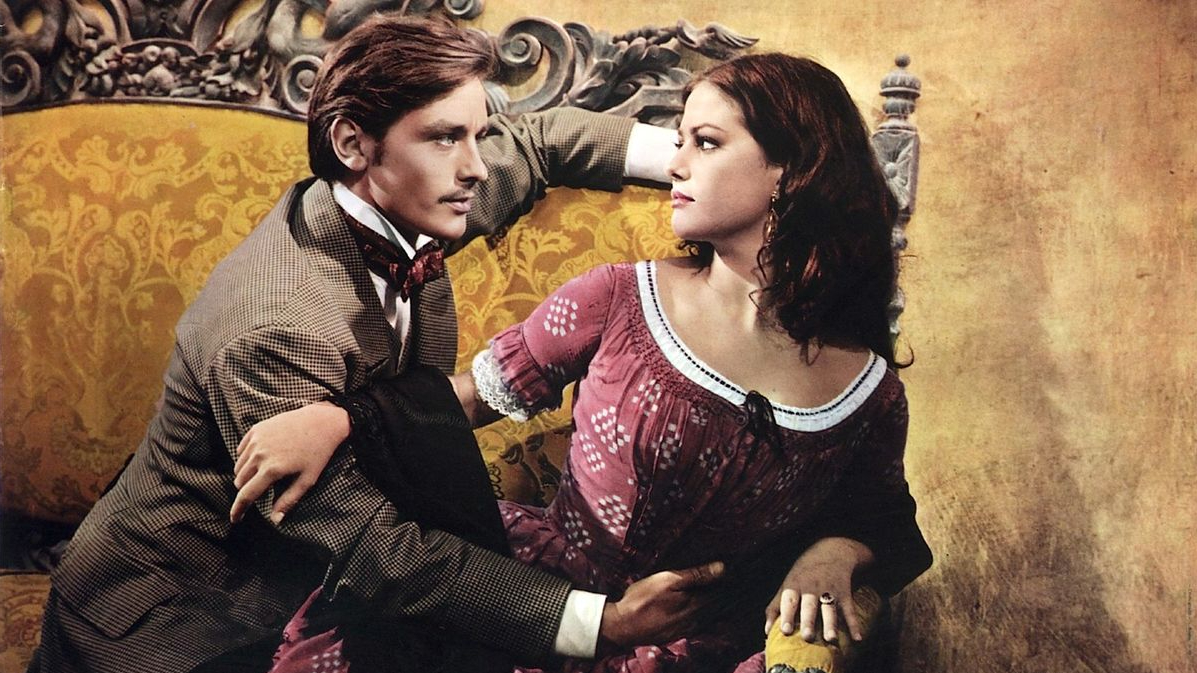
Without getting too carried away with romanticism, I’d like to draw a parallel with a movie I really like and which I have already discussed, The Cheetah, by Luchino Visconti. «We are old, very old. What we want is a long sleep from which no one can wake us. Our most intense longing is a longing for oblivion. A desire for voluptuous stillness.»
And speaking of the character of the people of Valais—like the Prince of Salina—we might rather say the character of Valais itself: «the atmosphere, the ruggedness of the landscapes,» the mountains, hunting, the vineyards—everything that keeps us rooted to our land, in fact, because it is everything to us, even today, from the plains to the ski resorts, and we cannot bear for anyone to tamper with it, especially not the rest of Switzerland.
And yet! As Don Fabrizio would say to his chaplain, who is allergic to gusts of wind, a little wind is necessary—otherwise, everything is just stagnation. So it happens in our story that we find ourselves facing urgent challenges that must be tackled. But aren’t these just passing waves, as quickly forgotten as they were necessary? Who today, looking out over the fertile Rhône plain, still thinks of Maurice Troillet, the great man who transformed swamps into orchards, built roads and the Great St. Bernard Tunnel, founded agricultural schools—so many reforms to bring the country into the modern age, but a modernity rooted in traditional peasantry? A modernity designed to combat modernity, in a way.
The frenzy for change that is sweeping our neighbors is just as harmful as blind conservatism—perhaps even more so—because we never know where we’re headed, whereas we always know where we are and where we’ve come from. But, you might ask, what does this have to do with Darbellay?
You'll also like



 French
  German
  English
Leave a comment