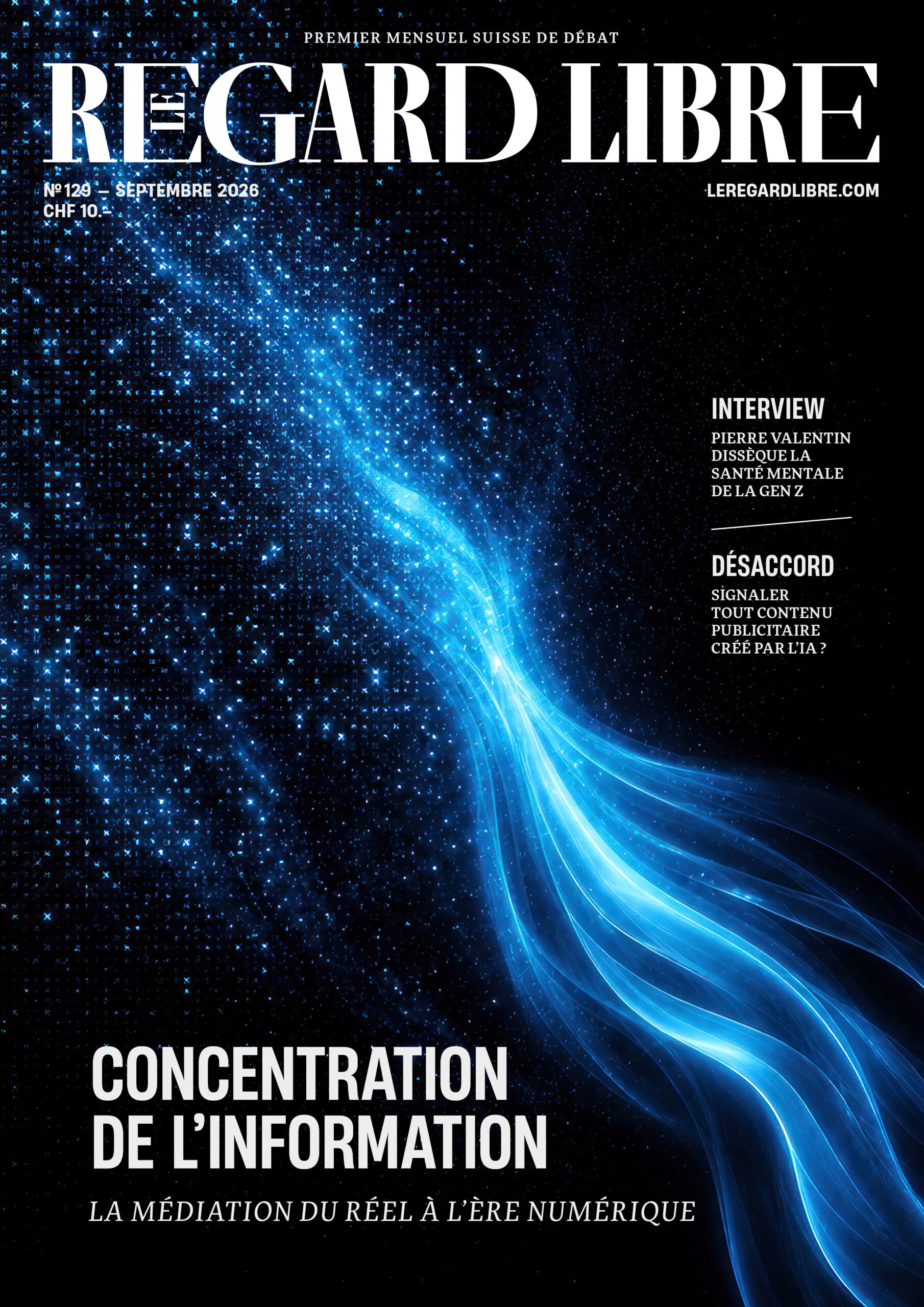




Should we flag any AI-generated visual advertising content?

Solange Ghernaouti and Jan De Schepper
New technologies are revolutionizing advertising. In New York, a new law requires that synthetic characters used in advertisements be identified. Should this requirement be extended to all visual content generated by artificial intelligence (AI)?
Solange Ghernaouti
Honorary Professor at the University of Lausanne,
cybersecurity and digital technology specialist
Yes. St. Thomas’s «I believe only what I see» no longer holds true in the age of generative AI. This principle is no longer sufficient to guarantee the physical reality of things or to attest to the truth. AI makes it possible to generate content to be seen, read, heard, and consumed. Whether aesthetic, realistic, plausible, or not, such content is created for specific purposes (advertising, entertainment, scams, etc.). It represents an algorithmic interpretation of the creators’ intentions, who—to elicit a reaction—may create content that is inauthentic but emotionally effective. Hence the importance of clearly labeling such content for its audience. Distinguishing truth from falsehood, recognizing a content creator’s ideological agenda, and detecting cognitive and kinesthetic manipulation all require a clear indication of the nature of the information being shared. This helps inspire the desire to make the necessary effort to reflect and make decisions in order to escape the confusion caused by information overload. Distinguishing between altered images and original or fake ones prevents us from falling into the trap of seeing only what we want to believe or what others want us to believe. This helps restore a measure of truth in a world that has legitimized falsehoods and “alternative facts,” amplified by the power of digital technology.
Jan De Schepper
CEO of the neobank Yuh,
President of the Swiss Advertisers Association
No. Such a requirement would be based on the wrong question. It is not the technology itself that should be regulated, but the risk of misleading the public. Advertising has always incorporated the innovations of its time: photography, digital retouching, computer-generated imagery, and special effects. AI is simply a new creative tool. Requiring a warning on every AI-generated visual would be like requiring a disclaimer for every retouched photo or every piece of software used by a graphic designer. However, when content depicts a person or event so realistically that it could mislead the public, transparency is essential. This is precisely the spirit of European legislation on AI, which targets «deepfakes» and content likely to be misleading, without requiring blanket labeling of all advertisements. Such a requirement would primarily create an additional administrative burden, undermine the aesthetic quality of campaigns, and stifle innovation without providing real protection for consumers. In Switzerland, the law against unfair competition already prohibits deceptive advertising practices. It is this requirement of fairness that must remain our guiding principle. Public trust is not built by increasing the number of mandatory disclosures. It rests on a simple principle: punish deception, not innovation.
Every month, our editor-in-chief Pablo Sánchez brings together two personalities at odds with each other, whether or not they are members of the editorial team. Regard Libre.
You have just read content published in our print edition (Le Regard Libre No. 129).
You'll also like




 French
  German
  English
Leave a comment