



The Importance of Urban Planning
Politicians, engineers, philosophers, scientists and policemen all play an important role in building a peaceful society. But there is one who is all too often forgotten: the town planner.
A city deserves its own science and its own philosophy. It takes someone to conceive of it, to give it significance. Every community—from a small town to a metropolis, including provincial cities—is a city, and therefore has an influence on its citizens, their behavior, and their destiny.
The issue of Paris’s suburbs, for example, has been raised time and again: how can we end up in a situation where, in certain cities—and not necessarily large ones—entire neighborhoods are inhabited by a foreign community that speaks its own language and operates autonomously? And where, often—far too often—insecurity is the norm?
A Vision for the City
This is, of course, first and foremost a political issue, linked to questions of unemployment and social mobility, but also to immigration and identity. But it is also an issue that concerns urban planners. The development of the suburbs is part of a certain vision of the city, and the desire—for example—to revitalize certain areas and to continually blend different «worlds» may be a solution.
That said, there’s no need to bring up the issue of communitarianism. We need only consider the feelings we experience when strolling through a city to realize just how essential its design is. This experience applies just as much to one’s own city as it does to a foreign one.
Moods
In fact, art has long sought to express the connections between the external landscape and a person’s inner landscape. Eighteenth-century poetryth and XIXth Centuries bear witness to this. But there is an equally fascinating field of research—one that Baudelaire, incidentally, had explored in his own (sublime) way—namely, the connection between the city and the feelings of those who live there.
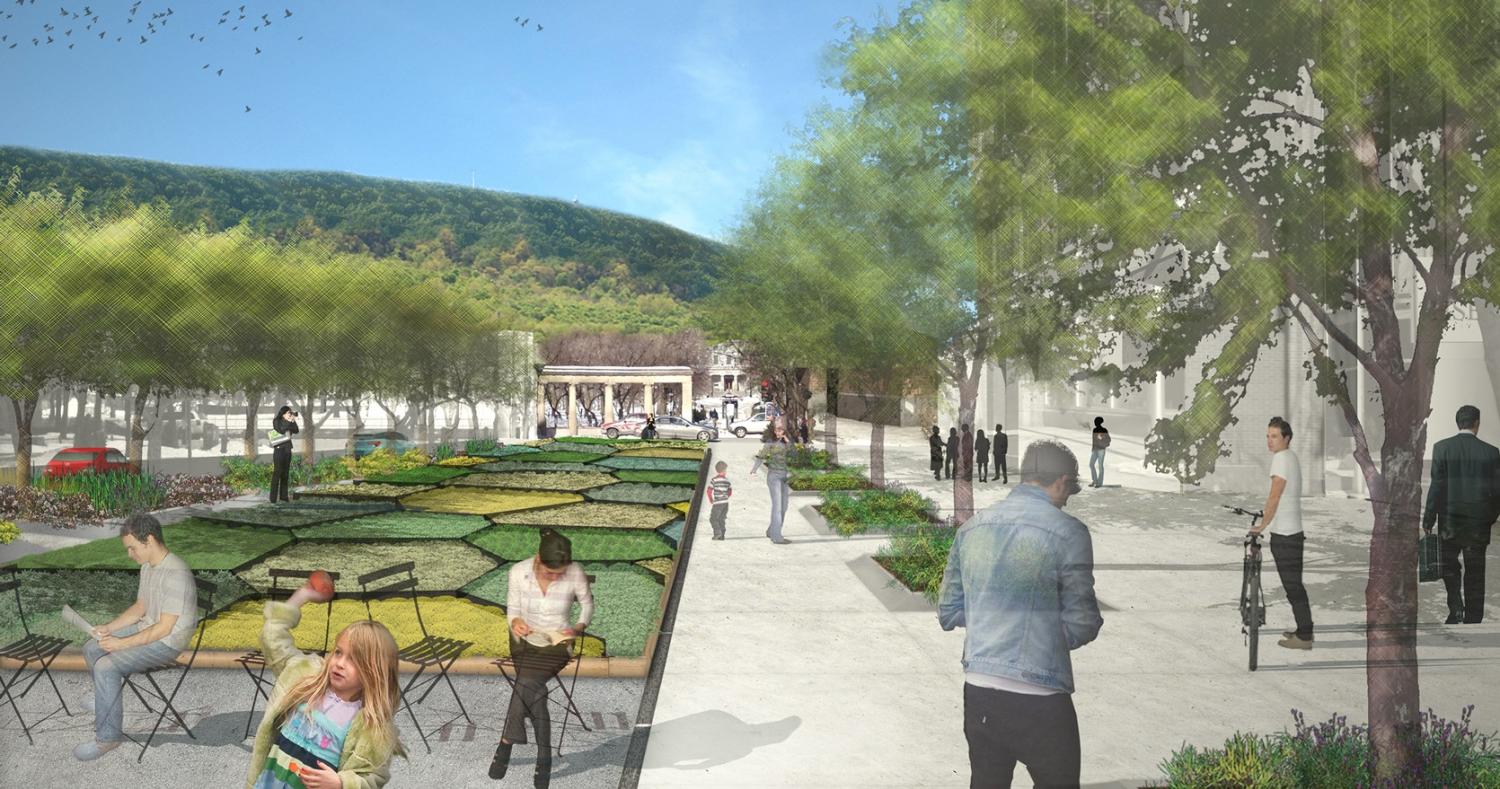
Therefore, we can surely all agree that the presence of some vegetation allows the body and soul to breathe—something that an «all-concrete» environment simply cannot accommodate. Just as a certain street layout provides a logical framework for what a priori couldn't have any. And that's no small thing.
The actions, thoughts, and encounters we experience in the city are set against a backdrop, an atmosphere, and sounds. I’d even go a step further: within an urban planning framework. Perhaps this field—and the legitimacy we grant it—can help solve urban challenges related to noise, mobility, and the coexistence of diverse cultures. Major challenges of the 21stth century.
Write to the author: [email protected]
Photo credit: © City of Montreal
You have just read an open-access article from the Regard Libre No. 33 (November 2017). Debates, analysis, cultural news: subscribe Subscribe to our thought-provoking media outlet to support us and get access to all our latest content!

You'll also like




 French
  German
  English
Leave a comment