




Federalism and capitalism: the story of a misunderstanding
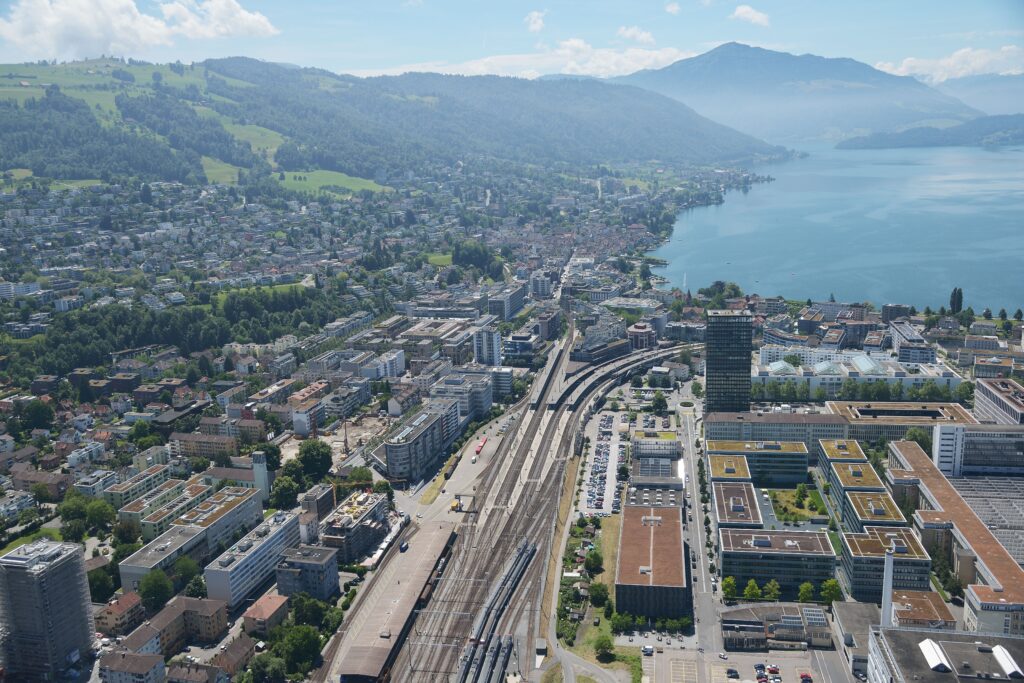
Switzerland is a paradigmatic example of the tension that has gradually developed between federalism and capitalism.
Liberals have long been reticent about the federalist idea. But the development of their conservative wing prompted them to reconsider their position. Today, federalism is seen by liberals as a pillar of the Swiss entrepreneurial spirit.
At first glance, the concepts of economics and federalism have little in common. They seem to sail in their own spheres, and for a long time may have appeared, at best, as rubbish for each other. Federalism, with its natural propensity for small, compartmentalized structures, was seen as an obstacle by the booming capitalist economy of the 19th century.th century. Indeed, with its almost deified borders, wasn't federalism the reflection of a narrow worldview, doomed to deadly protectionism? Conversely, capitalism, with its thirst for space, was destined to embrace a world without asperity or frontiers, abrading differences in favor of a harmonization that would favour in fine the smooth flow of products designed for the widest possible consumption.
Read also | Entrepreneurial desertion of parliamentary chambers
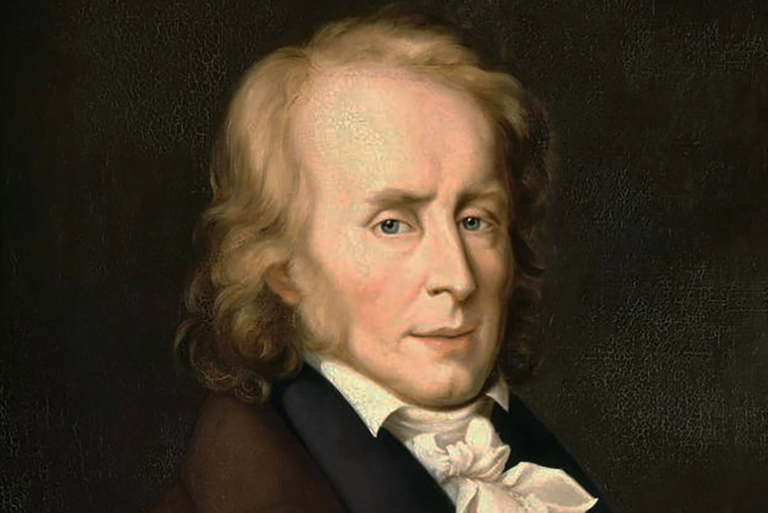
Switzerland is a paradigmatic example of the tension that has gradually developed between federalism and capitalism. First and foremost, the teachings of Benjamin Constant dominate, for whom the federalist idea, so cultivated in his homeland, merely reproduces the fragmented society of the Ancien Régime. Fitting the individual into boxes designed by providence, federalism was the antithesis of the equal rights postulated by liberalism. Adherents of a so-called «Manchesterian» liberalism, numerous in the Federal Parliament since the birth of modern Switzerland, repeat this discourse at leisure. Enthusiastic advocates of the «Common Market» established by the 1848 Constitution, they dream of the most centralized Confederation possible, purged of its internal borders which would hinder both the movement of goods between cantons and the mobility of people.
Driven by this vision of a Switzerland emptied of its cantonal «sovereignism», these liberals argued, as early as the 1860s, for a transformation of the Swiss institutions adopted in 1848 in the direction of greater centralization of the country. Wasn't the railroad developing at high speed? Is it still conceivable, in a context of shrinking distances, to conceive of a country whose legal orders change every dozen kilometers?
Supported by the Swiss Society of Jurists and the military, but above all by their Democratic opponents - the left wing of the ruling Radical Party, which demanded centralization of Switzerland compensated by increased power for the people through legislative referendums - the «ultra»-liberals in the Chambers obtained a revision of the Constitution in 1870: all liberals, even those from federalist cantons like Vaud, called for centralization, in the name of the fluidity of trade within the country.
The emergence of conservative liberalism
The revision of the Constitution accepted in April 1874, after failure two years earlier because the draft then under discussion had been judged too centralizing, effectively unified many areas of private law and introduced the referendum into the Swiss institutional order. The marriage of the country's liberals to the idea of centralization was not to last, however.
With the changes undergone by capitalism from the 1870s onwards, and the parallel rise of the workers' movement, liberalism split into two categories. On the one hand, the radicals in power were tempted to frame economic liberalism with a network of social insurance schemes, in order to block the rise of socialism. For them, the State had a role to play as a counterweight to a freedom whose possible excesses were recognized. On the other hand, the branch of liberalism that had already taken on more conservative traits from the 1840s onwards, accentuated its turn towards an ever stronger critique of capitalist modernity, to which it retained only its faith in individual freedom.
Read also | Who runs Switzerland? Not the lobbies, the people
This current of liberalism, hostile to radicalism and its «statist» liberalism, adopts a two-part discourse. On the one hand, it is sensitive to the damage inflicted by capitalism on nature and landscapes, the very face of the nation. On the other, he now clearly identifies with federalism, which he sees as the only conceivable barrier against the statist expansion visible at federal level. Instead of a federal state weighed down by an ever-expanding bureaucracy, and driven by centralist tendencies that the radicals were accused of encouraging, he preferred the cantonal state. Admittedly not free of cumbersome bureaucracy, the latter remains less harmful thanks to its small size and respect for local identities, which it defends against the prescriptive thrust of a federal Bern whose appetites are deemed insatiable.
This liberalism, which attempted to reconcile a love of freedom with conservative aspirations, went even further in the aftermath of the First World War, when, after some hesitation, it decided to incorporate the corporatist idea into its philosophy. In vogue in Catholic circles since the 1880s, but especially since the publication by Pope Pius IX of the encyclical Quadragesimo Anno in 1931, this text advocates collaboration between bosses and workers as a response to the class struggle and revolution that socialism has painted in red letters on its banners. Not dreaming of a restoration of medieval guilds and jurands, the conservatives of the '30s saw in this doctrine not only a solution to recurring labor disputes on building sites and in factories, but also a means of supporting private initiative against statism, erected as the supreme enemy of freedom.
Corporatism and liberalism
Yet corporatism is not liberal: while it is anti-statist and devoted to the federalist ideal, it is fundamentally critical of liberalism, which it considers outdated, and of capitalism, which it wants to control tightly, notably by restricting the freedom of trade and industry. The Radicals made no mistake, believing that corporatism could only be put into practice in authoritarian regimes, as they saw demonstrated by the model put in place by Mussolini, to which the corporatists of French-speaking Switzerland, whether Catholic or Protestant, made the fatal mistake of regularly referring.
In fact, corporatism failed - not to mention being recuperated by fascism - through its inability to justify its fight against statism without the help of... the State, which was called upon to give force of law to decisions taken jointly by trade guilds. If, like the anarchist philosopher Proudhon, corporatists sang the virtues of private property as a shield against state intrusion, they failed to grasp that freedom is nothing without its economic component.
Read also | Militia spirit, federalism and direct democracy are one and the same
But doesn't this detour via the conservative and corporatist seductions to which some liberals succumbed at least reveal that federalism actually belongs to a well-understood economic freedom? Doesn't the anti-statism it promulgates form part of liberalism's ongoing battle against the avalanche of regulation, which can only have its source in the powers constantly delegated to the State and its administration? While federalism is likely to erect barriers that may displease an anti-protectionist liberalism, doesn't it offer, in exchange, an institutional architecture that fosters freedom of initiative, allows for competition between models, and is sheltered from large, potentially stifling structures? In short, isn't the federalist framework the guarantor of freedom? The anti-federalism of nineteenth-century liberalsth century, sometimes taken up by certain modern liberals in the following century, isn't it all a misunderstanding?
It's true that this misunderstanding is tending to be cleared up, but this fact is relatively recent, and not without ambiguity. This aggiornamento could it have been driven by the fusion between the «statist» liberalism of the radicals and conservative liberalism, which was admittedly anti-statist but not unaware of the inescapable necessity of the idea of the State? Didn't Benjamin Constant mark the difference between these two approaches very early on in his career as a liberal thinker, when he was translating the Englishman William Godwin, one of the spiritual fathers of philosophical anarchism? According to Constant, liberalism had to guard against any anarchist temptation, even if it meant reintegrating a state as minimal as possible into its mental horizon. But this federalist appropriation by today's liberalism should be more straightforward, as Helvetian-style capitalism has long since absorbed its nourishing principles. As its industrial history shows.
Federalism, the pillar of liberalism
Unlike France and Germany, Swiss industry took off in the first half of the 19th century.th century was not built around large mining basins, leading to the high concentrations of workers that Emile Zola made famous with Germinal. To begin with, it is extremely scattered in remote valleys or in Alpine cantons such as Glarus. This is not to say that Switzerland is devoid of large-scale companies: by the end of the century, the cities of Zurich and Winterthur would be home to some eminent ones. But the vitality of Swiss industry is ensured by small and medium-sized companies scattered throughout the country. There were two reasons for this dispersion: to escape the regulations that restricted private initiative in several large cities, heirs to the guilds of yesteryear, and to be closer to energy resources, especially water. This kind of economic federalism contributed to the rapid progress of the Swiss economy, in conjunction with other features of its institutions.
There can be no successful economy without strong private initiative and a sense of responsibility. These qualities demand flexibility, agility and adaptability. These virtues find their natural anchorage in reasonably-sized, autonomous structures - the very spirit of the institutional federalism we know. And the alleged costs of federalism, brandished by its opponents, had already been strongly questioned by Proudhon...
Read also | Democracy and its enemies
Together with direct democracy and the militia system, federalism is one of the pillars of the Swiss system, where individual freedom can truly flourish. The three form a whole. The advocates of a liberal economy have understood this well, as shown by the book recently published by Avenir Suisse, Antifragile Switzerland, which places federalism and the «militia» among the main factors behind the extraordinary resilience and innovation displayed to date by our country's economy. Free trade need not fear borders when they are conceived within a federalist framework: as bridges structuring space, not as impassable walls.
Olivier Meuwly is a historian, specializing in 19th century. He is the author of numerous essays on direct democracy, liberalism and Swiss political parties.
You have just read an open-access article from our print edition (Le Regard Libre special issue N°7). Debates, analyses, cultural news: subscribe to support us and access all our content.

Jürg Müller, Christoph
Eisenring and
Patrick Leisibach
Antifragile Switzerland
November 2025
Versus Verlag / Avenir Suisse
224 pages

You'll also like



 French
  German
  English
Leave a comment