Illiberalism has established itself as one of the most widely used concepts for thinking about the mutations of the Western right. In a recently published essay, Raphaël Demias-Morisset attempts to trace its intellectual contours and the political traditions it claims to encompass.
Liberalism had the opportunity to govern alone between 1830 and 1835. Its distrust of the state prevented it from continuing the experiment. Since then, to maintain its influence, it has had to form alliances. But with whom?
Liberals have long been reticent about the federalist idea. But the development of their conservative wing prompted them to reconsider their position. Today, federalism is seen by liberals as a pillar of the Swiss entrepreneurial spirit.
Since the French Revolution, democracy has often been contested in its representative form, and has never completely erased the authoritarian aspirations of certain schools of thought. Yet direct democracy has not escaped criticism.
While Switzerland borrowed its federalist system from the USA, the growth of direct democracy across the Atlantic was stimulated by the Swiss model. This is the story of the common destiny of these two countries, which was not only played out in their capitals.
Switzerland doesn't like heroes, especially its own. That's not a problem in itself. Unless, that is, it removes the individual from history, at the risk of rendering it unintelligible. In this sense, Switzerland would do well to reappropriate its great figures.
Major entrepreneurs played a direct role in building the federal state born in 1848. These economic figures subsequently became rarer, often giving way to the leaders of employers' associations. An evolution that has left its mark.
Accused since Rousseau of sullying the mechanisms of genuine democracy, pressure groups are nonetheless an essential cog in the wheel. Seated among the «intermediary bodies» dear to Tocqueville, they enable opinions to be forged.
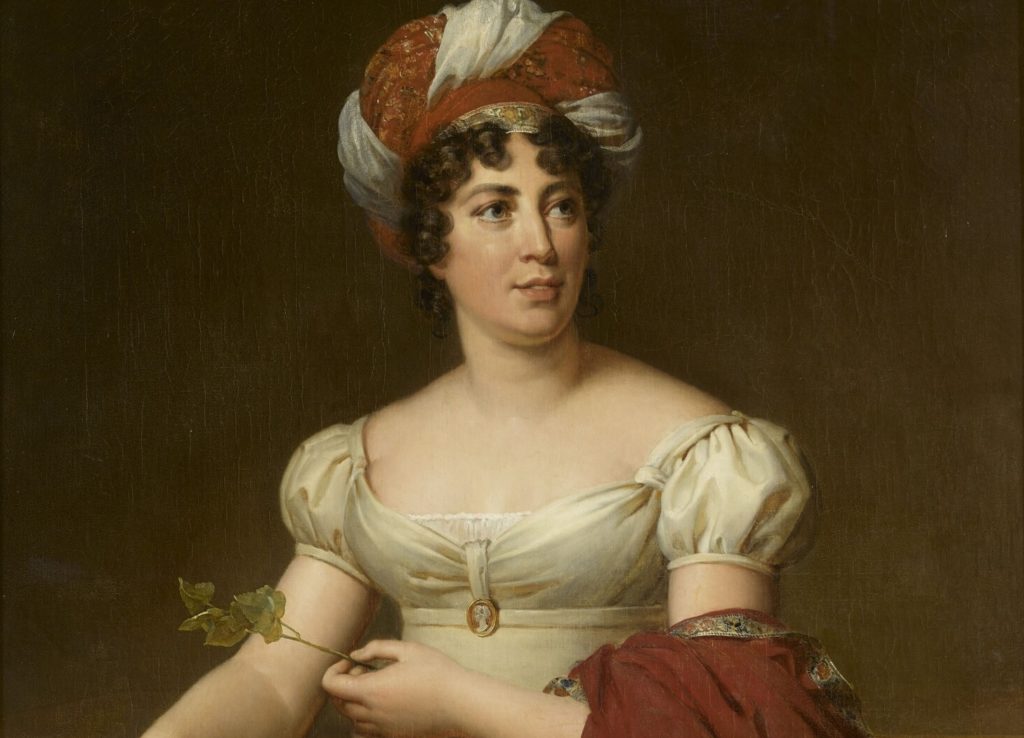
As a daughter of the Enlightenment, Germaine de Staël naturally embraced the liberal discourse. But she developed it by associating it with the idea of the nation, a reflection of the Romanticism of the time, which liberalism had come to tame with the concept of the nation-state.









 French
  German
  English