




Between laughter and delirium, the path of «Punk Samurai».»
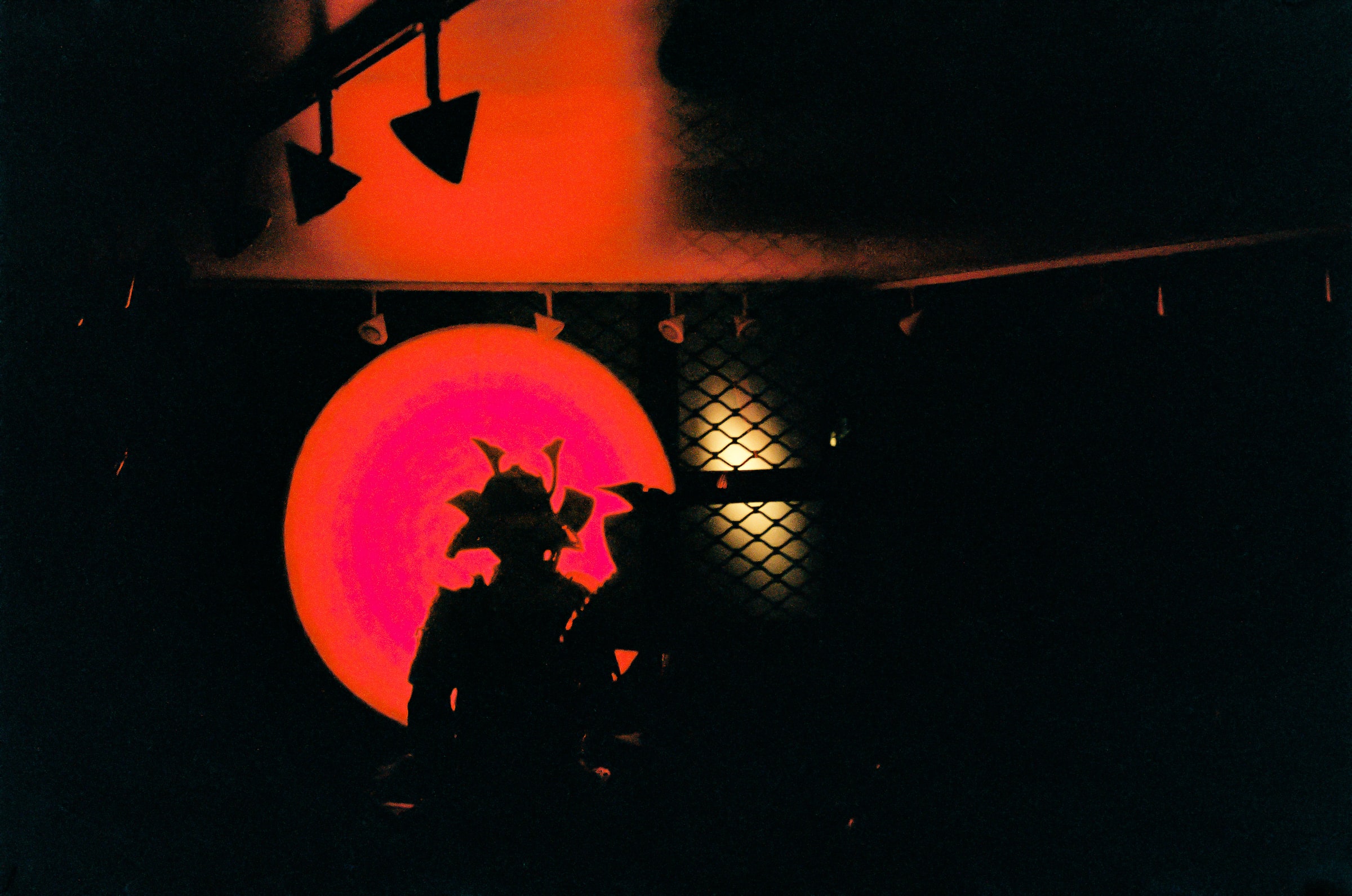
Tuesday books - Ivan Garcia
Ko Machida takes us on the trail of a masterless samurai with questionable morals, embroiled in a struggle against a cult of his own making. A cross between a cloak-and-dagger story and a medieval farce, Punk Samurai is a kaleidoscopic novel that's a delight to read.
The story we’ll be covering today takes place in the Land of the Rising Sun, at a time when samurai still existed and, through a strange twist of fate, spoke almost like us, using terms like «fake news,» «restructuring,» and «killing off»… Punk Samurai (…Râââh, I'm dying…) is a wonderful, zany comedy that follows a group of eccentrics trying to save their estate from a cult with some very strange customs. A story brimming with originality and humor.
Samurai Seeks Work
Kakari Jûnoshin, a rônin (a masterless samurai, or an «unemployed samurai,» if you prefer), possesses superhuman skill with the sword. At the beginning of the story, for some unknown reason, he kills an old man who was innocently strolling with his blind daughter. The public is stunned. Faced with this situation, Nagaoka Shume, a samurai in the service of the Kuroae fief, questions him about the murder. To avoid a fight, Kakari comes up with a far-fetched theory: the old man was dangerous. He was a member of the «Epigastric Agitators» sect, a group of dangerous fanatics who shake their bellies and cause countless public disturbances. Frightened and fearing for his fief, Shume asks Kakari to help him protect the domain from this group. What started out as nothing more than a lazy samurai’s fabrication ends up becoming all too real: the «Epigastric Agitators» soon make their presence known and turn the estate upside down… The hero and his companions will therefore have to do everything in their power to repel these dangerous religious fanatics.
In Japanese history, «bushido» is the moral and ethical code to which samurai are bound. A samurai without a master is called a «ronin.» He is a sort of outcast. In the Japanese imagination, the samurai is somewhat equivalent to our Western knight. So what could be more noble and classy than a samurai? But here’s the thing: the hero of Punk Samurai (…Râââh, I'm dying…) doesn't really seem cut out for the job: Kakari Jûnoshin is a rônin; he lost his job and is looking for another one. Also, since he needs money, as soon as the opportunity arises, he doesn’t hesitate to sell his services and pass himself off as a so-called expert on «Epigastric Agitators.» A shrewd salesman, he’ll do anything to protect his own life and convince those he’s dealing with that he can be of use to them. Thus, he finds himself hired by Naitō Tatewaki, «First Advisor to the Council of Elders of the Kuroae fief,» who—knowing full well that Kakari is lying—hopes to use him to annoy his rival, Second Advisor Ōura Shuzen. This will be the source of many complications.
A carnivalesque style of writing
Translated by Editions Actes Sud, this story by Ko Machida—a Japanese author of prose and poetry, as well as a rock singer—is a strange oddity. First, in terms of the story: it features samurai and a cult with a zany ideology—according to the «Agitators of the Epigastrium,» the world is the stomach of a tapeworm, and by stirring its epigastrium, we should induce indigestion in it so that it will loathe us «outside the tapeworm-world» and thus attain Reality. Add to that ropes falling from the sky, spy stories, beings with supernatural powers, and even a talking monkey… As you can see, Ko Machida’s work is a joyful feast to which whimsical inventions are invited. The whole thing is spiced up with references to popular culture, including nods to songs by Bob Marley and Frank Zappa. It’s a sort of cross between the works of Borges, television, and manga. In this regard, readers will particularly appreciate the inventiveness of the sword attacks, such as «Winnie the Pooh is drunk, looking for a fight, and punches.».
In various descriptions, the story seems to draw inspiration from movie scenarios, such as the scene where the group of heroes finishes eating at a cheap diner before heading to a preacher’s house, toothpick in mouth, or when Kakari walks into a tavern and asks, «Something to eat and drink.» The characters seem to be aware that they are part of a fictional story, which brings the narrative to life and, above all, makes it funnier—because, let’s face it, you’ll laugh a lot while reading this engaging story. As for the cast, the characters—and there are plenty of them—are memorable and well-developed, whether it’s the spy Konji, the dim-witted Osamu with superpowers, or the former gluttonous preacher Chayama Hanrô…
Read also | Kill Bill, Quentin Tarantino's Japanese-inspired works
This long story (over 300 pages) has no chapters, so you dive into it «in one sitting,» as they say. While reading, one takes little breaks «here and there» to savor the funny scenes described. Although the «Agitateurs de l’Epigastre» describe the world as artificial, the reader of Punk Samurai will enjoy «this work of fiction»—entirely fabricated by the Japanese writer—which weaves together a maelstrom of elements in this carnivalesque tale.
In the spirit of Carnival, what’s up is down and vice versa. The same goes for this story, in which the picaresque hero literally «turns» every situation on its head—to the point of causing monumental chaos. Unable to follow the path of bushido, Kakari Jûnoshin finds his own new path throughout the novel, amid laughter and madness: that of the punk samurai.
«—Ron. This world may be an illusion, as Chayama Hanrô says. Well, that’s very likely, I suppose. But that’s how I live my life. I’ve never belonged to any organization, any structure, or any society. I’ve always lived on my own. And I’ll continue to do so from now on. I have no choice. The guys at the Kuroae estate—if they knew the world they live in is an illusion, I imagine they wouldn’t be able to go on living. I’m not like them. I wonder about the very foundations of this world. I don’t give a damn about the world. Whether this world is an illusion or fiction, I’ll survive. Ron. I’m a punk samurai.»
Write to the author: [email protected]
Photo Credit: © Photo by Barthelemy de Mazenod on Unsplash

Ko Machida
Punk Samurai
(…Aaaah, I'm dying…)
Translated from Japanese by Patrick Honnoré
Actes Sud Publishing
2021
396 pages

You'll also like





 French
  German
  English
Leave a comment