



«La couleuvre qui se mordait la queue» (The snake that bit its tail), poetry that plays and surprises

Les lettres romandes du mardi - Loris S. Musumeci
A little poetry for today. No singing classics the long sobs of violins in a world where all is order and beauty, luxury, calm and pleasure. But light, local poetry from a simple man who works in the social sector: Pierre-André Milhit. Without pretension, the Valaisan author delivers to his few readers a short work that rings the bells of humor, in a peasant context, where wine and the beast make up daily life.
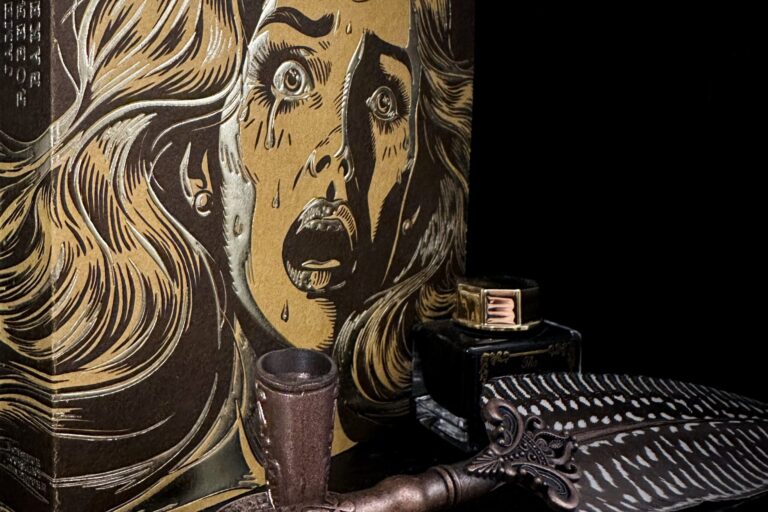
The snake biting its own tail at first glance, gives the impression of having succumbed to a deception. The book is slim; the cover, off-white on a rough, typed paper; the font, sober; the whole, elegant. Editions d'autre part has certainly succeeded. And yet, just a few pages into the book, the first poem appears, covering not half, not a quarter and not an eighth of the page. A first poem proudly displaying itself in two words: «je dis» («I say»). My goodness! And the title: «2». Is it too complicated to start a first poem with "1"? If the so-called poet wants to save himself the trouble of finding titles, let him at least put the numbers in order.
Fortunately, the next page has more content and the reader is obviously reassured; three words «absolutely I scream». Guess the title: «3». The situation: we're on page 10 of the book and we've only read five words. Noble and evocative as they are, that's not enough after having paid twenty-three precious Swiss francs. So what's to be done? Throw the book on the floor, grumbling and bitterly criticizing contemporary poetry and Swiss authors? Take the book back to the bookshop, pretending to an innocent-looking saleswoman that you've got the wrong book? Or continue?
Since there's an article, there's finally been a reading, accompanied by a few pleasant surprises. Pierre-André Milhit continues to title his poems with numbers, and now a coherent pattern emerges. Not only do the numbers progress in ascending order up to the middle of the book, they also indicate the number of words in the poem. This shows that we're dealing with a playful author. What's more, his game doesn't stop at the structure of the palindrome. He plays with words, rhythms and sounds to make them say what he sees around him.
The countryside, the birds, the village, the priests and the vines. All the poems revolve around these elements, sometimes using humor, even mockery, sometimes sensuality and even deep sensitivity. «Wine / that sweat of lime / slaps on the tongue / like a Cossack's whip / fantasy settles / at the bottom of the glass». Free verse, it goes without saying; but verse that reveals an experience of the earth and of reality, and that is like an echo of our own experiences, buried in the senses. «Wine clatters on the tongue», it's true.
Apart from the somewhat gratuitous and dirty provocative verses such as «a duck from the pond comes to bribe the rooster from the bell tower / the sacristan is moved and makes her eucharist / I masturbate the sky to drink the milk of the stars», the poet will dig more tragic emotions into his reader's belly with moving and magnificent words: «the silt is impregnated with the sorrow of men / the epidemics / the wars / the harvests wiped out by hail / the stolen herd / the death of the youngest / the father's accident».
Pierre-André Milhit may not even think of himself as a poet. He's a simple man who plays with words and enjoys sharing his hobby. Nevertheless, his work is not only worthy of reading; it deserves to be heard, as the sometimes jazzy, sometimes folkloric music that accompanies it is so pleasant and soft to the ear. To take us into the nature of the villages that surround us and rediscover the subtlety of the senses.
Write to the author : [email protected]
Crédit photo : © Editions d’autre part
The snake biting its own tail
Pierre-André Milhit
Editions d’autre part
119 pages
You'll also like




 French
  German
  English
Leave a comment