



L'écho des voix retrouvées «Des sirènes» by Colombe Boncenne

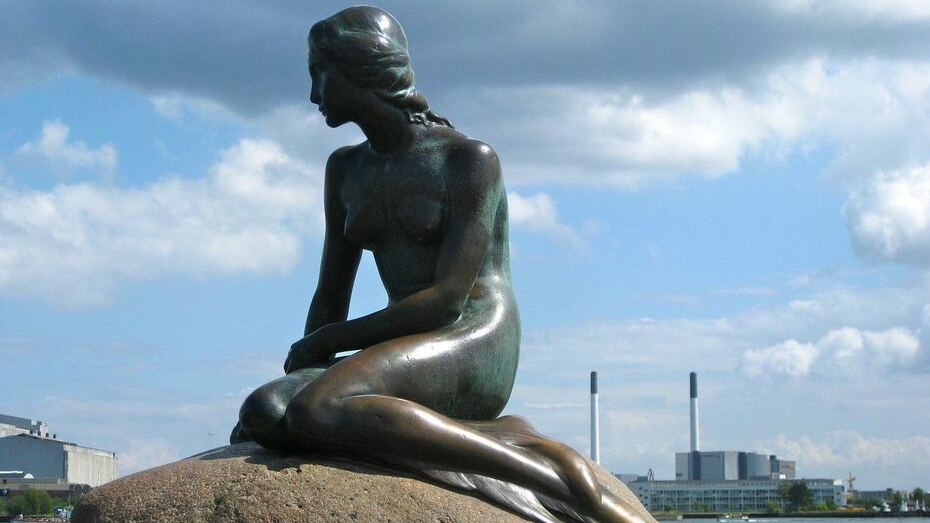
The Little Mermaid by sculptor Edvard Eriksen in Copenhagen © Pexels
Tuesday books - Aude Robert-Tissot
Colombe Boncenne takes us from the touching proximity of a hospital room to a small apartment where a young documentary filmmaker takes in her ailing mother. Gradually, like the echo of a siren's song, the scenery expands from distant memories of vacations and assaults to the dark landscape of a heavy family secret. A trauma that bumps up against the wall of the heroine's story. The echo then turns against the heroine, forcing her into silence, until she encounters mermaids who join her in song.
One morning in March, during a stay in Copenhagen - in the land of The Little Mermaid - my path crossed that of a Danish woman. She approached me in very broken French and seemed intrigued by my reading of the Sirens by Colombe Boncenne. We've only been speaking Franglais for a few minutes, so I'm surprised when she asks me if I'm a feminist. I reply, taken aback by such a question, especially out of context, and when I ask her why, she glances at my book and replies: «les sirènes».
Mermaids and feminism
What's the link between mermaids and feminism? Was she referring to The Little Mermaid? I came away from this brief encounter full of questions. I felt that something had happened between this woman and me. A kind of underground solidarity. It was as if she'd breathed something strong into me, without saying anything.
So much the worse if softness is a term too often used to talk about a woman's work. For it is with gentleness that Colombe Boncenne takes us into the life of a radio documentary-maker and her cancer-stricken mother. She gently takes us into the wake of secrecy, abuse and the spell that seems to have fallen on this family, as on so many others. The reader discovers an island that has been submerged for too long, but which resurfaces thanks to the ways of the sirens.
A feeling you can no longer wear
It's not about women fighting men, nor is it a manifesto of any kind. It's the ordinary story of a woman used to telling stories, who finds herself telling her own. A powerful, guilt-free echo, because it's no longer a feeling to be carried around. Voices have been set free, and this book is proof of that. Even if the path remains winding, literature can only help us along it, supported by finely crafted phrasing and narration like that of Colombe Boncenne.
«I was stirring my spoon in my cup without realizing it. Selma put her hand on mine, to stop the movement. Doesn't that make you angry? I couldn't quite see what she meant. I felt drained by what I'd just said and terrified by the fact that it still terrified me. I was afraid, yes, but nothing to do with anger.
You should be furious.
Against whom?Against them. Your attackers and the others.
I realized that I'd never really thought in those terms. I hated myself, I resented myself and I feared these men.
I was ashamed of it all.
I think you should join us.
I beg your pardon?
We must restore dignity to your words and your body, to our words and our bodies. We must reverse the forces. You're part of our troupe.
What are you talking about Selma?
About us. We intervene everywhere without any action being claimed, we are innumerable and unnamed, we don't meet, we find each other.»
Write to the author: [email protected]
Header image: Statue by sculptor Edvard Eriksen in Copenhagen. The Little Mermaid is inspired by a character from the fairy tale by Danish poet and author Hans Christian Andersen. Credit: © Pexels

Colombe Bocenne
Mermaids
Editions Zoé
2022
208 pages
You'll also like




 French
  German
  English
Leave a comment