




«The girl who loved trees», a call to put down roots
DR
Hope Jahren delivers a veritable declaration of love to science and trees in this autobiographical account, which has the «precision of a poet and the imagination of a scientist», according to the New York Times.
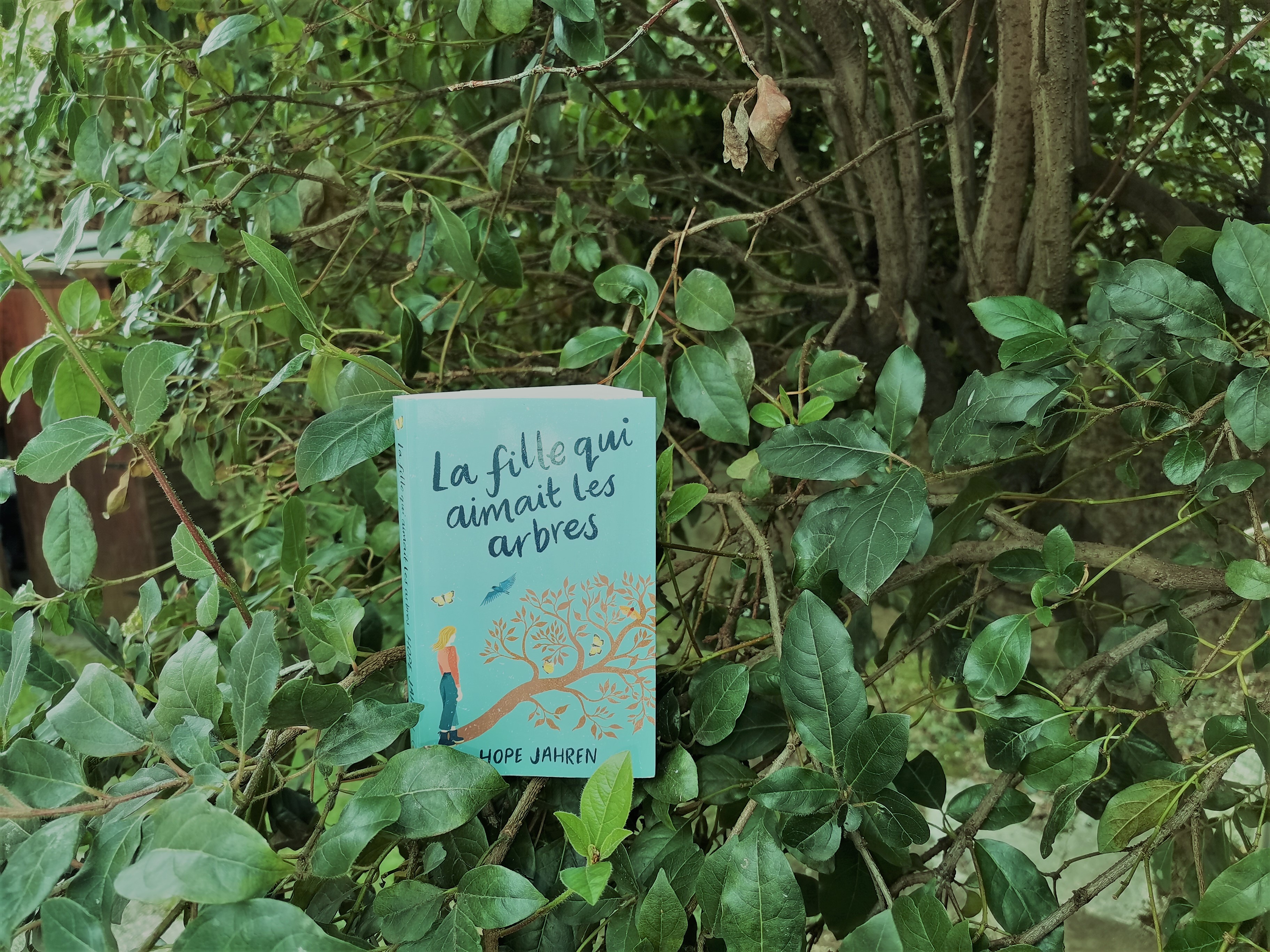
Once upon a time, there was a girl who loved science and trees. That’s how this autobiographical story by American researcher Hope Jahren might begin. Her book, titled Lab Girl The first French edition will be published on March 30 in paperback by Éditions Quanto, an imprint of Presses polytechniques et universitaires romandes.
For a book that blends memoir and popular science, this work—which has already been translated into 23 languages—has enjoyed unexpected success. This has allowed the geobiologist to make the bestseller list of the New York Times. She has thus joined the very exclusive club of the world's most influential people, according to the American magazine Time.
This success can certainly be attributed to Hope Jahren’s style, which is full of sensitivity and humor. While she certainly describes her research, she dwells only briefly on its technical aspects and on her specialty, the isotopic analysis of Eocene forests. Instead, she recounts her life story with a great deal of self-deprecating humor, from her childhood in Minnesota to her professional recognition at the University of Hawaii forty years later.
A Call to Protect Nature
Her love for trees shines through on every page—«one of the few things in the world that humans cannot make.» The scientist describes even the smallest seed and the tiniest radish plant with infectious enthusiasm. She marvels at 45-million-year-old tree fossils and the ability of Irish moss to absorb liquids.
In doing so, the author reminds us just how complex trees are as organisms and how essential they are to our survival on this planet. “Open your eyes and look around you,” the scientist urges in this plea for environmental protection. “See how much forest cover has shrunk over the past few centuries. And plant trees,” she urges.
The researcher makes no secret of the fact that her journey has not been easy. Her career has been marked by doubts, failures, giving up, and starting over. Hope Jahren modestly recounts the difficulties faced by a woman in the scientific and academic world. «No one will ever treat me as if I belong here,» she confides to Bill, her collaborator and partner of more than 25 years. And yet, after every disappointment or setback, the pair gets back to work, secures—with great difficulty—new funding, and relaunches their research, as an act of faith in their calling.
An Unwavering Friendship
She admits that if she’s been able to show such resilience, it’s thanks to Bill. Their unconditional friendship gives rise to the book’s most touching passages. He’s an eccentric Californian, practically homeless. She’s a woman—and bipolar, to boot. Their team is a real oddity in this rigid scientific world. But it’s he who, time and again, prevents her from sinking into depression, discouragement, or madness.
Together, they form the two sides of the same coin. «He is strong where I am weak, and that is why, together, we form a complete individual—each finding in the world half of what they need, and in the other, the half that is missing,» notes Hope Jahren. It’s an unusual declaration of love for this descendant of Norwegian settlers, who is not one for effusive expressions.
Taking Control of Your Life
The Girl Who Loved Trees The book’s central message is this: everyone must find their tribe—the people who enable them to reach their full potential. «It takes time to become who you’re meant to be,» the author tells her son in the final pages of the book. To get there, you have to follow the same formula as trees: carve out your own space, plant your roots deep in the ground, and reach for the sun.
You've just read an open-access review. Debates, analysis, cultural news: subscribe to support us and get access to all our content!
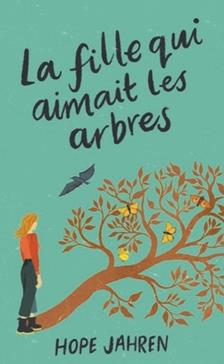
Hope Jahren
The Girl Who Loved Trees
Quanto
2023
394 pages
You'll also like




 French
  German
  English
Leave a comment