



«Les Inconsolés» of an immortal love

Tuesday books - Loris S. Musumeci
Lise falls in love with Louis. Louis falls in love with Lise. Love at first sight. Between a young girl with a complex and a young man without one. She thinks she's ugly; he knows he's irresistible. She turns out to be sublime, and he cruel, selfish, calculating. She becomes strong in her turn, asserting herself; he recognizes himself as weak and steps aside. They part. But their love is immortal; breaking up is impossible. When Prince Charming offers his princess the castle of her dreams to win her back, she gives in. They fall in love again. But at what price? The price of tragic romance. Les Inconsolés is a tragic romance. By Minh Tran Huy, published by Actes Sud.
Romance gives rise to romanticism; romanticism to a gothic atmosphere; the gothic atmosphere to tragedy; tragedy to passion; and passion to a fairy tale. This is the journey the novel takes, immersing us in an atmosphere where all these elements blend and intertwine. Les Inconsolés tells the most ordinary of stories: love at first sight that blinds the lovers. As the relationship unfolds, their eyes are opened to the truth. The truth of an impossible love between two people who are complete opposites. But a love that cannot be stifled, because it is the kind that lasts forever. The author makes the most of the atmosphere she creates to weave in her sources of inspiration: movies, novels, paintings, family stories, but above all, fairy tales. This book is a fairy tale about fairy tales.
And it also addresses the issues of immigrant status and social class. That’s where the problem lies. Lise is the daughter of a foreigner. And her background constantly influences her choices and her view of the world. The passages in which her silent immigrant father appears—as if constantly out of step—bring to light the issue of to come from somewhere else – a murky “elsewhere” – its central role in the plot. But the portrayal of social class doesn’t come across as well, because it’s caricatured. Note that social class differences are often caricatured even in reality. Nevertheless, the novel handles this aspect poorly. You can sense the author’s desire to do a little social work as well, but it really doesn’t work. It’s getting tiresome. Lise comes from the middle class; Louis, from the ultra-wealthy bourgeoisie—always pretentious, never satisfied. The love story between the two is quite rich and complex; it could have done without this overblown and artificial divide.
Complexity is also evident in the writing style. While it has the merit of offering the reader a delightful treasure trove of vocabulary, it also leads the reader astray a bit—especially in terms of structure. The book alternates chapters between two narrators: «Lise» herself and a mysterious «The Other.» This creates suspense, surprises, revelations, and even deeper questions. But this overabundance of mystery eventually becomes slightly irritating. At least until the middle of the novel, whose two parts emerge—with a break at the twenty-seventh chapter out of forty-seven—without being explicitly mentioned. It’s the feeling while reading that defines these two parts. Just as you start to grow bored with the romantic idyll between Lise and Louis, an exciting dose of suspense appears at the start of chapter twenty-seven without warning. And the pace is renewed. The momentum returns. Nevertheless, even in what I consider to be the second part, a few flaws continue to surface. Such as Minh Tran Huy’s tendency to over-explain, making his writing strategy too obvious.
And yet, we have to admit that we’re demanding when it comes to the things we love. As it turns out, I, too, have fallen in love with these *Inconsolés*. In turn, my high standards led me to identify what could have made the novel even better. Despite these reservations—and even with them—I succumbed to the charm of this a tragic, passionate, and gothic romance, to this fairy tale, which finally reveals that «they lived happily ever after and had many children» is just a gentle, conventional way of saying that the romance ends badly. So badly that we’d rather not mention it. Love exists only in sorrow and disillusionment. A sorrow and disillusionment that leave one forever without consolation. But which make this love immortal. Because love at first sight is love at first sight. From life to death, and beyond.
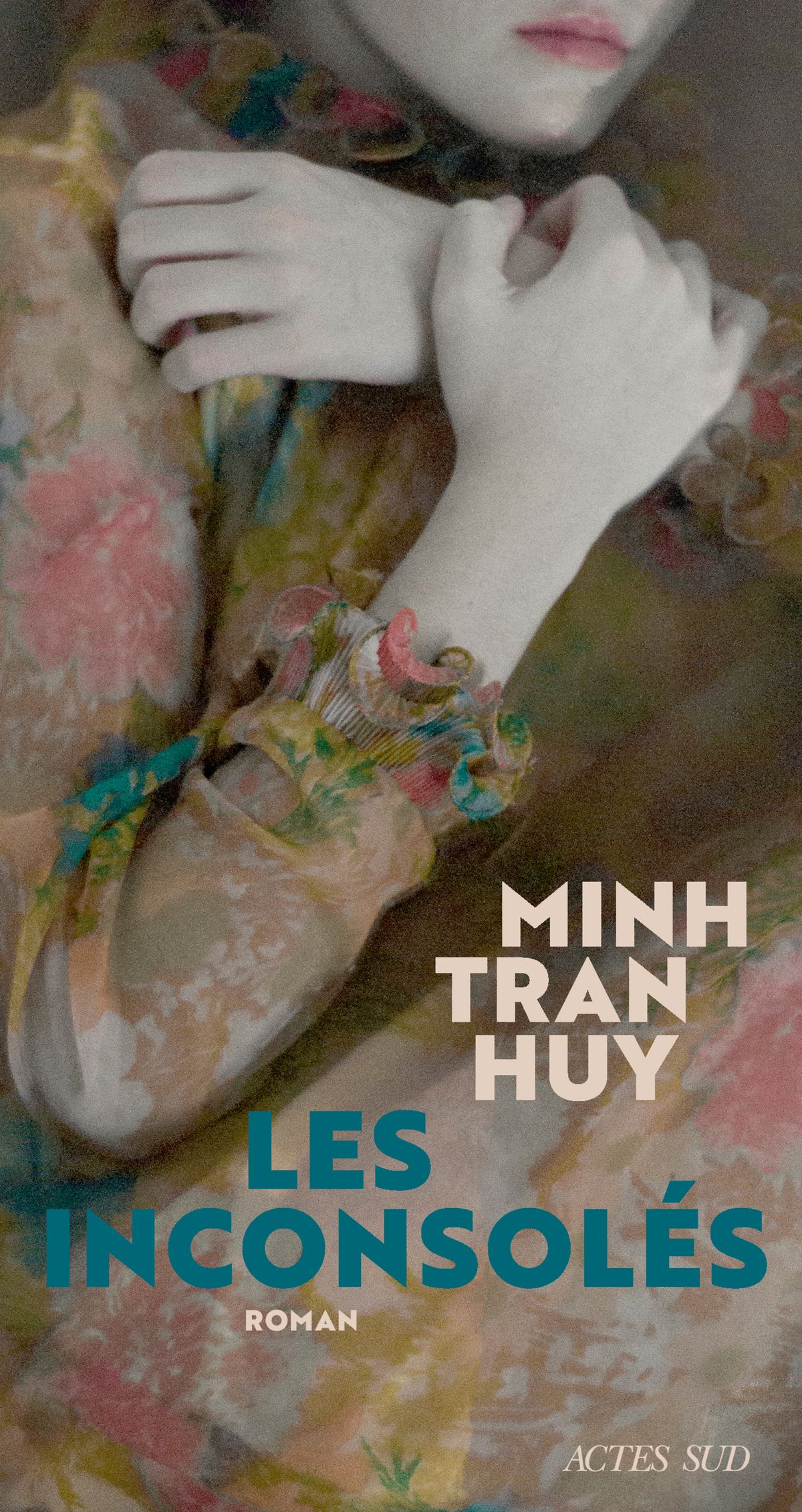
Minh Tran Huy
Les Inconsolés
Editions Actes Sud
2020
310 pages
You'll also like




 French
  German
  English
Leave a comment