



The best thing to do is to read Antoine Vuille
Jonas Follonier - Tuesday books
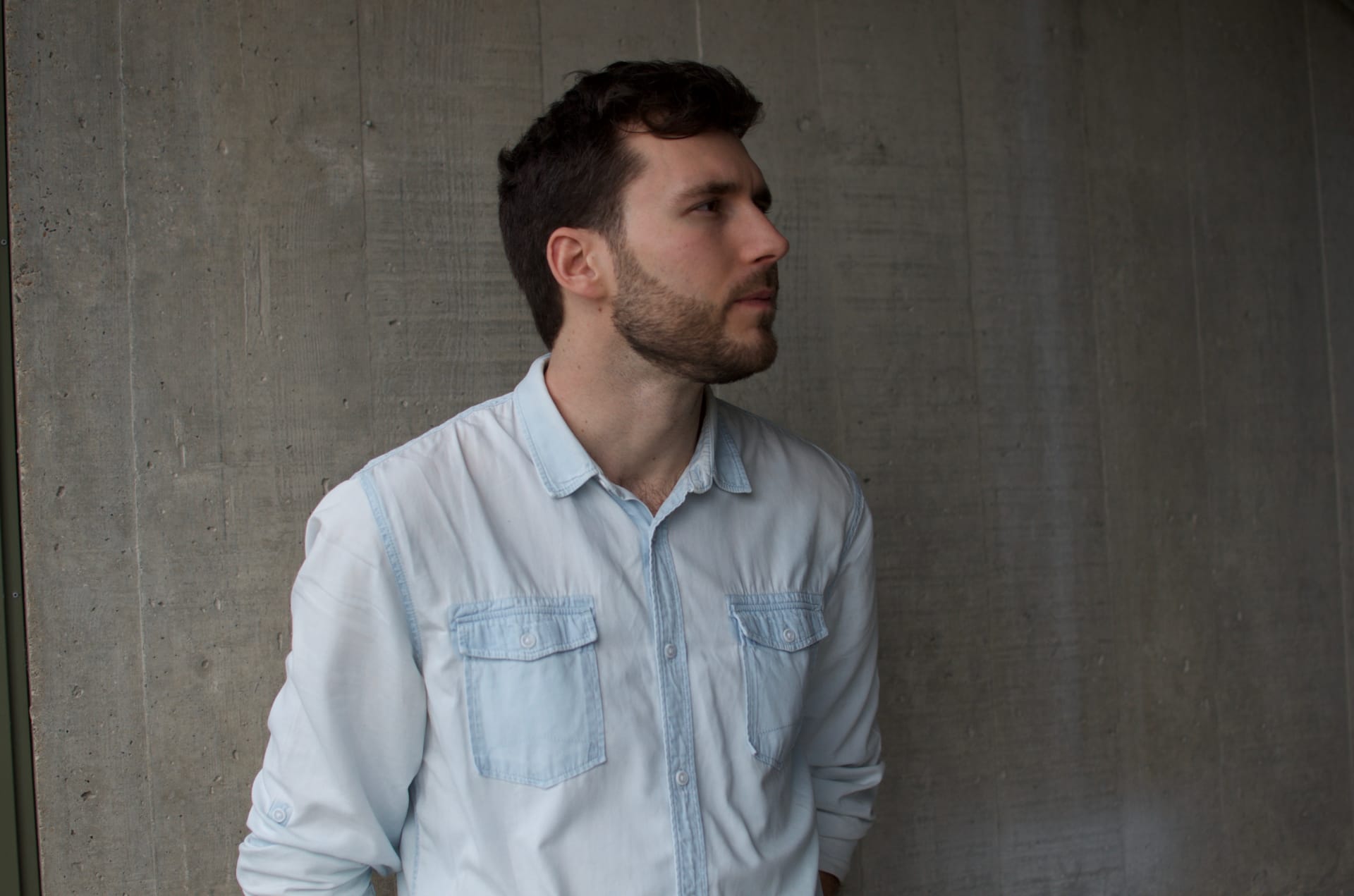
The need to get out of one's inner calendar and open up to others and the world. This could be the theme linking the four short stories published under the title Things to do, published by young author Antoine Vuille with Editions L'Age d'Homme, Lausanne.
Their names are Martin, Amandine, and Sophie, and they each have their own little internal struggles. In four short stories—each about twenty pages long—Antoine Vuille, born in Boudry in 1989, makes the never-ending «to-do list» the subject of his first published literary work. The’incipit This speaks volumes about the author: the character is thinking about how to organize his library, which echoes the intellectual nature of Antoine Vuille, who is currently working on a dissertation in philosophy. An opening that also brings to mind the Discount Store by Michel Field.
Philosophy is certainly a central theme in this collection of short stories, although the author was keen to point out to me over the phone that there is «a radically different continuum between what one can do as a philosopher and what one can do as a novelist.» True, but the fact remains that certain major questions lie in the background of the four stories. In fact, a quote from Bertrand Russell serves as the epigraph to the book—and everyone would do well to reread it after finishing the book. It sums up the book’s message so perfectly.
Antoine Vuille does not contradict me during our friendly discussion and anticipates my next question while smoothly transitioning from what was said earlier: the style itself is intended to be philosophical, insofar as it reflects a desire to avoid any ambiguity. Antoine Vuille advocates for «explicit writing,» which perfectly matches my own experience as a reader. The language is simple, fluid, direct, and unambiguous. You savor it just as you would a novel by Ernest Hemingway. Or Marguerite Duras. In fact, the author mentions the “nouveau roman” several times in his characters’ dialogues or inner thoughts. Is this one of his literary models?
«The »nouveau roman« is indeed one of my sources of inspiration,» Antoine Vuille confirms. “Historically, it was the first movement to aim to capture the inner workings of the human soul. This literature resonates deeply with me, but I believe my style is more classical.” Undoubtedly, his writing is undeniably traditional and conventional. This, however, in no way detracts from the beauty of the language. On the contrary, simplicity and authenticity—values sought by the characters in these four short stories—are all the more appreciated because they have too often been disregarded by writers. A short excerpt:
«He kept telling himself that he certainly wasn’t the kind of guy Vanille would dance with, but that his mind was infinitely sharper and deeper than Yanis’s or any other partygoer’s. He convinced himself that he was an artist and that worldwide recognition awaited him. If he didn’t fit in at a party like this, it was because he had better things to do. His genius commanded him to climb patiently toward higher peaks. […] Comforted by his project, Colin’s gloomy mood began to lift. Of course, the party had been frustrating. However, it would lead to the creation of a work of art, and that was what mattered most. »When you’re an artist, what matters isn’t what you experience, but what you create,” the teenager declared. “It’s art that gives meaning to life.”
There is something very Camusian about this passage, which celebrates art as the purpose of life and the resolution of the cycle of the absurd. Albert Camus, another figure who was part philosopher, part writer—whom Antoine Vuille admits to having read extensively when I bring up the subject. It’s also interesting to see how this passage continues. We find ourselves at the end of the short story «Postures,» a title that speaks volumes about the story—I hate to give away plot details, as it’s better for you to discover them for yourselves—and the teenager who expressed a certain detachment and superiority toward the partygoers doesn’t stop there. His mood actually leads to another fundamental element in the responses to the absurdity of life—one that shapes the final cycle of Camus’s works: love.
«He now realized that he was nothing more than an impostor, that his grand ambitions were merely daydreams that soothed his frustration. In the end, he was nothing more than a teenager fantasizing about a girl he’d never had the courage to talk to. If he’d had a choice, he would have preferred to be Yanis; his scribbles were worth infinitely less than Vanille’s attention.»
The full review is available at Le Regard Libre No. 52, Order here.
Write to the author: [email protected]

You'll also like




 French
  German
  English
Leave a comment