




Marquesas Islands with Brel, Gauguin... and Joseph Deiss
Tuesday's books - Jonas Follonier
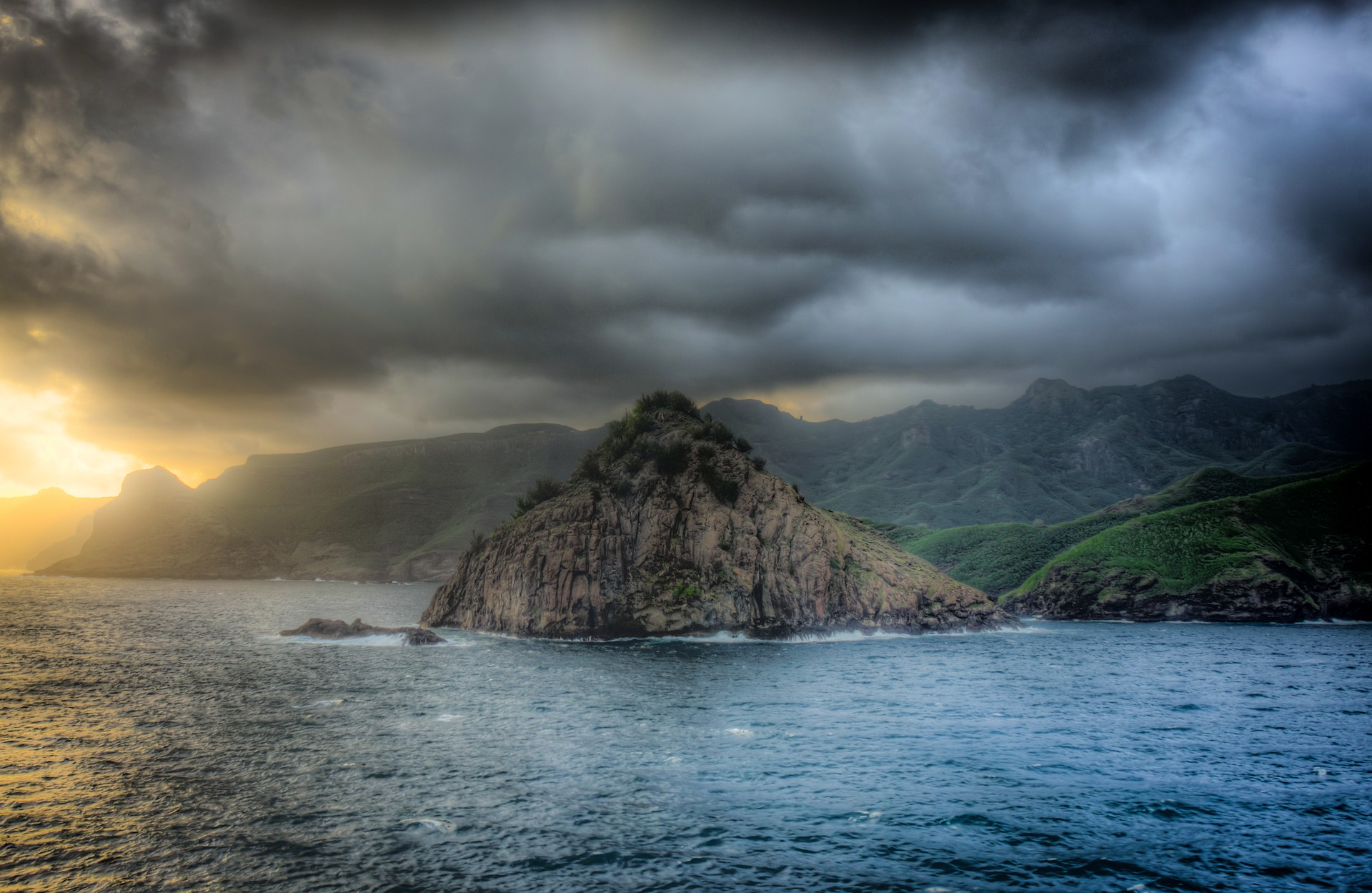
In his new book Pacific fascination, former Federal Councillor Joseph Deiss offers us a stopover in the Marquesas Islands, alongside eight other destinations which he narrates. The Marquesas, an ethereal land that meant so much to Jacques Brel, and which gave the name to his latest album. The Marquesas, subtle islands sublimated by the painter Paul Gauguin. The Marquesas, a beautiful archipelago that former statesman and now accomplished writer Joseph Deiss takes us on a voyage of discovery. Set course for this corner of the Pacific Ocean through the arts, the senses and the imagination.
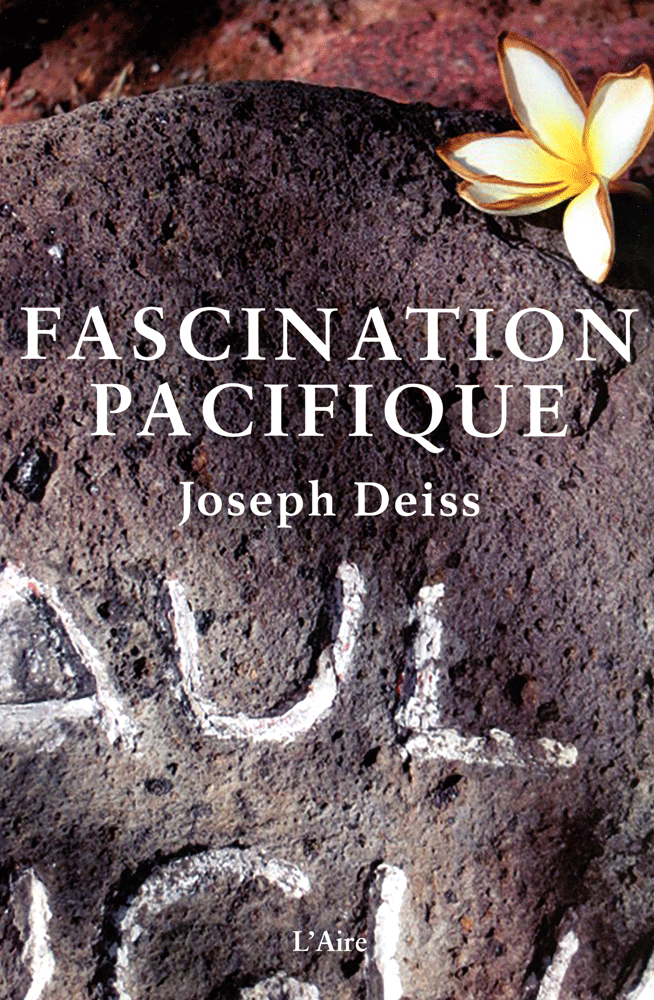
How can one, in travel writing, avoid falling into the clichés of the tourist—no matter how well-read he or she may be? Undoubtedly by being sincere. In this way, we gain access to a few fragments of truth, which add to other fragments from other travelers, other writer-tourists. This creates the beginnings of understanding, a sense of intimacy, a moment. And that is already a great deal. It is already a whole. Joseph Deiss has published a new book—his third, once again with Editions de l’Aire—a work that fully embraces this insight. Pacific fascination is a collection of travel notes organized into nine chapters. Each chapter corresponds to a stop the former Fribourg State Councilor made at a destination in the Pacific Ocean.
The eighth, which is the focus of this column, is devoted to the Marquesas Islands, «the archipelago farthest from any continent on the planet.» It provides a wealth of information on the history of this «Land of Men» (Fenua Enata (in the Marquesan language), this story stands out because it offers a rediscovery of the culture through literature. For the general public, in fact, it is primarily music and painting that are associated with the culture. The sublime song The Marquesas Islands Brel’s song, from the eponymous album that was also his last—written and composed while he was living there toward the end of his life—and Gauguin’s numerous paintings, created during his own exile there at the end of his life, convey the essence of how we imagine these islands. Joseph Deiss deserves credit not only for putting his own experience of the Marquesas—which is interesting in itself—into writing, but also for bringing Blaise Hofmann into the narrative.
Read also | Gauguin, from provocation to beauty
Hofmann, brilliant Swiss writer, who devoted an entire book to the islands—an important work: Marquises, published in 2014 by Editions Zoé. I was captivated by this book, which offers a taste of the spleen an integral part of the Marquesan identity, the fiu, and exhausted from his flight—the longest flight one can take—Joseph Deiss arrives in Polynesia. He offers us an intimate glimpse into his stay in the Marquesas, guided by his impressions and small everyday adventures. Deiss’s narrative is understated and elegant. It’s also funny: we encounter roosters that get the time wrong in the morning when announcing the break of day; we hear a sculptor, Thierry, tell our protagonist that roosters «are very good, grilled over a wood fire»; and we witness absolutely every meal of the former politician, who seems to have a hearty appetite—and we understand why:
«The menu is surprisingly good, considering how remote the place is: star fruit juice, plantains (bananas for cooking) in coconut milk, raw fish in coconut milk, wild goat with coconut milk, wild pork and fried vegetables, fried breadfruit (from breadfruit trees), banana with coconut milk, and cassava cake. What a wonderful culinary change of pace!»
In the Marquesas, scents and flowers are all sources of joy. Fruit goes hand in hand with the nights, with boredom in its positive sense—that of both inhaling and exhaling, of joyful and restful idleness. In short, it’s the ideal setting for creating, precisely. Creating, certainly, but not just anything: if a cruise on the Nile—boring to death—inspired Flaubert the idea of Madame Bovary, the setting of the Marquesas Islands—beautiful in their own way—leads the artist in a different direction. Serenity—that is how we might describe the feeling that takes hold of us as listeners to Brel and readers of Hofmann and Deiss. A certain Deiss, for whom peace is not an empty phrase—he who, as foreign minister, saw Switzerland join the UN and who presided over the sixty-fifth session of the UN General Assembly. A writer and traveler who sees—and helps us see—the peaceful dimension of the world, one that is, in fact, well-established and natural in certain places.
Read also | Joseph Deiss, a practical guide
«Thank you for giving us this chance to feel close to Jacques Brel, here, at the edge of the infinite horizon,» wrote Joseph Deiss in the guestbook of the hangar where «Jojo», Brel’s song. Thank you as well, Joseph Deiss, for giving us this chance to get even closer to the Marquesas. It’s one of those places that many of us may still know only through the arts. Through the imagination. Because that, too, is where travel lies.
Write to the author: [email protected]
Cover image: Paul Gauguin, Horsemen on the Beach (II), 1902, oil on canvas, the painter's last work (Source: Wikimedia)
Write to the author: [email protected]
Photo credit: Michelle Maria / Pixabay
Joseph Deiss
Pacific fascination
Editions de l’Aire
2020
226 pages

You'll also like



 French
  German
  English
Leave a comment