



Coco Mellors, the blues of a torn sisterhood

There's something both very contemporary and deeply disarming about «The Blue Sisters»: a way of caressing fragility without ever dramatizing it. Photo: Zoe Potkin
In Blue Sisters, With disarming honesty, Coco Mellors tracks down this very contemporary fear of losing one's footing, in the wake of four sisters on the edge of themselves.
«Lucky is twenty-six, and she's lost. Truth be told, the three remaining sisters are.
But there's one thing they don't know: as long as you're alive, it's never too late to be found.»
The prologue to Coco Mellors' new novel closes with a phrase that sounds like a late-night prophecy, containing everything that can make a person falter: a sharpness matched by murderous hopes.
Four years after her luminous debut in literature, the British novelist makes her comeback with Blue Sisters and continues to expose social relations. The sharp writing of Cleopatra and Frankenstein, The same vulnerability, but a more introspective, sinuous tone. A Sally Rooney air of emotional precision and casual relationships, minus the platitudes. All in a more dramatic, less analytical style. Coco Mellors puts heart where Sally Rooney puts body.
What's left of a family when what held it together disappears? Can you really escape your environment? Can wounds be healed by keeping them to yourself? Is it possible to find in others what has been broken at home? Over 400 pages, Coco Mellors unfolds a polyphony of questions that draws the reader into the existential questioning of an entire generation.
But make no mistake about it, Blue Sisters is not a novel that places us on a red couch; the characters' doubts and anxieties are not the stuff of psychoanalysis, but the echo of a millennial rout.
Avoiding the easy pathos of grief
Despite the grim subject matter, there's never a hint of sadness. Coco Mellors keeps any temptation to over-dramatize at bay with her sometimes crude way of expressing emotions. So far from being theatrical, mourning diffracts into ordinary gestures, silences and substitutions. The drama lies in routine renunciations, not effusions. With her fine but lively pen, the author proceeds by light touch: she captures not so much the events as their intimate repercussions, their delayed shockwaves in the characters' consciousness. She doesn't scarify sorrows to feed them to literature.
The result is a kind of fissure writing: not a clean break, but a persistent gash that doesn't abolish the bond, but permanently alters its texture.
And what's admirable about Coco Mellors is her ability to build a palpable emotion, to unroll it into a long thread and let the reader move forward like a tightrope walker, tossed about by the winds of feeling, but never too far to topple over. The novelist plucks affects like a child trying to catch butterflies with its net. The result is a dazzlingly modern work that captures the malaise of a distraught society and makes these psychological rifts resonate like twin intimacies.
What gives, what stays
What gradually emerges, beneath the smooth surface of the story, is a veritable theater of neurotic disorders. Since her first novel, Coco Mellors has developed a fascination for dysfunctional relationships. All her characters carry an inner imbalance, and the Blue sisters are no exception: they move through the world at a snail's pace, caught up in diffuse psychological tensions, as if prevented from fully inhabiting their own existence. They are mermaids drifting by their own songs.
In Blue Sisters something at once very contemporary and profoundly disarming: a way of caressing fragility without ever dramatizing it. A mixture of lucid melancholy and raw intimacy. Sadness settles in the depths of these pages in diffuse, almost mute layers, leaving behind a sense of emptiness, an absence that cannot be filled but must be dealt with. It's a nostalgia without ideals, an infinite shore.
To read Coco Mellors is to look at fears from a human perspective.
Every month, Quentin Perissinotto sets out to put a literary work through a kaleidoscope, in order to collect the images it projects and reproduce their diffractions. Even if the flashes of genius turn out to be shards of glass. Write to the author: quentin.perissinotto@leregardlibre.com
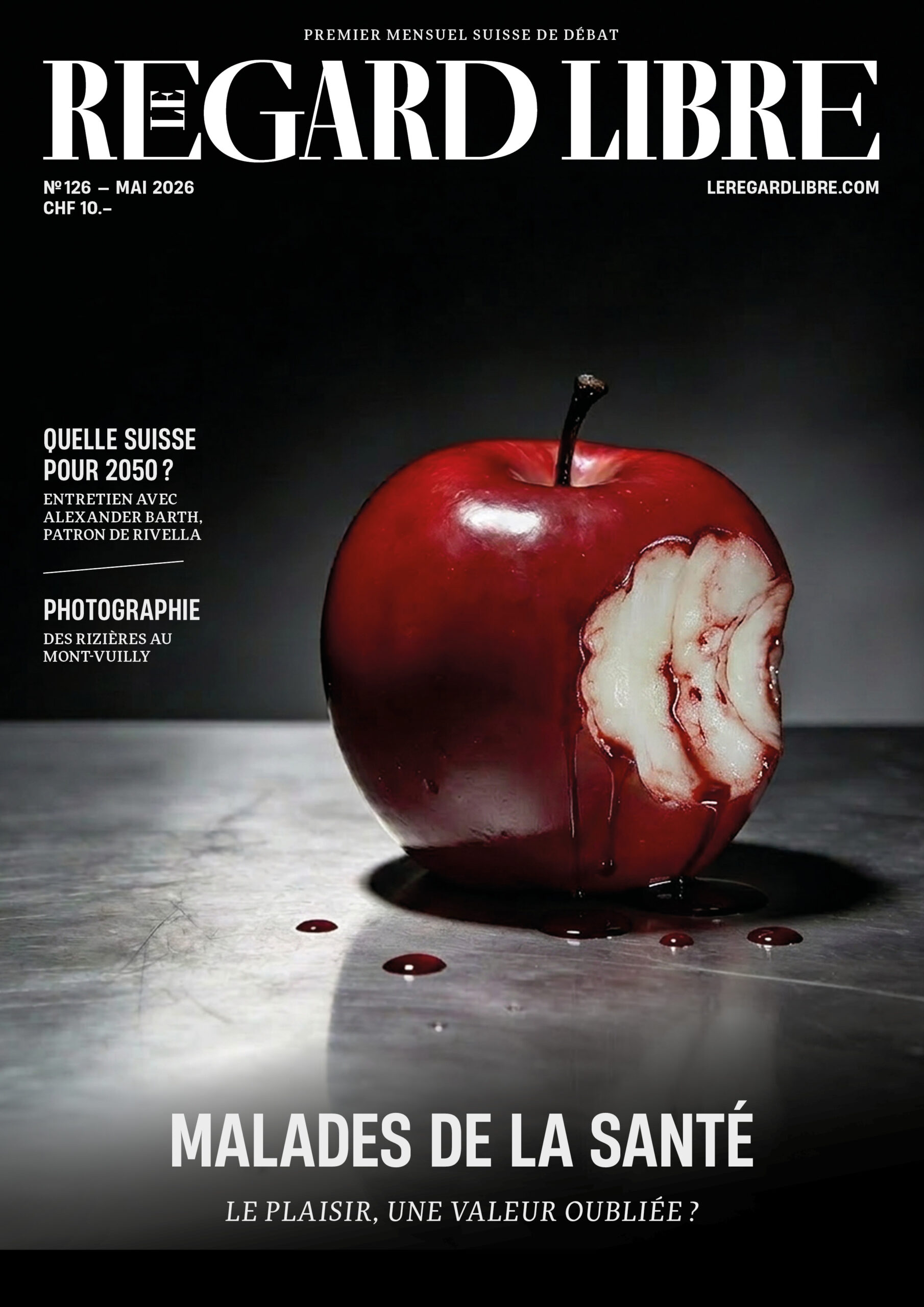
You have just read an open-access column published in our print edition (Le Regard Libre N°126). Debates, analyses, cultural news: subscribe to support us and access all our content.

Coco Mellors
Visit Sisters Blue
Translated from the Italian by Laura Brignon
Calmann-Lévy
March 2026
400 pages

You'll also like




 French
  German
  English
Leave a comment