




Moscow kisses from Isabelle Cornaz
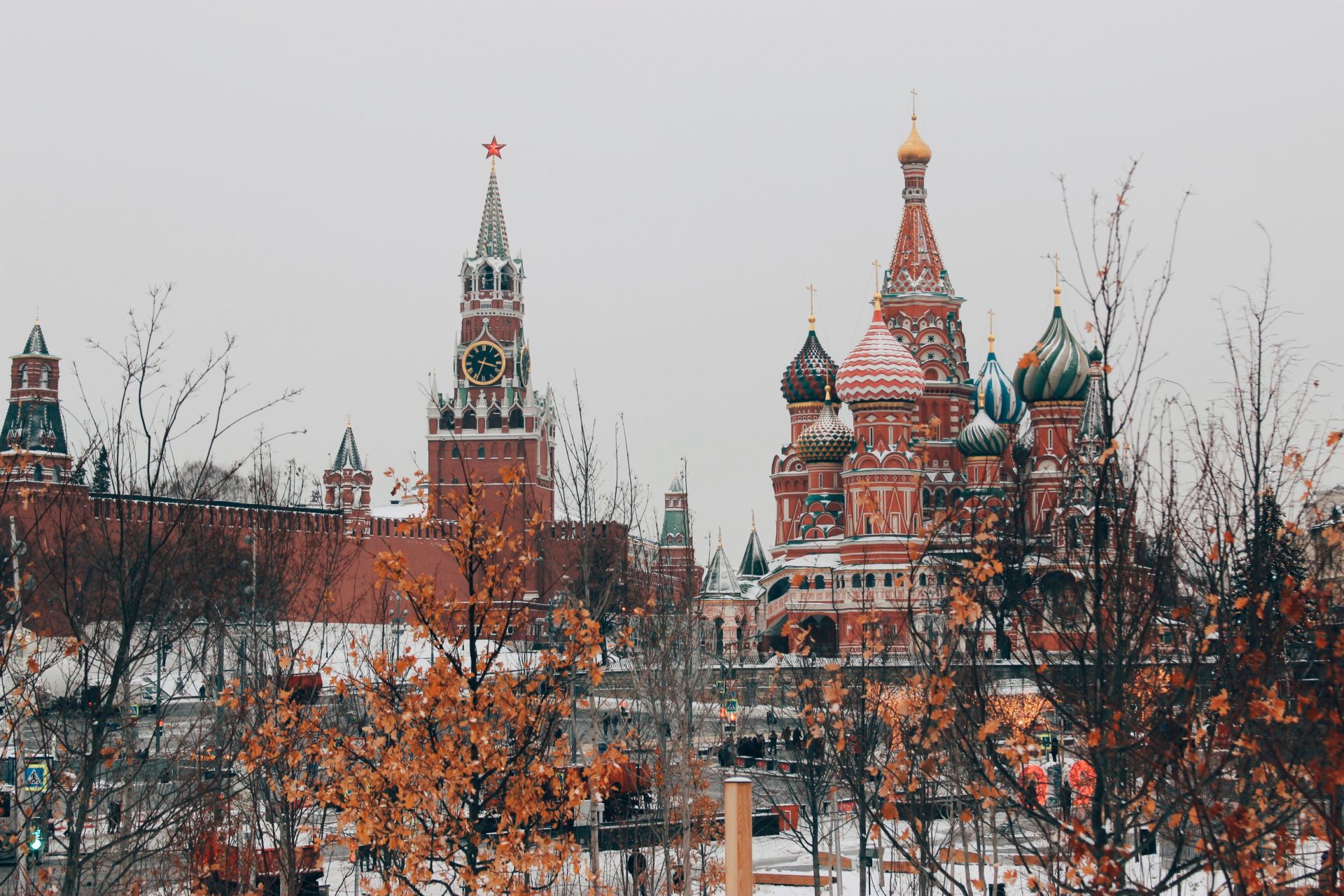
Michael Parulava / Unsplash
In her first book, the journalist from French-speaking Switzerland offers a poetic and dreamlike declaration of love to her beloved city, Moscow, which she was forced to leave when the war in Ukraine broke out.
It is a small, 80-page book with a red cover, reminiscent of the heyday of the Soviet Union. Isabelle Cornaz, a journalist from French-speaking Switzerland, served as a correspondent in Russia for Radio Télévision Suisse (RTS) for four years. She had to leave the capital, which she says she «loved deeply,» and has been unable to return due to the war in Ukraine. And yet, the memory remains. Her first book is, therefore, a full-fledged declaration of love addressed to the Russian metropolis. La Nuit au pas, published at the end of August by Editions La Baconnière.
This is not a novel, but rather a collection of memories and fragmentary impressions, intertwined by the passage of time. Almost a dream, where journeys to the Russian Far North, childhood memories, and summer thunderstorms in the streets of Moscow intertwine. «There comes a time when familiar places enter our dreams. They become haunting, untouchable,» says the woman in her early forties, who wonders: «How deeply must we be drawn to these fields, these houses, these skies, these street corners for them to never let us go?»
The author paints a picture of a Moscow unknown to tourists—a city of backyards, side streets, and patches of dandelions. But it is a city that has changed profoundly in recent years. «What I loved is gone,» Isabelle Cornaz laments.
She explains that Moscow has become «sweet»: «Instead of offering urban youth a democratization of the country (…), they were offered a Westernization of the urban landscape, the trappings of a globalized world, as if that were enough to mask the traces of an authoritarian regime. In the hope of thereby satisfying them—or lulling them to sleep.»
«Can Moscow morally survive war?»
For this unconditional love, which shines through on nearly every page, does not prevent Isabelle Cornaz from wondering what Russia has become today and how it got to this point. It is a vast country, yet one where everyone lives in cramped conditions, «for lack of space to live with dignity.» A country where one must «seize land to appear strong. (…) Not knowing what to do with the land one already has.» A country built on the blood and sweat of its people, like those scientists sent to the far reaches of the Soviet Union to work on secret nuclear projects, whose descendants are still there, as if trapped in the cold and ice.
Above all, the author wonders what will become of this city after the conflict in Ukraine. «Can Moscow survive the war morally?» asks Isabelle Cornaz, as if the capital had become a living, breathing entity.
Read also | | The open wounds of mourning between Moscow and Siberia
What is probably most moving about reading this story is the author’s nostalgia and sadness, which are as tangible as physical pain. «It’s been three years now since I’ve been to Russia, even though it used to be my home,» Isabelle Cornaz laments with modesty. At the same time, memories are fading. «Moscow is disappearing, little by little. The details are fading, even though the city is made up entirely of them.» And the author, a native of French-speaking Switzerland, hopes that these lived moments—«like the remnants of the previous summer’s fires that survive beneath the snow, defying the night, hidden in the darkness»—may one day «be reborn as a life force.».
You've just read an open-access portrait. Debates, analyses, cultural news: subscribe to support us and get access to all our content!

Isabelle Cornaz
La Nuit au pas
Editions La Baconnière
August 2023
88 pages
You'll also like



 French
  German
  English
Leave a comment