



| The open wounds of mourning between Moscow and Siberia

Cottonbro Studio
Injury, First of all, the long wait before the death of a sick mother. Then, the thousands of kilometers traveled all over Russia with her ashes. A poetic autofiction, but bordering on exhibitionism. True and powerful, or just shocking?
«My mother died and I carried her ashes from Volzhski (ndlr: 1’000 km au sud de Moscou) in Ust-Ilimsk (ndlr: 1’000 km au nord d’Irkoutsk, en Sibérie) For two long months, I lived with his remains in my room and thought about them a lot. Then I buried them in Siberia, in cold black earth, among scrawny pine trees. That's the whole story. And it's an important one.»
That's how Russian feminist writer Oksana Vasyakina sums up her autofiction. Injury. And if the story is important, it's above all because it tells the story of the young woman's mourning process. A journey to build herself outside the gaze of her mother and a superstitious Russian society. Death as a relief, which nonetheless leaves her «naked on the road».
Bulky rocket modules
In fact, this ambiguity of feelings feeds the story. Just as it surrounds Oksana's relationship with her mother. She says she was fascinated by her. She says she adored her. But she also says she feared and hated her. As a child, she lacked tenderness and found herself confronted by violent lovers. Although she never received a single blow, the author grew up in fear and neglect.
In a complex psychological game, the writer and narrator attempts to repair the bond by living a fusional relationship with the ashes of the deceased. An initiatory journey that ends with a liberating burial and the removal of all traces of the mother's body. The disappearance of her mother - and before that, her grandmother and stepfather - enables her to detach herself from the weight of previous generations. In an all-Soviet metaphor, Oksana Vasyakina explains that she «takes off like a rocket whose stages are detached one by one(...) facilitating (her) trajectory and (her) flight».
The girl who killed her mother
This story is also the author's meticulous plunge into the intimacy of the body. Little by little, Oksana sees her mother's sacred «femininity» disappear as a result of her cancer. First a breast: cut off. Then her hair fell out. A disease caused, according to the mother, by a drop of mother's milk that hardened in her breast. In other words, her daughter first stole her identity and then killed her.
It's hardly surprising then that the thirty-something struggled to establish herself as a woman. The impact on her sexuality is obvious. «The figure of my mother has always been closely linked to sex. To my sex, not to sex in general. In my mind, the mother figure was directly linked to jouissance, pleasure and shame.» It wasn't until her mother died that she learned to love her body and let herself be loved. An entirely psychoanalytical reading.
Autofiction as reality TV for nerds?
That the intimate becomes public and political is an evolution to be supported at all costs. Feminist and lesbian activist Oksana Vasyakina shows us some of the facets of 21st-century Russia.th century away from clichés. And that's good. On the other hand, and this is often the risk with autofiction, the intimate details here border on exhibitionism. Putting the reader in the role of voyeurist. It's almost embarrassing.
Who needs to know the smell of this dying woman's vaginal secretions? Or to follow in minute detail the pain caused by the author's vaginitis as she leaves the morgue? Does this feeling of disgust make us aware of our unhealthy view of death, old age and women's bodies? Or is it simply shocking and unnecessary? Has autofiction, in its psychotherapeutic form, become reality TV for nerds?
We'll leave readers to make up their own minds. But beyond its expiatory side, this novel is courageous in the questions it asks. Injury by Oksana Vasyakina is an alternative vision of the Russian soul. At last, a fresh look at a Russia too often locked into a narrow-minded Western gaze.
Write to the author: [email protected]
You've just read an open-access article. Debates, analysis, cultural news: subscribe to support us and get access to all our content!

Oksana Vasyakina
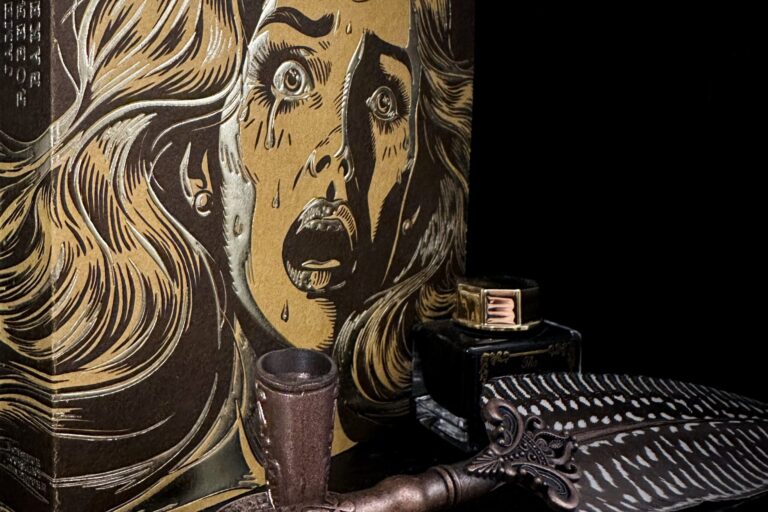
Injury
Translation by Raphaëlle Pache
Robert Laffont
2023
335 pages
You'll also like



 French
  German
  English
Leave a comment