




«American Pastoral», a book that says it all
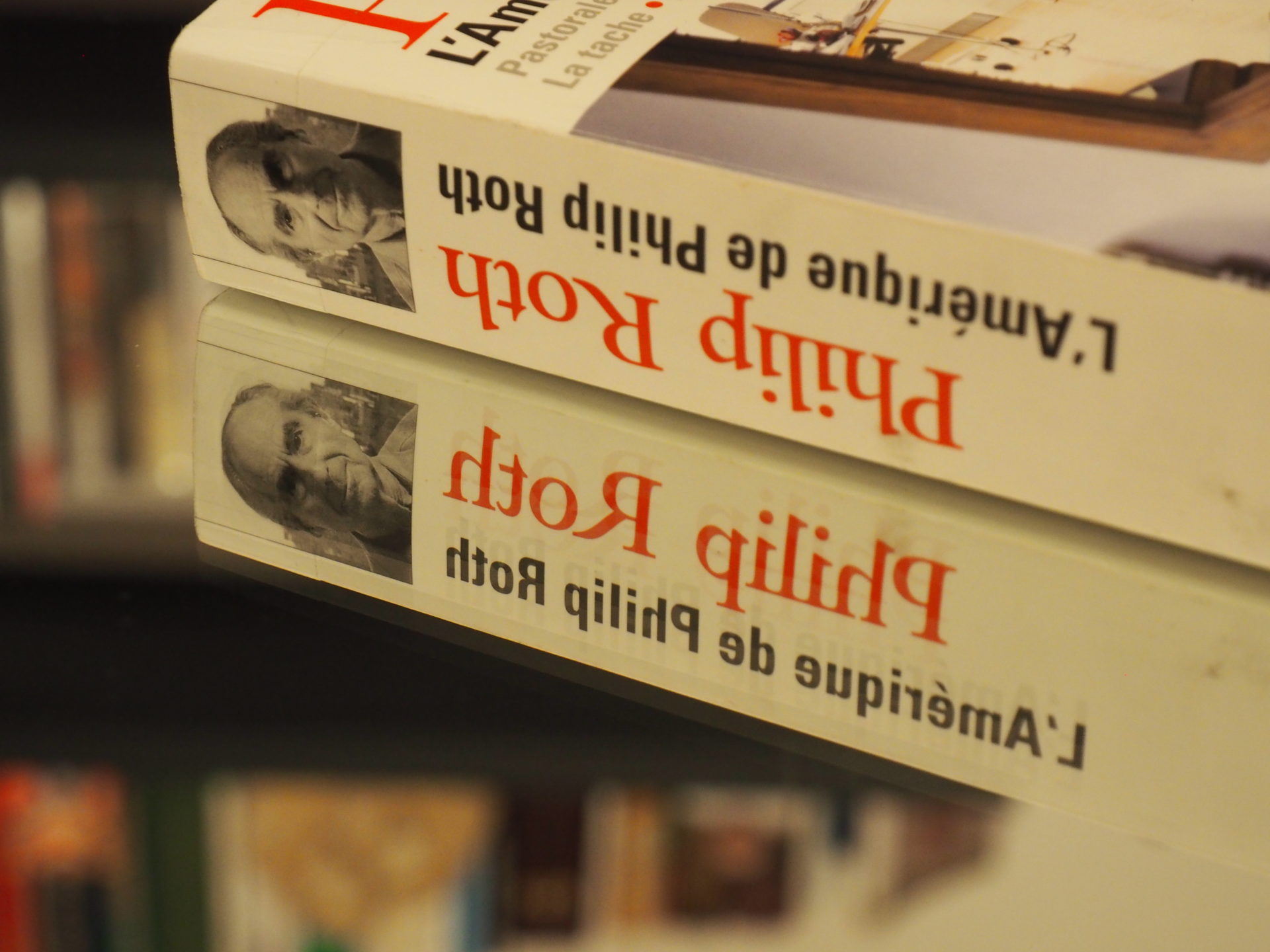
Roth makes no attempt to explain his novel. He presents; he describes. A portrait of an America where everyone remains a mystery. Photo: Loris S. Musumeci for Le Regard Libre
In this all-encompassing novel, Philip Roth dissects the American dream through the life of Seymour Levov, a model of integration and success, whom history will ultimately crush. A masterpiece that reveals the fragility and mystery of every destiny.
«Two hundred and fifty million people eat a single, colossal turkey that feeds the whole country. We bracket weird foods, bizarre practices and religious particularisms, bracket the Jews» three-thousand-year-old nostalgia, and among Christians Christ, his cross and crucifixion; everyone, in New Jersey and elsewhere, puts their irrationality on hold better than any other time of the year. Grievances and resentments are bracketed, and not just the Dwyers and Levovs, but everyone in America who suspects their neighbor. It's the quintessential American pastoral; it lasts twenty-four hours."
American pastoral care (1997) is a revelation. It is a Philip Roth revelation for those, like me, who had never read the author before. It is also a revelation of a novel that could not be more complete in its themes, and where the style speaks the truth. It is also the revelation of a work of art, which undeniably stands as an authentic literary masterpiece.
Read also | The plot against America
Enter American pastoral care, is to embark on an American epic that seeks to understand what it is to be American, what it is to be America. Guiding us on this journey - or perhaps losing us - is the writer's famous double: Nathan Zuckerman. A writer himself, he recounts the American epic through the character of Seymour Levov, known as «the Swede» because of his tall, blond hair.
Our beloved Swede
As his name suggests, Seymour Levov is Jewish. The Swede is, in fact, the model of Americanness for all his fellow Ashkenazi Jews in the United States; indeed, he is a model of Americanness altogether. He embodies all the values of a balanced America, at once open-minded and attached to its history. Seymour Levov, in short, is handsome, strong, kind, brilliant at school, endearing, wise, obedient, free, tolerant, conciliatory and, what's more, the embodiment of success in everything. In the eyes of young Nathan Zuckerman, he is almost Christ-like, the salt of the earth of Newark, the light of the world.
«Keer Avenue was where the rich Jews lived, rich at least in the eyes of those who rented apartments in small buildings of two, or four units, with the brick porches essential to our after-school sporting activities: street games, blackjack, stoopball, We'd play endless games until, by mercilessly swinging the lousy rubber ball against the stairs, it finally exploded, cracking at the seams. It was in this network of acacia-lined streets, laid out on the Lyons farm during the boom of the 1920s, that the first generation of Newark-born Jews had clustered. They constituted a community more influenced by American culture than by the Jewish way of life. shtetl their parents, still speaking Yiddish, had recreated around Prince Street in the impoverished Third Ward. With their serviced basements, veranda-like porches and flagstone staircases, the Jews of Keer Avenue seemed to hold the upper hand and, like daring pioneers, demanded the conveniences of American life in order to integrate. And at the vanguard of the avant-garde were the Levovs, to whom we owed a debt of gratitude. our beloved Swede, the best equivalent of a goy we'll ever have.»
The Swede goes so far as to arouse feelings of love in everyone who sees him, boys and girls alike. He is desire.
«Hearing him say this, I remembered the scrimmages from which he always emerged, ball in hand, and how much I had fallen in love with him on that distant autumn evening when he had transfigured my ten years by choosing me to enter Seymour Levov's Gesture; that moment when it had seemed to me that I too was called to do great things, and that no obstacle could stop me, now that the face of our benevolent god had shed its light on me alone. ‘‘This has nothing to do with basketball, Grasshopper.’’ What a bewitching language his innocence had spoken to mine! What a key he had given me! It was everything a kid could want in 1943.»
He is America.
«The life of Levov the Swede had been, to my knowledge, very simple and very mundane, and therefore formidable, the very stuff of America.»
And Nathan's almost pathological admiration for the Swede remains with him well into adulthood, despite the years that have passed. And all this in Roth's evocative style. You'd think you were there. We fall in love too!
«One evening in the summer of 1985, while visiting New York, I went to see the Mets play the Astros. As I walked around the stadium with my friends to find the entrance that matched our seats, I saw the Swede, thirty-six years older than when I'd seen him play for Upsala. Wearing a white shirt, striped tie and charcoal summer suit, he was still absolutely gorgeous. His golden hair had darkened a tone or two, but it hadn't thinned out; he didn't cut it short like he used to, and its mass covered his ears and the back of his neck. In this suit that suited him so well, he looked even taller and slimmer than in his various sports outfits. It was the lady with us who first noticed. Who's that? That wouldn't be... John Lindsay?« she asked. - No,» I replied. My God, do you know who that is? It's Levov the Swede!« - »It's the Swede," I said to my friends.
If anyone else had asked me if he could tell me about a tribute he was writing for his father, I would have wished him luck and kept my nose out of it. But I had imperative reasons for sending a note to the Swede - within the hour - to let him know I was at his disposal. The first was that Levov the Swede wanted to see me! It may have been ridiculous, on the threshold of old age, but all I had to do was read his signature at the bottom of the letter, and images of him on and off the pitch flooded in, still captivating me fifty years later.»
The Swede is the famous American Dream.
And yet, Philip Roth has a sense of the tragic, and knows full well that all greatness is intimately linked to a transcendence that surpasses it and ultimately crushes it. In this case, transcendence is the course of history, the inevitability that makes happiness the quest of a lifetime.
The family
The author writes with a pen that uses, in the simplest terms, the human experience. American pastoral care and his American epic are born and always return in Seymour Levov's story. And it is from this experience that the reader rises to the banal but essential questions that interrogate fatherhood and filiation. What does it mean to be a father? What does it mean to be a son? What do fathers teach? What do children learn?
«These men of limited intelligence but boundless energy, these men quick to befriend, and quick to tire, these men for whom the most important thing in life was to go on living no matter what, were our fathers; our task was to love them.»
«Merry, my little fool, even more foolish than your idiot father, blowing up houses doesn't help either.»
How do generations pass? Can they break up a family?
«Three generations. All upwardly mobile. Working, saving, succeeding. Three generations ecstatic about America. Three generations of blending in. And now, with the fourth, annihilation of hopes. Total vandalization of their world.»
Can the family resist American integration? Can a family really become properly American?
«All the minor problems that any family expects to encounter are exacerbated by an act so implausible that it precludes reconciliation. The beautiful American future that seemed promised, the one that should logically have arisen from the solid American past, the result of a seamless process in which each generation gained in intelligence, because it knew the limits and inadequacy of its elders, whose narrow-mindedness it knew how to overcome in order to fully enjoy the rights conferred by America, to free itself from Jewish habits and attitudes, to emancipate oneself from the insecurity of the old world and old obsessions, and, in enfin conformity with the ideal, to live among one's peers, without complexes.»
And the questions go even further. They touch the reader to the core. From the particular, we move on to a universal theme, then back to the particular; and this time, it's all about getting wet yourself. This is the hallmark of great novels: when the character reveals to the reader who he or she is. Besides, what does it mean to be alone?
«You're alone with the houses, alone without the houses. You can't argue with loneliness, and all the attacks in the world haven't made the slightest dent in it.»
From memories to sex
What is the passage of time?
«It's a wonder that everything that was immediately visible in the lives of our classmates has remained etched in our memories. It's also astonishing the degree of emotion we feel when we see each other again. But what's even more astonishing is that we'll soon be the same age as our grandparents were when we arrived as freshmen at the high school annex on January 1.er February 1946. The amazing thing is that we, who had no idea how things would turn out, now know exactly what happened. The results are in for the class of January 1950 - the then unsolvable questions have been answered, the future revealed - isn't that the surprise? To have lived and in this country, in our time, in our skin. Amazing.»
And, as time goes by, how does a man come to question his whole life?
«What are you? Do you even know? You're a guy who's always trying to cut corners. You're always trying to be moderate. You'll never tell the truth if you think it'll hurt. You're always compromising, always indulging. You're always looking for the bright side. You have good manners, you put up with everything patiently. You've always been respectful of form. You never break codes. Whatever society dictates, you do. Appearances, forms. We spit in their faces.»
But there's still love, the inevitable dimension of existence. Or, at the very least, sex, which brings a fine tear of joy to one's happy days. The sublime eroticism described by Roth in the next passage.
«For months after their wedding, she would start crying as soon as she reached orgasm. She’d climax, and she’d cry; he didn’t know what to make of it. «What’s wrong?» he’d ask her. »I don’t know.’ “Am I hurting you?” “No. I don’t know where it’s coming from. It’s as if it’s the semen, when it spurts inside me, that triggers the tears.” “But I’m not hurting you?” “No.” “Do you like it, Dawnie? Do you enjoy it?” “I love it! It’s something special. It touches me where nothing else can reach—at the source of my tears. You touch a part of me that nothing else can touch.” – Okay. As long as I’m not hurting you… – No, no. It’s just strange. Strange. Strange not to be all alone anymore.””
Or the one that turns into a nightmare, destroys everything and makes you want to vomit just reading it.
«The rape was in his blood, he couldn't get it out. There was the smell of it in the blood, the sight, the legs, the arms, the hair, the clothes. There were the noises, the muffled blows, her screams, the fall into a tiny enclosed space. The horrible barking of a man enjoying himself. His grunts. Her whimpering. The stupor of the rape erased everything else. In total ignorance, she had crossed the threshold, they had grabbed her from behind, thrown her to the ground, and her body was at their mercy. She had only a thin cloth over her body. They had torn it off. There was nothing between her body and their hands. They had penetrated her body, filled her body. With terrible force, the force that tears. They'd knocked out a tooth. One of them was crazy. He'd sat on top of her and let out a spurt of shit. They were on top of her. The guys. They were speaking a foreign language. They were laughing. Anything they could think of, they'd done to her. The next one was waiting his turn. She could see him waiting. There was nothing she could do.»
American pastoral care also tackles the most burning social issues, past and present. The novel is also political.
«- How much do you pay the workers at your factory in Ponce, Puerto Rico? How much do you pay the workers who stitch your gloves in Hong Kong and Taiwan? How much do you pay the women in the Philippines who blind themselves by hand-inlaying patterns to satisfy Bonwit customers? You're just a shitty little capitalist, exploiting blacks and yellows, and living in the luxury of your beautiful home, behind armored gates against niggers.»
A tragi-comic work
With Roth, tragedy is never the opposite of comedy: the two go hand in hand. The most serious moments are recovered, or even cut short in certain passages, by laughter. It springs from the reader's lips in the face of absurd, zany situations. Lou Levov, Seymour Levov's father, is a glove-maker for whom the glove is more intimate than his Jewishness. He's the delicious, terrifying old Jew who's always out of step.
Read also | Portnoy and his complex, the art of the touch
Lou and Sylvia Levov, who now live in Florida, visit their son once a year. Their visits give rise to convivial evenings where a few family friends and neighbors are invited. Father Lou befriends Seymour's alcoholic neighbor. The scene is hilarious. Even though he despises her and she disgusts him, he takes care of her. At the risk of being insensitive to her. The whole thing is carried along by a few words of Yiddish - present throughout the novel - which take on an even more pleasant charm at this point.
«Thirteen, thought her father. A pisherke [and you said goodbye to the whole family? What was going on? Did these people have an empty box? Why were you saying goodbye to the whole family at thirteen? No wonder you're shicker [drunk], now.»
At the same party, old Lou, obsessed with gloves, interrupts the discussions of the other guests and rubs shoulders with the academics to expound his science with a clumsiness that compels the reader to put the book down, so much so that laughter ensues - and I'm not exaggerating, experience has shown! Yet Lou's point is far from stupid; it's all in the manner and context.
«You know what Romeo says to Juliet when she’s on the balcony? Everyone knows it: «Romeo, Romeo, where are you, Romeo?»—that’s what she says. But what does Romeo say? I started working at the tannery when I was thirteen, but I can answer that for you, because my old friend Al Haberman—who, sadly, has since passed away— He was seventy-three; he stepped out of his house, slipped on black ice, and broke his neck. Terrible. He’s the one who told me. Romeo says: «See how she presses her cheek against that glove! Ah, if only I were the glove on that hand, I could touch her cheek.» Shakespeare. The most famous author in history.»
Finally, American pastoral care is a moving work that says it all: we laugh, we cry, and we know that, in the end, human complexity is such that Roth doesn't try to explain anything in his novel. He presents; he describes. A portrait of an America where everyone remains a mystery.
«The point is that understanding others is not the rule, in life. The story of life is to be wrong about them, again and again, again and again, relentlessly and, after thinking it through, to be wrong again. That's how you know you're alive: you're wrong. Maybe the best thing would be to give up being right or wrong about other people, and go on just for the ride. But if you can do that, you... then you're lucky.»
You have just read an article from our Philip Roth special report, published in our print edition (Le Regard Libre N° 43). Debates, analyses, cultural news: subscribe to support us and access all our content.
You'll also like




 French
  German
  English
1 comment
[...] Read also: Pastorale américaine, a book that says it all [...]
Leave a comment