




Screening of «Ciné-roman» by Roger Grenier

Les bouquins du mardi - Literature in retrospect - Loris S. Musumeci
A book find. Without knowing the author, without ever having heard of this title, Cine-novel, composed of the two things I love most, movies and novels, couldn't leave me indifferent. For a hundred cents, I bought it, and I wasn't disappointed. disappointment!
This little-known work by a forgotten writer won the Prix Fémina in 1972. Author Roger Grenier devoted a lifetime to literature until 2017, when he died at the age of ninety-eight. A life for literature, but always in the shadows. And yet, what a career! He began as a journalist at Fighting, with a certain Albert Camus. He joined the Resistance. He went on to become a journalist, writer and essayist. But above all as a publisher with Gallimard, where he helped two of the leading names in contemporary literature to break through: Sylvie Germain (author, among other books, of the sublime Magnus) and Daniel Pennac.
A whiff of nostalgia
With Cine-novel, No great literature. No literary revolution on the part of a Grenier who writes what he likes to please himself - you can feel it when you read it. No style that lulls the reader with its poetry, no style that fascinates the reader with its elegance. Cine-novel is light and simple. It's entertainment in the same way as a film shown in a local cinema. A film that you see once, that amuses you, perhaps moves you a little, and then you slowly forget about it. But that doesn't stop this novel from being perfumed with a touching and very personal nostalgia.
Beyond its light, nostalgic reading, the novel's charm lies in its carnal, enamored relationship with cinema and its world. Monsieur La Flèche, an aging hyperactive, decides to open a cinema and a dance hall in the same suburb. But while the dance hall is a phenomenal success, the cinema, with its old-fashioned but magical name, is not, The Magic Palace. Audiences prefer city cinemas run by big exhibitors. More American films, more dreams, more sensations, but above all films that you can see without having to wait three weeks for the price to drop for smaller theaters.
A story of love and cinema
The Laurent family, members of the enterprising petit bourgeoisie, bought the cinema in a deal with La Flèche that could clearly be described as a scam. When the new owners realize that the cinema is struggling to attract the crowds, they throw themselves heart and soul into saving Le Magic Palace. And especially François, their fifteen-year-old son, who not only falls in love with the place, but also with cinema. And falls in love altogether.
«He struggled to regain the keys. She clutched them to her breast, with a funny smile, and so he had his hand on her breasts. Soon they were kissing. She was a good kisser, with tongue. The Magic Palace was changing again. In the teenager's eyes, it had been first the temple of cinema, then a field of exploration, and now, immense and deserted but familiar, a romantic hideaway for his first loves.»
Nostalgic, sweet and endearing, Cine-novel is nothing more than a novel about the cinema, through the experience of a fifteen-year-old teenager who bears a striking resemblance to the author. The reading then becomes a projection, during which we plunge into the darkness of a theater; we plunge into an era, that of neighborhood cinemas, sung with just as much nostalgia, gentleness and attachment by Eddy Mitchell in The last session (1977). And as Paul Morelle wrote in the columns of World when the novel was released: «Roger Grenier is the projectionist of the small world he has filmed in reduction over the years, with the invisible camera of the senses and the heart.»
Write to the author: loris.musumeci@leregardlibre.com
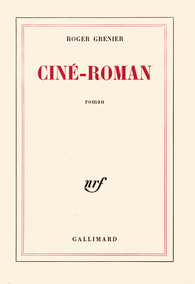
Roger Grenier
Ciné-Roman
Editions Gallimard
1972
288 pages
You'll also like





 French
  German
  English
Leave a comment