



Jikaëlle: a folk style that matures over time
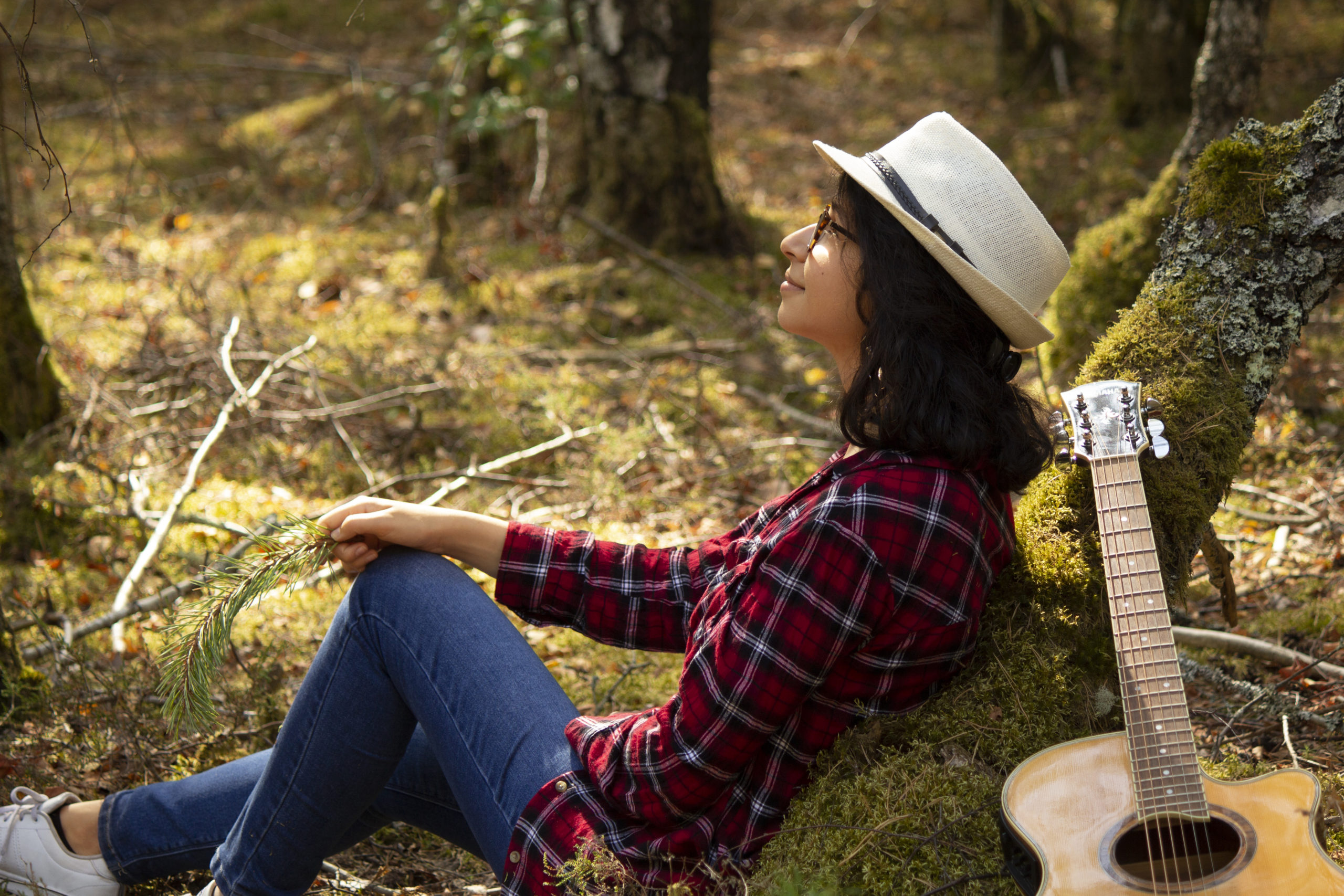
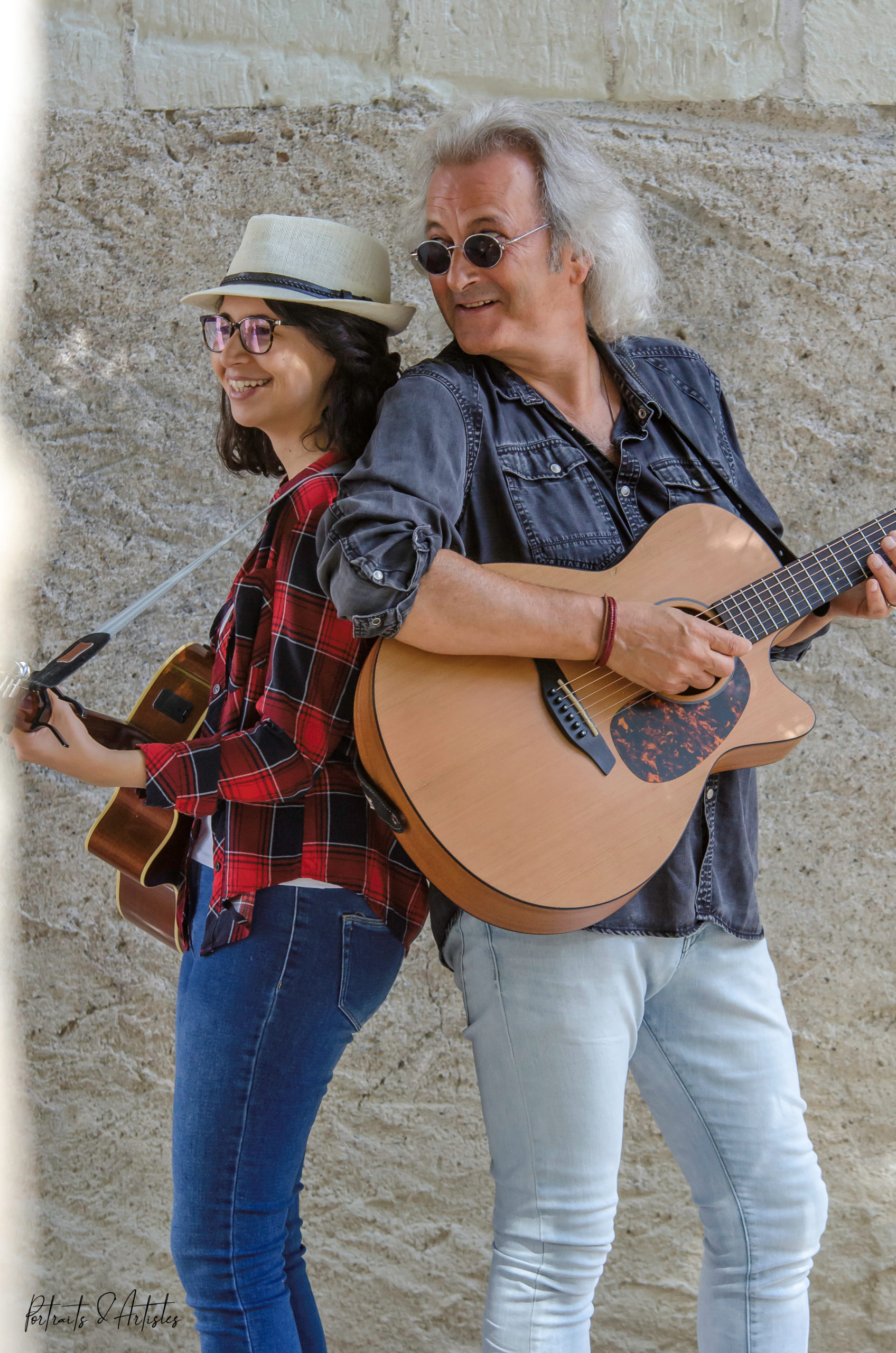
Julie, also known as Jikaëlle, is a young singer-songwriter who simply enjoys doing something that’s gone out of style: French chanson. The French singer tells us stories—an approach to songwriting that was long the norm for the genre. Between Here and Elsewhere This is her third album, and—due to the pandemic—it might have been released earlier. Jikaëlle’s style, however, has never been more evident. Produced by Bernard Léchot, this album showcases an artist in her prime. An interview.
Le Regard Libre: This album establishes your folk style in the sense that it refines it, adding a few new touches. Is a style something you build, or does it happen subconsciously?
Jikaëlle: I don't know if you actually create your own style, but one thing is for sure: it refines itself over the years. What I think you can sense when listening to my three albums is the evolution of the instrumentation. For the first album, Escapes (2014), my musical partner Bernard Léchot had recorded all the instrumentation, because I didn’t feel confident as a musician, so it was mostly his ideas—even though he always asked for my opinion, of course. Since everything was new to me, almost everything suited me. And most importantly, we’d recorded the album before doing any concerts. As for’Evidence (2017), we were able to test out the songs on stage before recording them. For my third album, Between Here and Elsewhere, which is coming out now, I made a point of writing all the arrangements myself. So, of course, this has an effect on the style, which is partly tied to the orchestrations. By listening to certain things over and over, your style also evolves. Becoming friends with Morgoran—who has played on some of my tracks since my first album—and listening to him has inevitably influenced my new album. In my track A New Beginning, I wanted to recapture some of the dreamy sounds you find in his music. Morgoran plays two guitars on this track, which immediately gives it a different musical flavor.
Read also | Morgoran, the Bob Dylan of French-speaking Switzerland
In fact, these personal influences or intersections are reflected in the instrumental piece Here, elsewhere… And a little bit there, too.
Absolutely! Erwan Mouly, one of my closest friends and collaborators, is on the track, as is Bernard Léchot, of course, and his son Morgoran, in fact. The song started out as an improvisation between Erwan and me. We then decided we had to do something with that improvisation. Erwan came up with a melody on the guitar—which he also plays on the flute toward the end—and we put together an arrangement with a build-up of instruments so that everyone could take a solo.
This brings me to a general question that’s been on my mind for some time. People often say that a song consists of lyrics and music. But wouldn’t it be more accurate to say that it’s the combination of a melody (with lyrics) and an orchestration?
Absolutely—I think we underestimate the importance of orchestration. If the stage and the studio are so different, it’s precisely because of the role of instrumentation. In fact, artists often prefer either live performances or the studio. Personally, I prefer live shows, and I know that Bernard, for example, prefers being in the studio—that’s also why we complement each other so well. As for me, I make music first and foremost for the spontaneity that comes with it and the connections it fosters. The «confined» nature of the studio demands such precision that there’s no room for error. The idea is that a track on an album will be listened to multiple times, so it has to be perfect—it has to grab the listener from the very first notes—especially since there’s no visual element like there is at concerts.
Read also | Bernard Léchot: «The process of making an album begins when you think it’s finished.»
You were there It's one of the most beautiful songs on the album. Where did the piano part—which is so well done and really carries the song—come from?
The piano of You were there is performed by Jean-Félix Camus, a professional jazz musician. I met him while training to become a music educator in Tours—my job involves introducing children, mainly babies, to music. Since Bernard had a piano piece in mind for You were there And since I love Jef's piano touch, I sent him the demo, and he played his part his own way, changing the notes a little.
I get the feeling that the stories you tell us, like the one about those two former friends in You were there, are true, and that you know the people you're telling us about very well. Am I wrong?
That’s the age-old question. In my case, my songs are the result of a gentle blend of what I see, what I experience, what I feel, and what I imagine. Sometimes my imagination clearly takes precedence over reality; other times, it’s the opposite. You’re talking about people: sometimes they’re individuals I don’t know at all, but whom I see for just a brief moment and who inspire something in me. This is typically the case with A New Beginning: I was in a train car and saw a conductor saying goodbye to someone on the train; that single scene alone made me imagine the whole rest of the story.
Is this the great power of music and art in general: to expand reality?
I’d simply call it an escape. My approach is very much rooted in that idea. It’s no coincidence that my first album is titled Escapes and my latest Between Here and Elsewhere.
Your titles are interesting in more ways than one (Laughter). All three begin with a th.
That's right! That was intentional. After Escapes and Evidence, I was thinking, just for fun, of calling my third album Possibly, or else Evanescence, since I felt I had, in a way, covered everything. I did feel, however, that these two words weren’t as «obvious» as the first two, but I was still looking for a single word. It was the word «elsewhere» that was on my mind. Like Elsewhere "All by myself" would have been a bit too broad, so I figured I could include a few words in my title, and it quickly turned into Between Here and Elsewhere. I realized later that in all my song titles, there’s this ambiguity between reality and an «elsewhere.» And since this album was recorded in both Switzerland and France, this title perfectly sums it all up. The album was made here and there, both in terms of production and the meaning of the songs!
What artists did you listen to as a child? It’s often said that this is what largely shapes a person’s musical journey.
I grew up listening to Radio Nostalgie. So it’s both the ’80s—I’ll admit it, nothing beats them for dancing—and the two decades before that. I was particularly influenced by Cabrel and Goldman. Then I discovered English-language music, mainly the Eagles—which I have in common with Bernard—and, later, the American singer Gretchen Peters. I stumbled upon her completely by chance: I went to see a David Crosby concert in Paris, and people were handing out flyers for Gretchen Peters’ show in the same city two days later. The David Crosby concert left me somewhat underwhelmed, since his sound ended up being more electric than I’d expected. On the other hand, when I went to see Gretchen Peters two days later, I was completely captivated by her world. She has a stage presence, a voice, and a gentleness that allow her to embody everything that’s quintessentially folk without having a nasal voice like Bob Dylan’s. I also really enjoyed her melodies, atmospheres, and instrumentation. The concert took place at the Chapelle des Lombards, which is a tiny venue where I could even play myself. It just goes to show that it’s not always the big stars that really blow you away! Since then, I've been listening to this artist a lot, and she's inspired me to play the same kind of picking (Editor's note: a melodic playing technique) that she plays on the guitar. My song Like a Bird is very much inspired by it.
Isn't French music an absurd—or even masochistic—pursuit these days?
Yes, absolutely. I’m well aware of that. With the lockdown, I’ve gained even more perspective on things and realized that being known by as many people as possible isn’t necessarily the goal, since I now know my style and I know it doesn’t fit the current trends. For me, what matters is sharing moments with the audience and enjoying myself. My songs aren’t played on any radio stations in France—only on Swiss stations. There’s a different kind of openness over there. In France, you have to have very pop-oriented arrangements, which means the story told by the lyrics gets overshadowed by the music. Even Vianney, whose lyrics and musicality I appreciate, has gone down that path, and I think that’s a shame. The media and record labels have enormous power; so we end up following what they tell us to like.
All the details about his tour dates.
Write to the author: [email protected]
Header image: © Bernard Léchot
You have just read an article from Jonas Follonier taken from our print edition (Le Regard Libre No. 65).

You'll also like
 French
  German
  English
Leave a comment