




Visual arts, cinema... and philosophy
Unpublished article - Jonas Follonier
La Fondation de l’Hermitage rouvre ses portes! Avec sa nouvelle exposition «Arts et cinéma», l’institution lausannoise met à l’honneur les liens évidents et non moins passionnants qui se tissent entre les arts plastiques d’un côté, et le cinéma de l’autre, des premiers films de la fin du XIXth siècle à la Nouvelle Vague. Un visiteur curieux et imaginatif remarquera également les relations que tissent ces disciplines avec d’autres domaines non exposés, mais implicitement convoqués, tels que la philosophie.
Le titre de l’exposition «Arts et cinéma», très efficace, est en même temps incomplet, voire trompeur. Déjà, parce que le cinéma, aux dernières nouvelles, EST un art. Pourquoi donc parler d’arts ET de cinéma? Mais ce n’est pas la première fois que les arts sont réduits par des officiels aux seuls arts plastiques, comprenez par-là la peinture, certes, mais aussi la sculpture, le dessin et la photographie. Après tout, ces endroits où l’on accroche diverses choses sont toujours appelées «musées d’art», appellation directement liée à la tradition des «beaux-arts», encore une curieuse expression faisant la distinction entre des formes d’arts qui ne seraient jamais belles et des formes arts qui le seraient toujours.
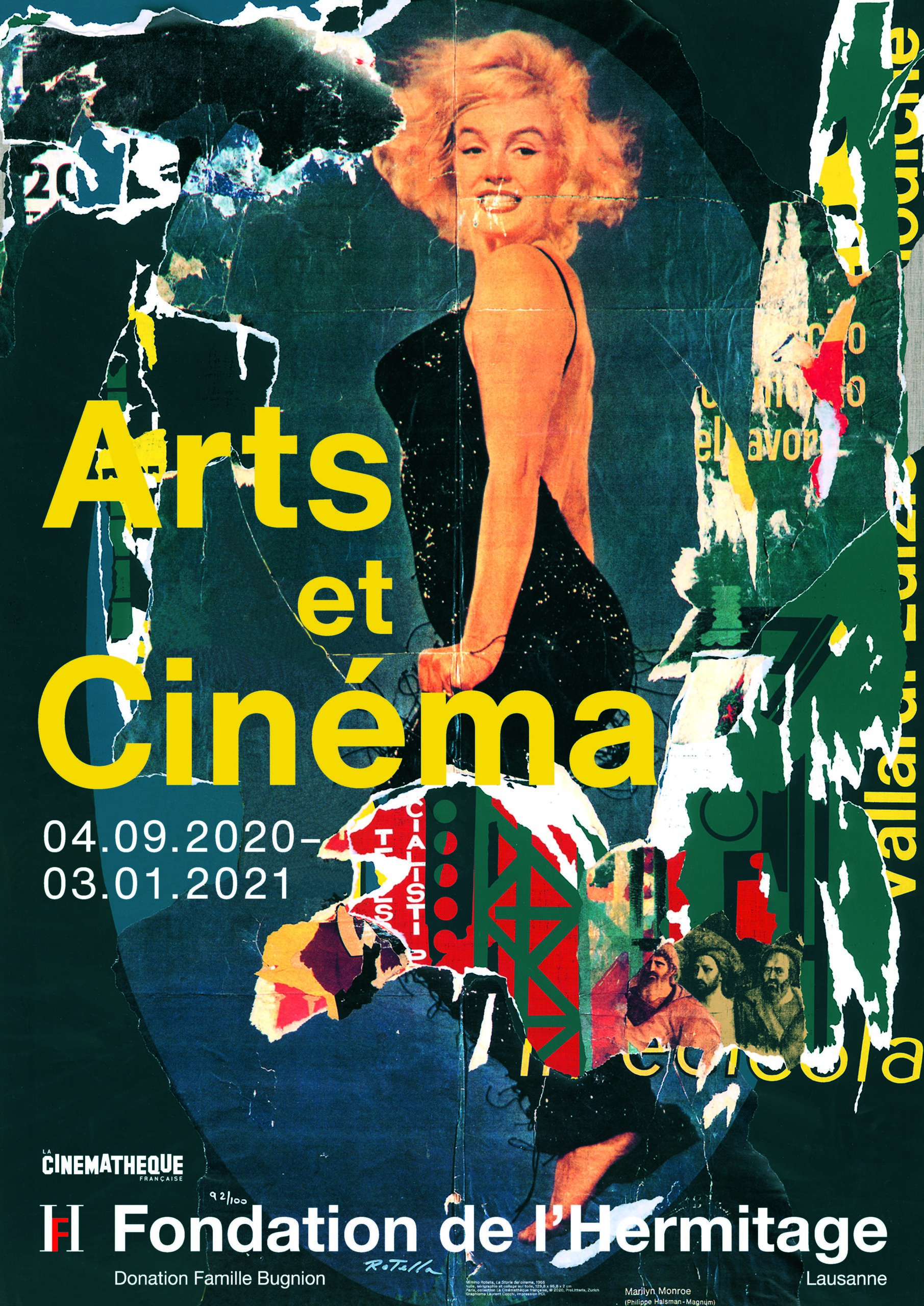
Mais passons sur cette boutade. Le titre «Arts et cinéma» – bien choisi, répétons-le – en appelle d’autres, dans la mesure où l’exposition focalise l’attention, et c’est normal, sur certaines formes d’art, justement, et non sur tous les arts. On remarquera par exemple que la musique est aux abonnés absents. Un jour, il serait intéressant d’aborder la question de ses correspondances avec d’autres arts tels que le cinéma, évidemment, mais aussi les arts plastiques traditionnels, justement. La présence dans une des salles de l’expo de l’affiche du film La dolce vita from Federico Fellini appellerait une question d’ordre très audacieux, très original et très populaire: la title track from cinephile Christophe, sortie dix-sept ans après l’œuvre de Maestro, would she be inspired by it? A call for action has been issued.
Read also: Christophe, out of format (interview from late 2019)
Il est un autre domaine du monde des arts, des sciences et des lettres qui peut être sollicité par l’esprit d’un corps déambulant à la Fondation de l’Hermitage ces mois-ci. Car c’est la grande force de cette nouvelle exposition, outre ce qu’elle montre en soi: le fait de stimuler des associations d’idées. Ce domaine en question, donc, c’est la philosophie. Un penseur en particulier, associé à la philosophie française, s’est imposé dans mes réflexions pendant la visite de l’expo: Henri Bergson. Bergson, grand représentant du charme à la française, théoricien de beaucoup de thématiques qui n’avaient guère été traitées auparavant, dont celle du rire. On lui doit notamment une idée remarquable résumée en cette formule: le comique, c’est «du mécanique plaqué sur du vivant». Cette définition se comprend ainsi: le vivant se définit par la fluidité, par la continuité, par l’agilité; arrive alors une chute, un tic, un toc – voilà du mécanique, qui rend l’humain plus proche de la machine que de l’être vivant. C’est là que le comique survient.
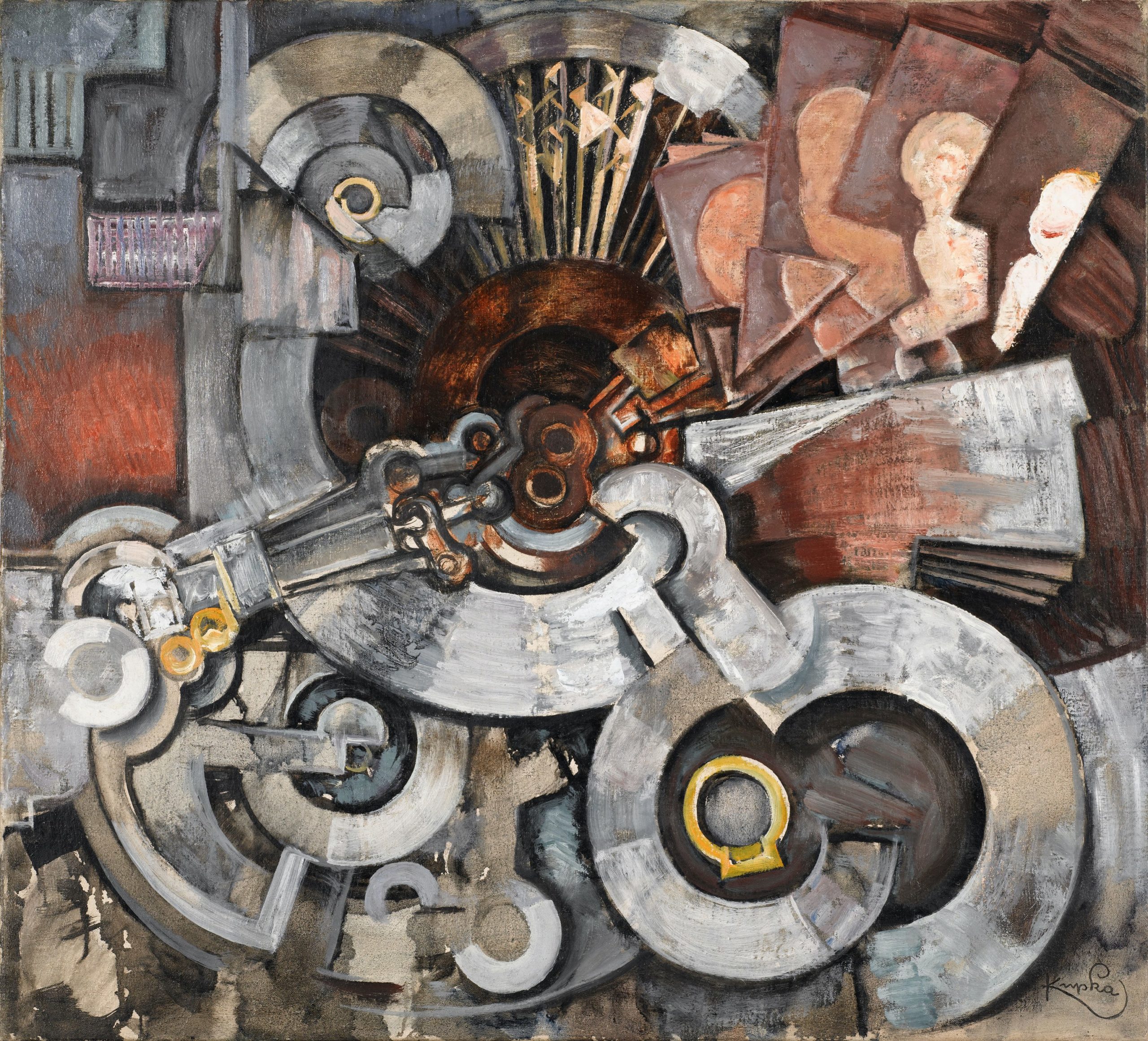
Voilà bien un lien évident avec le contexte artistique à l’œuvre au temps de l’écriture du Laugh, at the turn of the 20thth siècle. Apparaît en effet une réflexion sur les machines, omniprésentes dans la Révolution industrielle, qui commence progressivement à être questionnée. C’est ainsi qu’on retrouvera plus tard ce motif du mécanique et des rouages dans des œuvres comme L’Acier travaille by František Kupka (1927–1928) or Cubist Charlie by Fernand Léger (1924).
Charlot, parlons-en: ce personnage incarné par Charlie Chaplin n’est autre que l’incarnation du comique tel que défini par Bergson. Non seulement il est l’Homme devenu robot, mais il montre ce qui est consubstantiel au rire selon le philosophe, à savoir une impitoyable social correction. Indissociable du concept de masses, cette attitude collective porte en elle le risque totalitaire d’une conception du «même» – ou prétendu tel – contre tout être différent ou tout égarement, contre tout «autre» en somme. D’où, chez Chaplin, à la fois ce comique si réussi et cette dénonciation du fascisme. Bergson écrit, à la fin de son essai paru en 1900 déjà, comme un avertissement du siècle:
«C’est ainsi que des vagues luttent sans trêve à la surface de la mer, tandis que les couches inférieures observent une paix profonde. Les vagues s’entrechoquent, se contrarient, cherchent leur équilibre. Une écume blanche, légère et gaie, en suit les contours changeants. Parfois le flot qui fuit abandonne un peu de cette écume sur le sable de la grève. L’enfant qui joue près de là vient en ramasser une poignée, et s’étonne, l’instant d’après, de n’avoir plus dans le creux de la main que quelques gouttes d’eau, mais d’une eau bien plus salée, bien plus amère encore que celle de la vague qui l’apporta. Le rire naît ainsi que cette écume. Il signale, à l’extérieur de la vie sociale, les révoltes superficielles. Il dessine instantanément la forme mobile de ces ébranlements. Il est, lui aussi, une mousse à base de sel. Comme la mousse, il pétille. C’est de la gaîté. Le philosophe qui en ramasse pour en goûter y trouvera d’ailleurs quelquefois, pour une petite quantité de matière, une certaine dose d’amertume.»

«Arts et cinéma»: une exposition incontournable à découvrir à la Fondation de l’Hermitage, à Lausanne, jusqu’au 3 janvier 2021. Infos supplémentaires: Arts and Cinema.
Write to the author: [email protected]
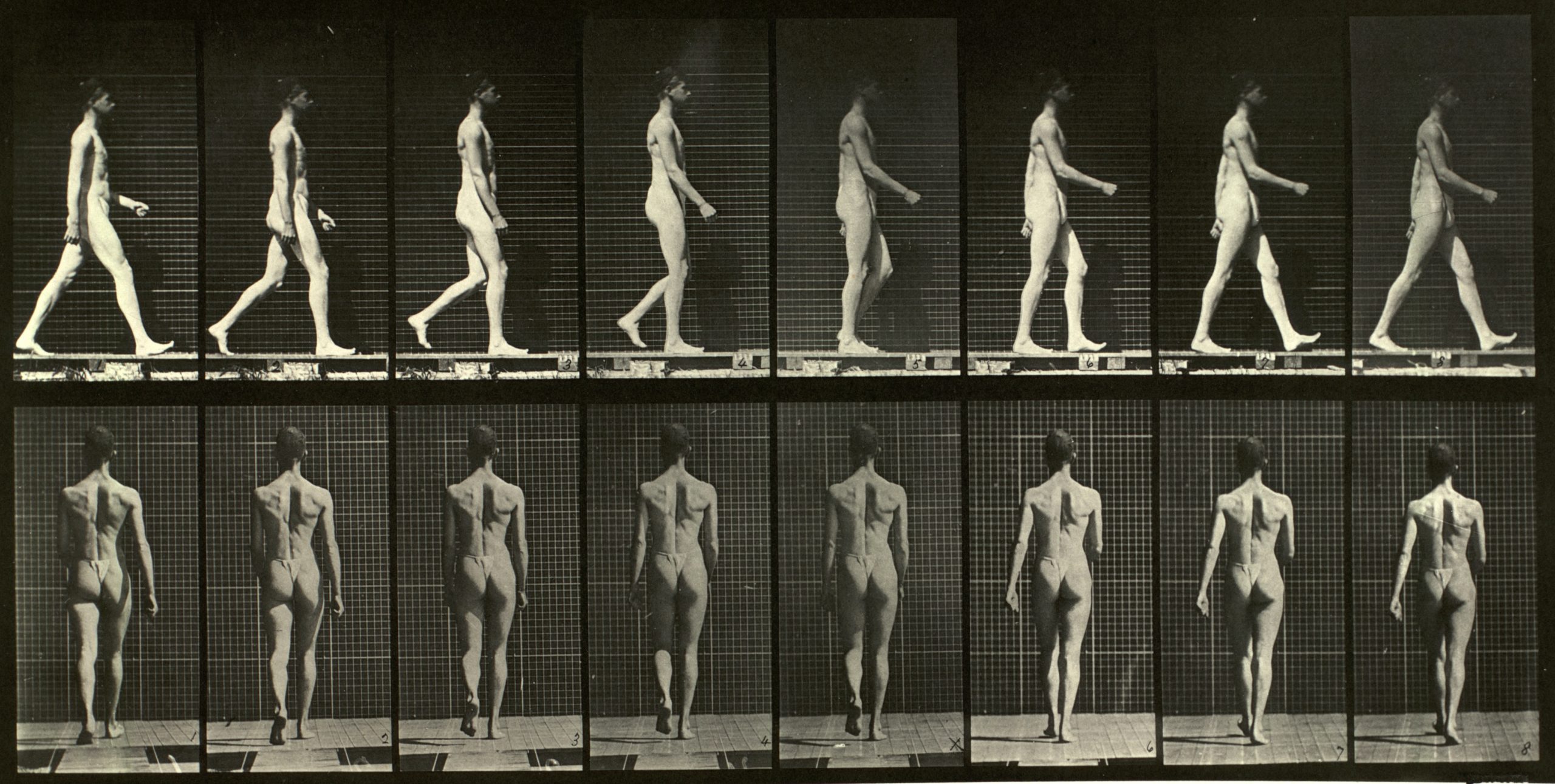
Image d’en-tête: Eadweard Muybridge, Animal Locomotion: Males (Nude), phototype, 1887. Paris, La Cinémathèque française series.
-
 Youth passCHF25.00 / year
 -
Digital subscriptionCHF50.00 / year
-
Standard subscription (Switzerland)CHF100.00 / year
-
Support subscriptionCHF200.00 / year

You'll also like



 French
  German
  English
Leave a comment