




How can you not be a conservative-liberal-socialist?
In 1978, the Polish philosopher Leszek Kolakowski, a dissident exiled in Oxford, proposed a definition of liberalism, conservatism and socialism that made them compatible and set a course to follow.
« »Avancez vers l’arrière s’il vous plaît! » Telle est la traduction approximative d’une injonction que j’entendis un jour dans un tramway de Varsovie. Je propose d’en faire le mot d’ordre d’une puissante Internationale qui n’existera jamais.» Dans son article «Comment être « conservateur-libéral-socialiste ». Credo» published in the French magazine Comment In winter 1978-1979, the Polish philosopher Leszek Kolakowski, a dissident exiled in Oxford, proposed a definition of liberalism, conservatism and socialism that made them compatible and set a course to follow. It should be stressed that this brief reflection of great posterity took place against the backdrop of the Cold War and the vivid memory of the tragic events of the twentieth century.th century.
Kolakowski attributes three fundamental theses to each of these three currents. The very first: «A conservative firmly believes that, in the life of men, there have never been and never will be any improvements that are not paid for by deterioration and evils; therefore, when considering a reform project tending towards the better, one must determine its price.» If this belief seems obvious enough as soon as it is formulated, let's admit that it is rarely formulated, at least not so explicitly. True progress is an evolution in which the gains are greater than the losses. This assessment has the merit of setting the framework for any political debate, which is a balancing act. It is not progress that determines political choices, but political choices that determine progress. Hence some of the difficulties posed by the much-used term "progressivism".
On order | Le Regard Libre N°90, special report «Today's political cleavages».»
Moreover, for the conservative, there's no reason to believe that destroying existing traditional structures would improve society's situation. He also postulates that the institutionalization of virtues such as love and altruism leads to despotism.
The ideas attributed to the liberal and the socialist are relatively conventional. For the former: the legitimacy of the state in its role as guarantor of security, and the necessity of competition. For the latter: the relevance of regulating the economy for the benefit of the most disadvantaged, provided this lever is counterbalanced by intermediate powers and framed by representative democracy.
«As far as I can see,» writes Kolakowski, "these guiding ideas in no way contradict each other. One can therefore be a conservative-liberal-socialist, which is to say that these three qualifiers now represent options that are not mutually exclusive. As for the great and powerful International I mentioned at the beginning, it will never exist because it cannot promise people that they will be happy."
We can question the author's pessimistic view of the success of his proposal. We can also question his definitions of conservatism, liberalism and socialism. But if we accept his definitions, the idea of compatibility between the three political theories can hardly be refuted. Above all, they may even seem attractive. Under the conditions laid down by Kolakowski, how can we fail to feel conservative-liberal-socialist?
There's plenty to inspire these three families of thought, who would certainly benefit from a more sophisticated worldview in terms of clarity and coherence. The same applies to movements that claim to go beyond these ideologies. Reading and re-reading the great thinkers of Europe and the world will never be too much. Our dossier on today's political cleavages, in our new issue, is no exception to this credo. Enjoy your reading!
Write to the author: [email protected]
You've just read an open-access editorial. Debates, analysis, cultural news: subscribe to support us and get access to all our content!
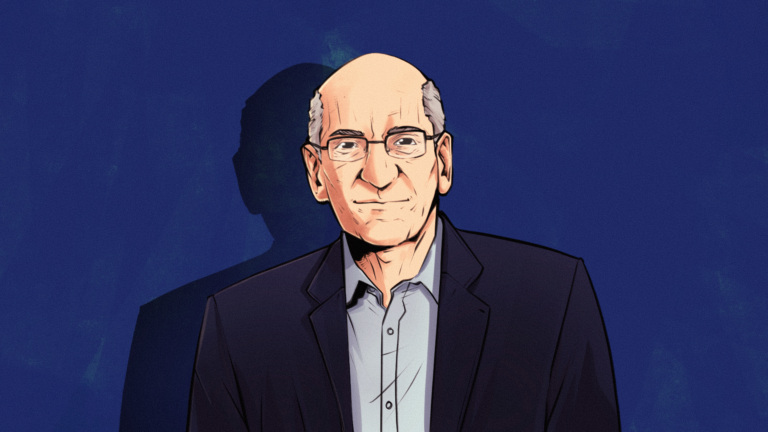
Image: © Drawing by Nathanaël Schmid for Le Regard Libre

You'll also like


 French
  German
  English
Leave a comment