




The Federal Council, more than representation

News on Mondays – Diego Taboada
With last week's election to the Federal Council, the world of Swiss politics was back in the limelight, having been rocked in French-speaking Switzerland by the Broulis, Savary, Maudet and Barazzone affairs. After the collective realization that Switzerland is not spared by the political detours, It's a timely return to «normality».
Gender, the new criterion
It was the turn of Johann Schneider-Ammann (PLR) and Doris Leuthard (PDC) to bow out after long years of loyal service to their country. Election to the Federal Council is an institution in itself, governed by more or less codified habits and customs. It is also perhaps one of the few national executives whose essential criterion is representation, not program. Linguistic representation, of course - enshrined more or less clearly in the constitution - requires that the different languages be represented as best they can within the government. Secondly, partisan representation - the famous «magic formula» for stability - means that the parties are represented in the executive in proportion to their weight in the Federal Assembly. These two criteria are generally scrupulously respected.
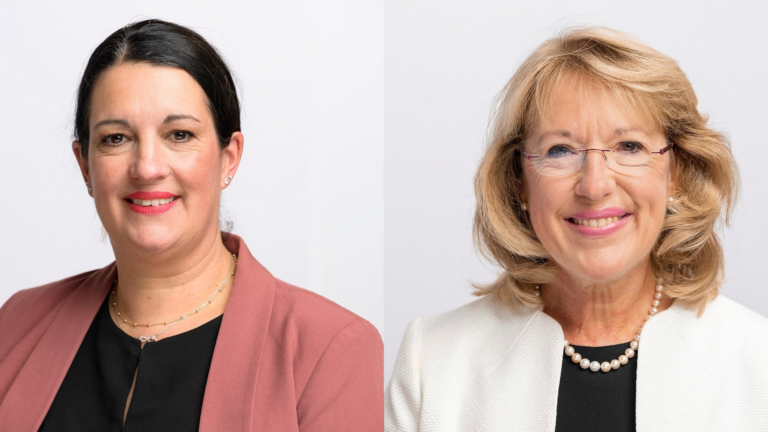
During the campaign, a new, omnipresent criterion was introduced: gender. It was imperative that the two future federal councillors be women, in order to respect parity. A natural demand, especially at a time when the gender issue is at the forefront of the "women's rights" movement. #metooto the equal pay debate. Duly noted. Karin Keller-Sutter and Viola Amherd are women.
Competence: an often overlooked criterion
But apart from their «female» quality, which was mainly emphasized during and after the election by the majority of commentators, Karin Keller-Sutter and Viola Amherd are formidable politicians with a track record that is the envy of many.
Ms. Keller-Sutter focused on security and justice issues during her time on the Council of State in St. Gallen, before turning to economics and health in the Council of States, which she chaired in 2017. An unsuccessful candidate for the Federal Council in 2010, she is one of Switzerland's most influential parliamentarians. Ms. Amherd is renowned for her efficiency (particularly during her time on the executive of the city of Brig), her hard work and her consensual profile. Her commitment to peripheral Switzerland is also one of her trademarks. So why do we insist so much on the fact that they are «women», or from minority regions such as Eastern Switzerland or the Upper Valais? Why isn't their opinion on pension reform, the framework agreement with the EU, or the role of public companies such as Swiss Post or Swisscom what should interest them?
In a country like Switzerland, which is characterized by its cultural and linguistic fragmentation, it is obviously essential that different sensibilities are represented. Moreover, the election of two women to the Federal Council is a strong and important symbol for the feminist and egalitarian cause. However, by focusing solely on their gender and less on their intrinsic (or subsidiary) skills, we leave open the possibility of thinking that, in the end, that's all that matters, what they represent. Emphasizing their competence, their background, their ability and readiness to take on the job of Federal Councillor as an individual and not as a member of a group is far more rewarding. It also takes the wind out of the sails of those who still believe that women have no place in politics. Legitimacy must come from one's own competence, not from one's gender or canton of origin.
Representing, yes, but not only
With this obsession with representation, it is often overlooked that the role of Federal Councillor is a demanding one. Seven ministers, each in charge of three or four departments. The collegiate nature of the decision-making process means that each councillor has to deal with his or her own issues, but also take an interest in those of the others, as there is no such thing as a prime minister who decides on the various issues in Switzerland. It's a demanding job, with an impressive workload that requires well-prepared individuals.
Moreover, the recent polarization and media coverage of Swiss politics, and the complexity of the issues facing the country, mean that members of the government must be increasingly well prepared and competent, and not simply cash registers for their party's decisions.
The balance between linguistic regions and the presence of women in political institutions is an important issue of our century, but this «representation frenzy» must not obscure the fact that it is essential to have competent people, capable of forging compromises but also of having a clear political line. With Karine Keller-Sutter and Viola Amherd, we can not only welcome female representatives, but above all capable politicians, who will hopefully help Switzerland face the challenges that lie ahead.
Write to the author: [email protected]
Photo credit: © Wikimedia CC 2.0
You'll also like



 French
  German
  English
Leave a comment