




Voting fantasy
News Mondays – Clément Guntern
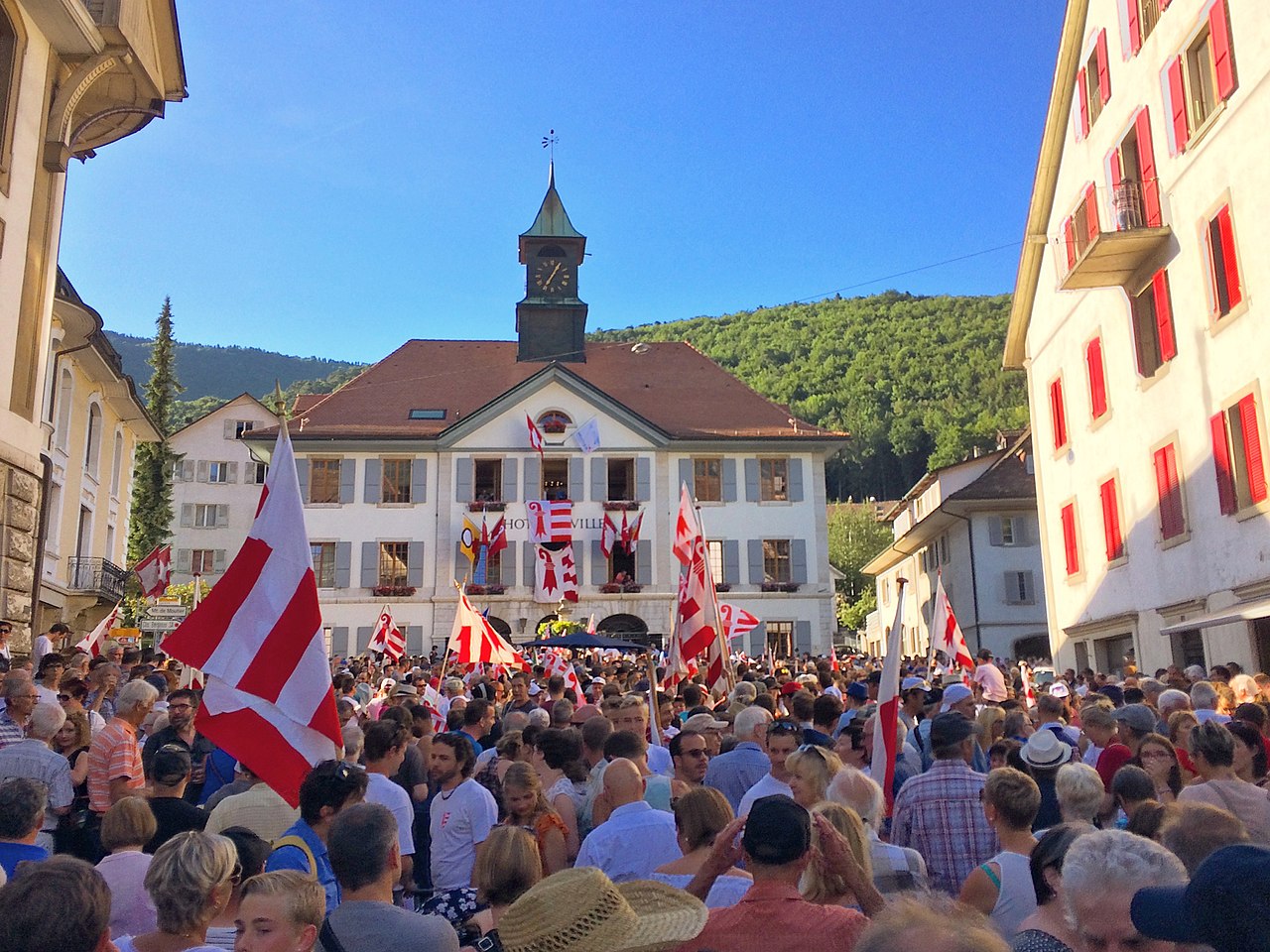
Sunday November 4 and Monday November 5, 2018 were each in their own way revealing of what a popular consultation, or a vote as it's called in Switzerland, represents. On Sunday, the inhabitants of the archipelago of New Caledonia had to decide on their independence from France, while in Switzerland, this Monday morning, the justice of the canton of Berne invalidated the popular decision on the cantonal membership of the town of Moutier, voted on a year ago. These two recent examples illustrate a certain contradiction between the merits we give to this type of democratic exercise and the effects we can reasonably expect from them in terms of conflict resolution.
Popular consultations are often seen as the solution to all problems, and hold out the hope of resolving certain conflicts. But the popular will, which is supposed to settle thorny issues with a simple yes or no vote, is clearly not infallible. The sum of individuals does not make a superior individual capable of understanding all the issues and responding in the best possible way. Sometimes, the context of the vote has been so bad that citizens have been unable to make up their minds. The arguments were misleading, the purpose of the vote and its possible consequences were unclear.
Voting is not the alpha and omega of democracy. On the one hand, as mentioned above, it can never be perfect, like all forms of government, and on the other, there are other ways in which democracy can exist. Firstly, voting on an issue is not necessarily democratic. We can still discuss this, but in the case of Catalonia, which is more democratic: institutions accepted by an entire country and then renewed over the years, or a vote at a given moment in a given region?
Secondly, a vote may be called, contrary to its democratic appearance, to disrupt a country's political life rather than solve its problems. We can recall the initiative against mass immigration in Switzerland, which, on the pretext of wanting to solve the problem of immigration, was only intended to disrupt the government in its action and for the party that launched it to emerge stronger.
Latterly, and in a way close to the last argument, a vote is by far not a perfect form when the people calling for them don't care about the consequences of acceptance. The Brexit vote is a striking example of this. The leaders who launched and imposed the idea of a referendum had no idea of the consequences of acceptance. Nor did anyone else, for that matter. These votes were launched by people who either didn't know the consequences of accepting the text, or had done so in order to make it deliberately inapplicable and vague, so as to reap political gain in the event of non-implementation. Consultation is therefore not the ultimate form of popular legitimacy that will save the world from dictatorship.
Certain rules must be respected for a vote or election to be validated, guaranteeing a certain legitimacy. In the name of democracy, these institutional rules can also overturn popular decisions. It's a good thing that the people can't decide just any old way. However, it remains to be seen whether, in Switzerland, greater control could be exercised by the courts. Particularly when an initiative contravenes certain legal principles, or when its wording or objectives are unclear. Without necessarily preventing the people from voting, the courts could ask the initiators to clarify or elaborate on a point in their text. The obvious aim is to ensure a healthy democracy, avoiding sterile debates about who is to blame for popular initiatives that are not implemented.
You'll also like






 French
  German
  English
Leave a comment