



Militiamen play an essential role in workplace safety
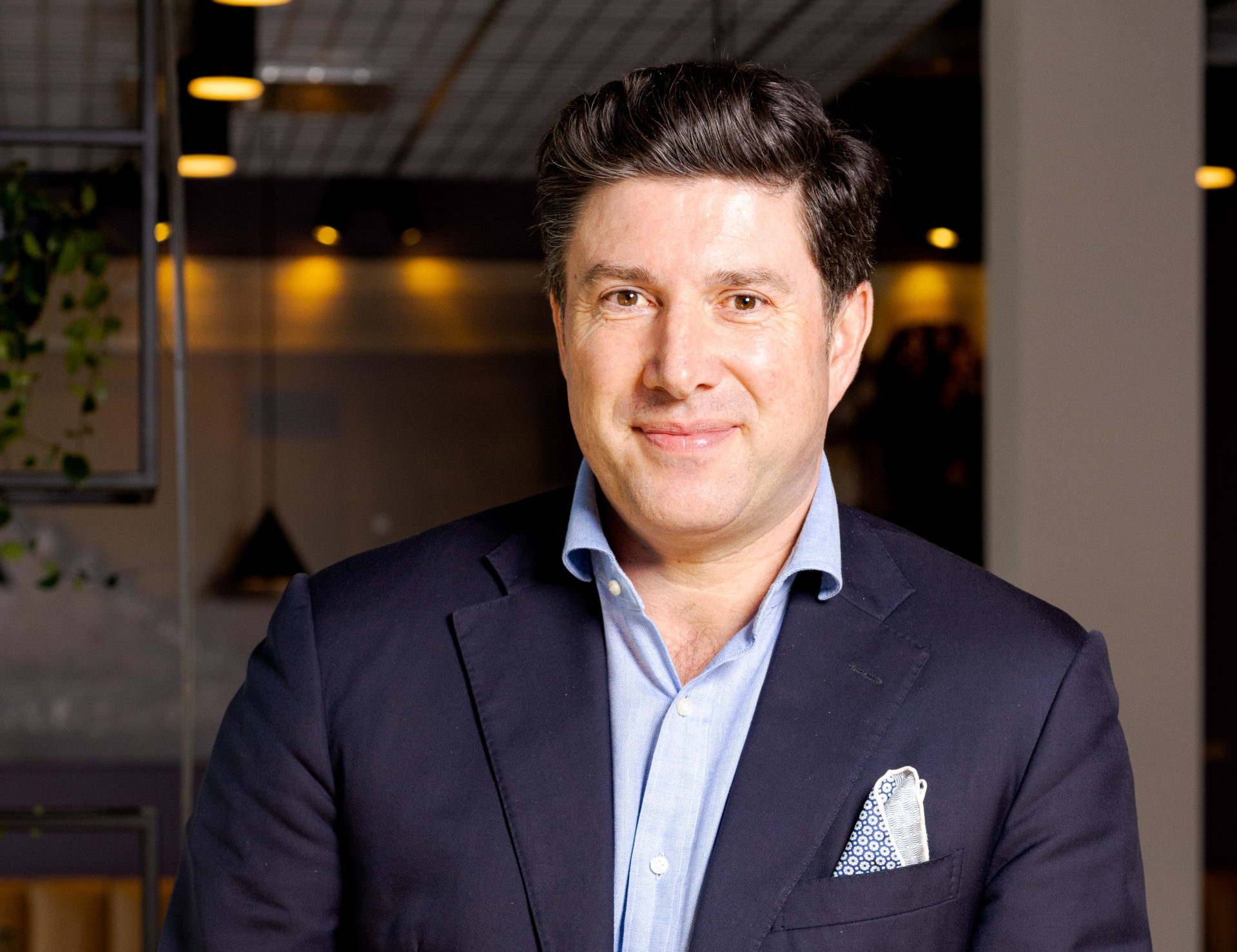
Christian Wyssmüller is President of the Swiss Society for Occupational Safety, which operates on a militia basis. Photo: Samuel Devantery (© samueldevantery.com)
Over the decades, the Swiss militia system has fostered mutual understanding between the professional, political and associative worlds, as well as the pooling of knowledge. This is also true for the culture of prevention among the general public.
The Swiss Society for Occupational Safety (SSST), which celebrates its 40th anniversary this yearth anniversary, relies on a large number of militiamen to provide services and high-quality training for over 1,800 occupational health and safety specialists. Its aims include promoting safety in all areas of life, but particularly in the workplace, advancing professional training and enabling its members to carry out their duties under the best possible conditions. In particular, it is responsible for monitoring continuing training and keeps a register of safety specialists (known as «MSST»). freely available on its website.
Since its creation in 1984, thanks to the commitment of its members in the field, the SSST has helped to reduce the number of occupational accidents in Switzerland by more than 50%, but its mission is now threatened by the clouds hanging over the militia system. It is becoming increasingly difficult for associations to find people willing to join their committees.
Supporting employees who want to get involved
Against this backdrop, last year the SSST and Suissepro, the industry's umbrella association, launched a Declaration of Support for the Militia System in Switzerland to raise awareness of the issue among companies and encourage them to put in place concrete measures to support employees wishing to get involved. With 31 major companies and associations as co-signatories, representing more than 3 million workers, committing themselves to putting in place working conditions conducive to militia activities, the result of this campaign goes well beyond the SSST's expectations. It demonstrates the economy's attachment to the militia system, and many prominent figures have lent their support.
Following on from this approach, a postulate was submitted to Parliament this spring by Vaud National Councillor Jean Tschopp, calling on the Federal Council to examine the advisability of incentives and facilitating measures to enable employees to commit themselves to the community, in order to develop our militia system. The bill is due to be debated in plenary session this autumn.
The commitment of companies is vital if the militia system is to survive, and it has been observed that militiamen are very unevenly distributed, and concentrated in large companies. A recent survey of SSST members revealed that 62 % of them comply with the legal requirements for continuing training. For the 37.5 % of members who do not declare themselves up to date, the main reasons given are lack of support from employers, lack of time or fear of being sanctioned by the supervisory bodies (Suva, cantons).
These results are striking, and demonstrate that workplace safety is all too often perceived as a constraint by managers, who have other priorities to contend with. In SSST's view, it is up to the supervisory bodies to ensure that companies comply with their legal obligation to pay for continuing training. The time and cost of training should not be borne by employees.
Safety at work should be seen as an investment, as it contributes to the health of the country's economy, in terms of leadership, image and skills sharing. So it's vital that small and medium-sized businesses are given incentives to support staff who want to get involved.
The ball is in the politicians' court
In its response to Jean Tschopp's postulate, the government takes the view that there is no proven need for action on this issue at federal level. Existing legal bases would provide sufficient instruments for employees to become involved in the militia system. To date, however, no incentives have been put in place for companies, despite these signals, which should give us cause for alarm.
While everyone seems to be committed to perpetuating the militia system, it's time for the federal chambers to put pressure on the executive to take the measure of the problem and come up with a political response. The survival of many associations, whose activities benefit the whole community, is at stake.
You've just read an open-access forum. Debates, analyses, cultural news: subscribe to support us and get access to all our content!
-
 Le Regard Libre N°109 | Dossier MILICEPrice range: CHF5.00 through CHF10.00
You'll also like






 French
  German
  English
Leave a comment