




Facebook scandal: what now?
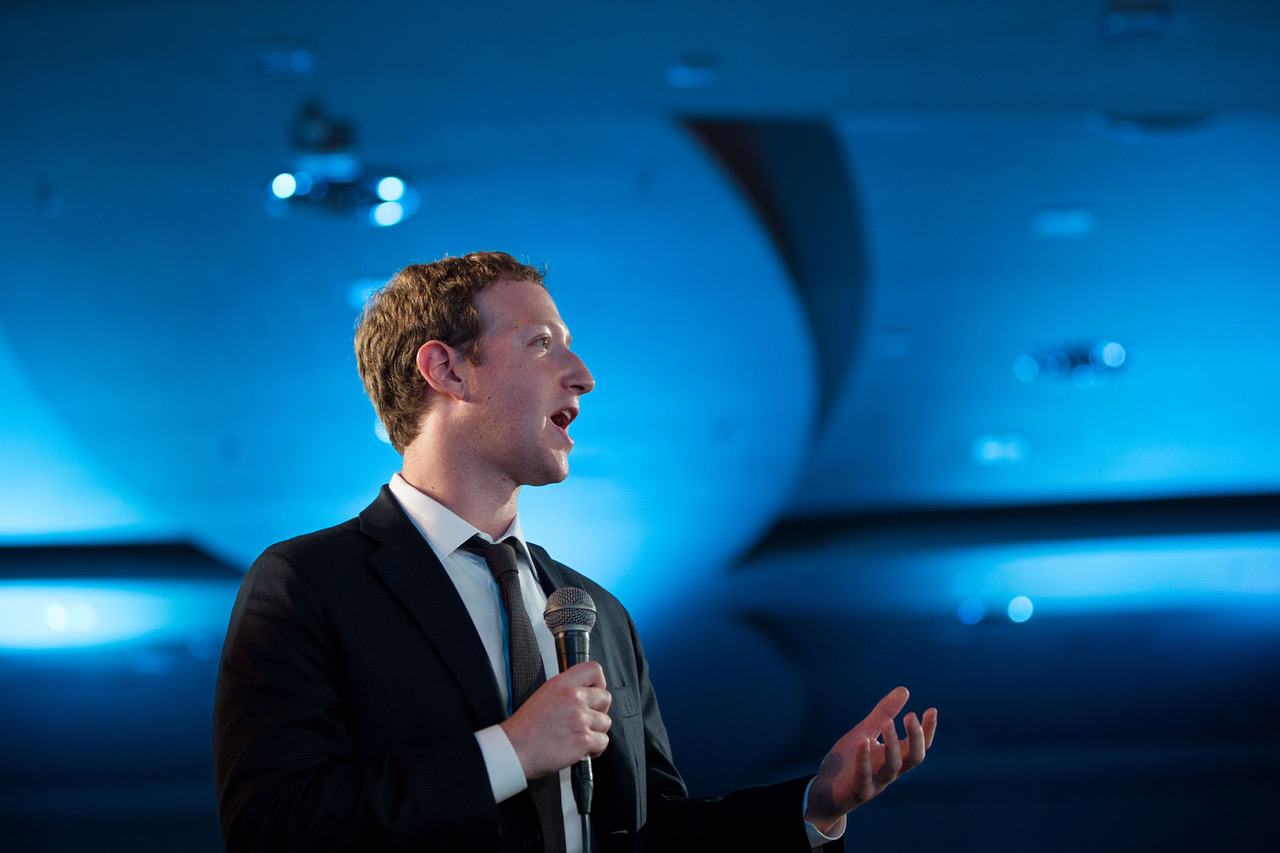
Facebook co-founder Mark Zuckerberg asks a question during the CEO Summit. (Official White House Photo by Pete Souza)
Mondays of the’News – Diego Taboada
Following the revelations about the scandal now known as the «Facebook-Cambridge Analytica» scandal, Mark Zuckerberg appeared before the U.S. Congress this week for a ten-hour hearing. As a reminder, the social media platform is accused of allowing the data analytics firm Cambridge Analytica to harvest personal data from more than 87 million users. This information is suspected of having been used to influence the most recent U.S. elections. Facebook now finds itself in a critical situation, reflecting the widespread unease surrounding digital technology and social media.
«Which hotel did you stay at yesterday?»
First the Senate, then the House of Representatives. Mark Zuckerberg seemed tense and uncomfortable. A far cry from the confidence he displays during his public appearances. It was also a far cry from the image of a potential Democratic candidate for the U.S. presidency, as some media outlets had fantasized less than a year ago.
An oral session during which elected officials stood out for some of their incisive remarks. These were scathing, uncompromising retorts that were sometimes surprising, such as: «Your terms and conditions are invalid!».An awkward moment when, while defending the right to privacy, a senator asked a nervous Mark Zuckerberg which hotel he had stayed at the night before. As for today's victim, she answered questions in a low-key manner, acknowledging her mistakes.
But this «political trial» of Facebook’s CEO and founder served more as a showcase of the U.S. government’s omnipotence than as a real step forward on the issues raised. The vague measures announced to salvage what could still be saved are not enough. States and the public are expecting real commitments. This hearing therefore failed to answer the nagging question: what do we do now?
The Challenges of Regulation
The protection of personal data is a major issue for the coming years. Safeguarding the right to privacy is just as important. Zuckerberg himself acknowledges that regulation of the sector seems «inevitable» in order to prevent this kind of abuse.
Regulate—but who should do it? Some questions posed by U.S. lawmakers have at times revealed a distressing lack of digital literacy. Congress has once again demonstrated the limitations of lawmakers, who struggle to grasp the implications of such technical issues.
Regulate—but how? Technology and the digital sector are fields that are constantly evolving at an exponential rate. Given how quickly laws become obsolete, inappropriate government regulation would be counterproductive and could hinder the growth of the digital industry.
In any case, it is essential for these tech giants to reevaluate their approach. Zuckerberg and his colleagues must realize that a global shift in awareness is taking place. Data protection, more than just a government mandate, must be a reasonable and legitimate demand from individuals. The various stakeholders—whether public or private—have an obligation to safeguard citizens’ freedom and privacy.
Because, like you, Mr. Zuckerberg, I wouldn't want anyone to know which hotel I stayed at last night…
Write to the author: [email protected]
Photo credit: © Official White House Photo by Pete Souza
You'll also like





 French
  German
  English
Leave a comment