LONG FORM INTERVIEW, Jean-David Ponci | Taking vaccine hesitants and anti-sanitary passers-by seriously, trying to answer their questions by countering their positions with arguments, helps us all to identify the flaws in our societies and to rethink together the notions of solidarity and freedom. Interview with doctor and theologian Bertrand Kiefer, editor-in-chief of the Swiss Medical Journal.
LONG-FORM INTERVIEW, Jonas Follonier | Moix is a free spirit. Above all, he is driven by «novelistic truth»—which he conveys with the flair of a genius, using phrases that are as sensitive as they are harsh, and as tragic as they are funny. Who else but a master of premeditated improvisation is capable of this? A former panelist on the show «On n’est pas couché,» hosted by Laurent Ruquier on France 2, and former host of his own show «Chez Moix» on Paris Première, Yann Moix is also a child of television, who loves to put his verbal wit to work in the intimate and demanding exploration of people, books, and the world. I had been warned: «He’s a bit of an oddball.» This experience was confirmed during this interview, which very nearly didn’t happen. The writer, director, and television commentator opens up to *Le Regard Libre* about his «horrible years» in his twenties, the city of Reims in the 1980s, and the anti-Semitism he became entangled in during that time. And one of the best contemporary French authors explains to us exactly what he means by «novelistic truth,» two years after being the subject of controversies related to his family—a family he no longer refers to as such.
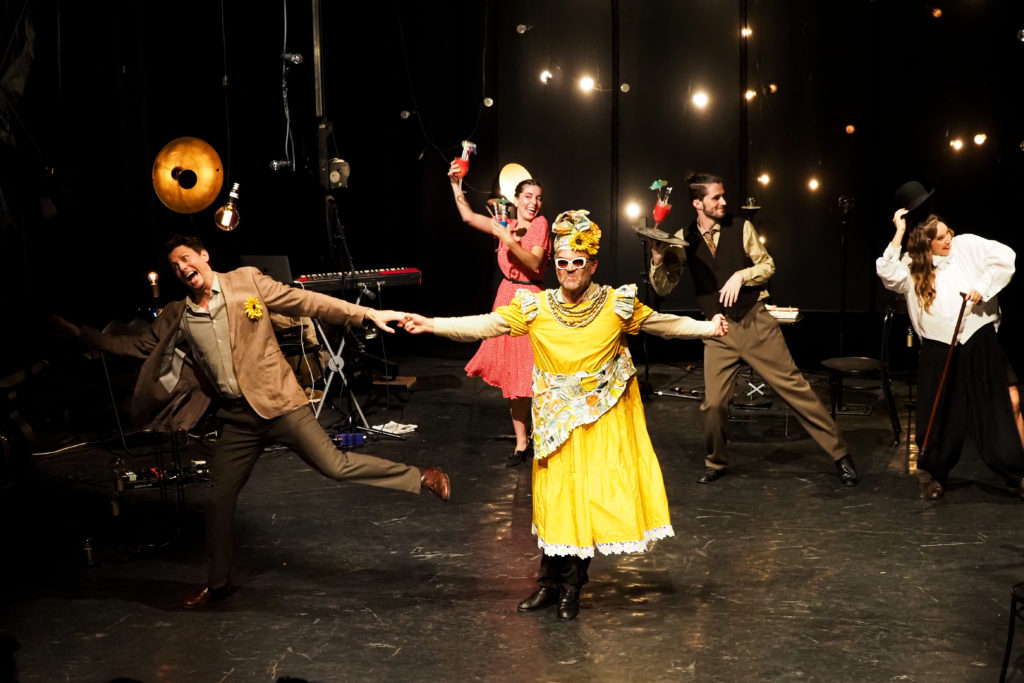
LONG FORMAT INTERVIEW, Antoine Bernhard | Alongside his job as a teacher at a Valais high school, Stéphane Albelda devotes a great deal of his time to the theater. This year, with the Nova Malacuria and Hussard de Minuit companies, he brought to the stage the fascinating and mysterious life of Antoine de Saint-Exupéry. For Le Regard Libre, he talks about his play Saint-Exupéry volé au ciel and his passion for «Saint-Ex», a writer born at the dawn of the 20th century, who disappeared in the twilight of the Second World War, but whose work continues to fascinate us all.
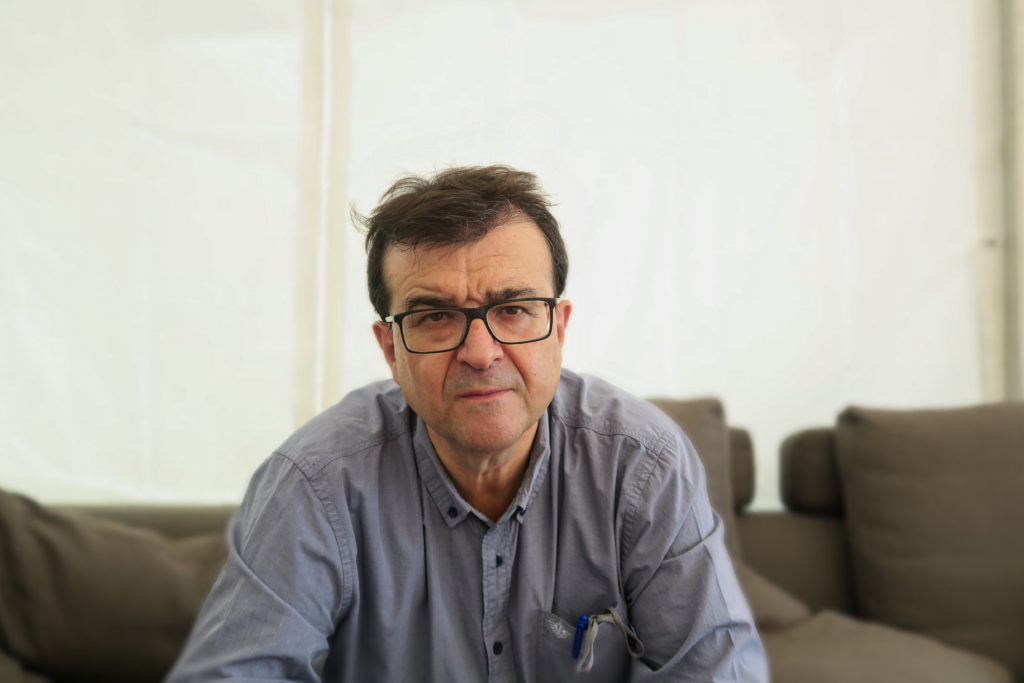
LONG FORMAT INTERVIEW, Ivan Garcia | Every year, the «Le Livre sur les quais» festival in Morges is the rendezvous of the Swiss literary season, where authors, publishers and readers meet on the shores of Lake Geneva. For this twelfth edition, the honorary president of the event is none other than Spanish writer and translator Javier Cercas. Based in Catalonia, the columnist for the Spanish daily «El País» has been writing books since the 1980s. His best-selling novel, «The Soldiers of Salamis», published in 2001, features a journalist investigating a mysterious soldier who, during the Spanish Civil War, is said to have saved the ideologue and founding member of the Spanish Falange, Rafael Sánchez Mazas. Particularly interested in the history of contemporary Spain, from which he draws material for his writings, Javier Cercas has recently embarked on a series of detective novels centered around the detective-investigator Melchor Marin, the first part of which, «Terra Alta», was translated into French this year by Editions Actes Sud. Meet the writer on a September afternoon, under the «Livre sur les quais» authors' tent, to discuss his work and the situation in Spain and Catalonia.
Interview with Jean-Pierre Siggen
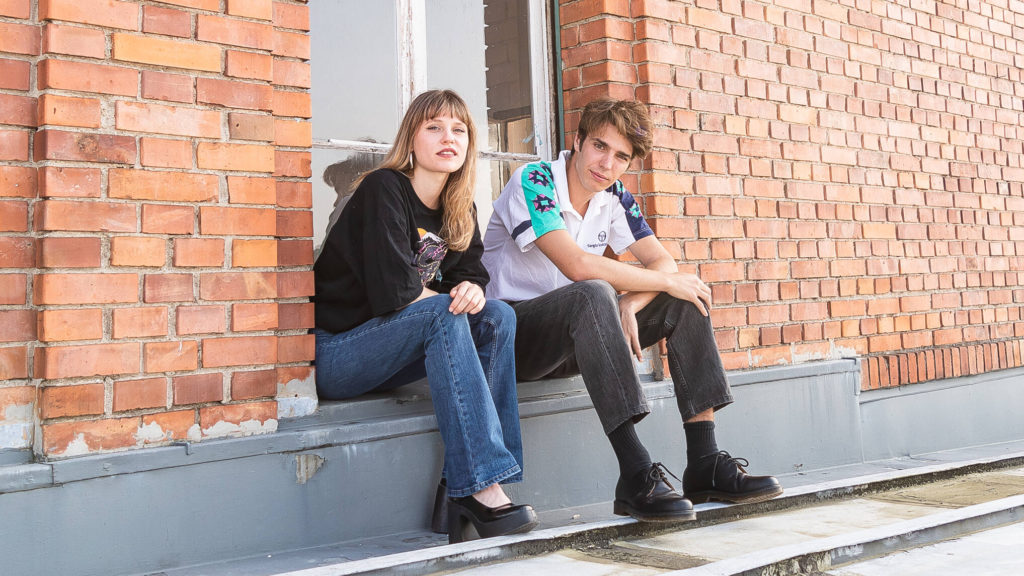
They're both 24, studying contemporary history at the University of Fribourg, and are among the most successful bands in French-speaking Switzerland this summer. Faustine Pochon and Arnaud Rolle, committed but not militant, make up the French-speaking indie pop duo BARON.E. Revealed in particular by the presence of their single Un verre d'égo in a playlist of the prestigious French magazine Les Inrocks, but above all by the quality of their work as measured by their listeners and spectators, the Dzodzets of the moment present us with their new EP Créature, comprising, like the previous one, five songs situated between pop, electro and progressive rock. They invite us to meet them on the rooftops of Fribourg, their home town, to talk about music and society.
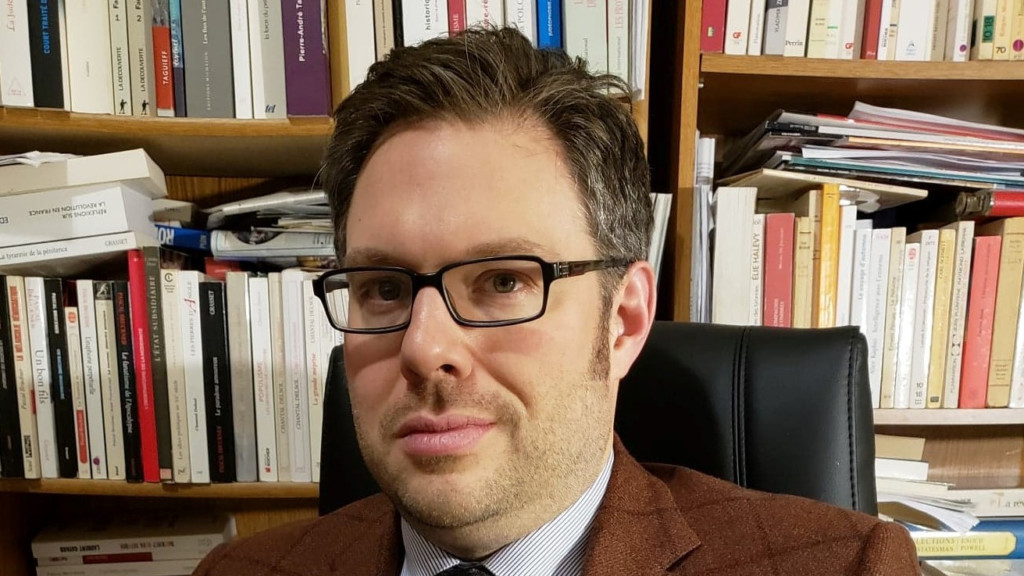
Quebec sociologist Mathieu Bock-Côté castigates the «diversitarian regime» that is tending to replace democracy as we know it in the Western world. Interview about his latest book, La révolution racialiste.
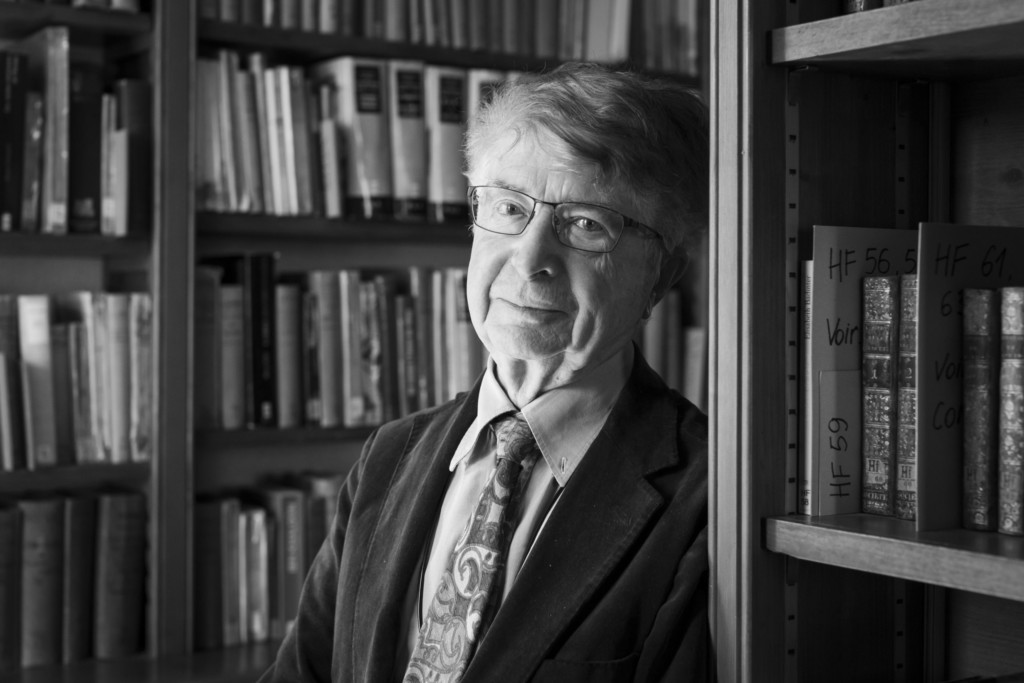
On June 28, we met Professor Georges Nivat, an eminent French Slavic scholar, at his home in Haute-Savoie. His hospitality is Russian, and the view splendid. He welcomes us to his garden, which he likes to take care of for an hour every morning before plunging into his work. Among other activities, Georges Nivat is currently translating the Ukrainian poet Vasyl Stus into French. The next day, he has a Zoom appointment with Kiev, an opportunity to exchange nuances of Ukrainian with the man who helped him acquire the language. The Russian world is his home; we hope to discover a few versts of it under his guidance.
Over the past year, the coronavirus crisis, with all the questions, insecurities and frustrations it has brought, has given rise to a number of conspiracy theories, the scale of which has continued to grow. These simplistic and, in some cases, dangerous theories, as distinct from opinions critical of the management of the crisis or the doubt inherent in science itself, are well and truly present. How can we explain the success of conspiracism in the age of Covid-19? Back to basics with Laurent Cordonier, sociologist and specialist in this phenomenon.






 French
  German
  English