




Mathieu Bock-Côté: «There is an intellectual corruption of the social sciences».»

Mathieu Bock-Côté
Quebec sociologist Mathieu Bock-Côté castigates the «diversitarian regime» that is tending to replace democracy as we know it in the Western world. Interview about his latest book The racialist revolution.
In just a few years, Mathieu Bock-Côté has established himself as a leading intellectual in the French-speaking world. An independent Quebecer, a defender of the Gaullist heritage and a great admirer of Raymond Aron, he devotes his work to analyzing the evolution of our society towards a new regime he calls «diversitarian». While criticizing the excesses of the radical left - notably in his books Multiculturalism as a political religion and The empire of political correctness -he proposes a model of society imbued with the conservatism he champions. In April 2021, Mathieu Bock-Côté published his latest book The racialist revolution, The result is a scathing critique of the transformation of the anti-racist struggle into a new totalitarian ideology. An opportunity to revisit some of the central ideas in his work and current events in the intellectual sphere.
Le Regard LibreThe concept of the «diversitarian regime» plays a fundamental role in your work. Can you define it?
Mathieu Bock-Côté: The «diversitarian regime», as I understand it, is the transformation of the democratic regime through the reinterpretation of all its principles, institutions and practices, in the light of diversity. This is not, however, a diversity that presents itself as the diversity of cultures, peoples or ideas, but a diversity that is thought of as a trial against what we believe to be Western civilization. Whatever its manifestations (France, Quebec, Canada, the United States), Western civilization has been built around what I believe to be a phantasmal figure: the dominant heterosexual white male, who hides behind the nation, universality or common culture to exercise his hegemony. The «diversitarian regime» claims to deconstruct institutions, culture, the nation - in short, all shared referents - to allow the emergence of the «diversity» that has been pushed to the margins of our civilization over time.
What is the nature of this diversity?
It's not a question of diversity established once and for all on the basis of this or that group. It's about a diversity that never ceases to generate new categories to be liberated, as if there were always new groups repressed by history that appear before us and demand reparation. The «diversity regime» claims to highlight a «victimized» diversity. In this respect, it is a regime with revolutionary pretensions that is never established once and for all, but unfolds endlessly. We are witness to an infinite scattering of subjectivity, to the point of saying «I am a victim, therefore I am». To the extent that a group presents itself as a victim of Western civilization, it can claim a privileged position in the public arena, and gain financial, political and symbolic advantages.
Read also | Controversy at La Libertéthe era of repentance
In your various works, we find a serious accusation against this «diversitarian regime», which you say is potentially totalitarian. How do you justify this accusation?
At the heart of modernity lies an insurmountable totalitarian temptation that must always be fought: 1793, 1917, the late 60s, the early 2020s, are all examples. What is totalitarianism? It's the temptation to merge the True, the Just and the Good into a single orthodoxy, in order to recreate the world and subject it to the obsession of an idea from which no thought, no category of society, can escape. A totalitarian regime demands explicit, ritualized adherence to its doctrine. Since we are so strongly influenced by the XXth century, today we say that totalitarianism equals the gulag. The gulag is certainly one of the monstrous modalities of totalitarianism, but totalitarian logic can very well do without it: today, there are many rituals of adherence to the «diversitarian regime» that are quite fascinating - more so on our side of the Atlantic, but it will come to you.
Can you give a few examples?
Ideological re-education workshops are found in companies, where people from the dominant social category - today's Western majorities - have to accuse each other of their privileges. This idea of a necessary re-education of the population has become normalized in North America. In other words, socialization processes - if not natural, at least traditional - are fundamentally corrupted by racism, sexism, transphobia, etc., and we need to re-educate ourselves in the light of the «diversitarian revelation» to be able to evolve in a truly inclusive society. The totalitarian temptation of the «diversitarian regime» is also embodied in the symbolic - but increasingly legal, even political - persecution of dissent; the assimilation of dissent to hate speech; the psychiatricization of dissent and its criticism through the multiplication of «-phobias». This is the matrix of totalitarianism, which I believe is the dark face of modernity. Modernity is not just that, but also that. Western societies still have to fight this temptation, which re-emerges like a form of utopianism with scientific pretensions, wanting to give birth to the ideal society by delivering it from the evil incarnate in a figure - once the aristocrat, then the bourgeois, now the white Western man.
You contrast this totalitarian temptation with the regime of liberal democracy. Why are the «diversitarian regime» and liberal democracy so antagonistic?
Because liberal democracy is a framework founded by definition on the recognized pluralism of legitimate political options. It seeks to combine popular sovereignty and public liberties in a balancing act that is never definitive. It does not institutionalize a truth that is supposed to unfold its consequences throughout the social order, but rather integrates the possibility of disagreement between conservatism and progressivism, cosmopolitanism and rootedness, the individual and authority, and proposes to institutionalize deliberation so that a debate is constantly conducted between these different options. For me, both terms are important: «democracy», because the power of the people is important, and «liberal», because civil liberties are absolutely essential.
Read also | Editorial by Jonas Follonier: Beyond the left-right divide, the quarrel of the universal
On the other hand, you believe that liberal democracy is insufficient. Why is that?
Liberal democracy is unimaginable without thinking about the civilization of which it is the political expression. Liberal democracy without the nation, without civilizational patriotism, without the founding anthropology of our societies, is an empty regime. This is what is happening today with the «diversitarian regime». It instrumentalizes, distorts and falsifies the principles of liberal democracy by claiming to fulfill them. Although I love Tocqueville passionately as an observer of our societies and of modernity - he defines democracy as a process destined to expand ever further under the logic of equality - it's not in his way that I read democracy. For me, democracy is, according to the Aristotelian conception, a regime, and it is as a regime that it must be thought. Secondly, as an opposition to the «diversitarian regime», it is insufficient. It is merely the political framework of a civilization that as a whole must oppose this ideological aggression.
All those who claim to be liberal democracy would therefore be your objective allies in the face of the diversitarian regime led by the radical left?
Yes and no. With all those who accept to situate themselves in the mental universe of liberal democracy, we won't be enemies, but we can nevertheless be adversaries. If I accept that you win elections, and if you then accept that I win them, without us seeking to exclude each other from the city, we have common ground in the face of the «diversitarian regime». That's why, in France, the Republican left and a good part of the conservative right have a lot in common, even if their country's history means they can't identify with a shared political project. In my case, for example, when I'm in France (where I arrive with the privilege of being a foreigner), what I say is often heard on both the left and the right. Why is that? Because, in reality, when we accept that we are evolving in the space that is the nation and in the regime that is liberal democracy, we have a lot in common with the diversitarian left.
From this point of view, it's interesting to note that Natacha Polony, Michel Onfray and Alain Finkielkraut, for example, are being lumped together as reactionaries or extreme right-wingers, even though their political projects are often radically different.
Of course we do! That's what sacred union is all about. Today, the ideology of diversity is not just a fad. If we take it seriously, as I do, we have to look beyond our own particular ideological preferences. Secondly, we need to understand that this ideology gives rise to a «collabo» psychology among some of the elite. This is particularly true of the American bourgeoisie. It's quite fascinating. Today, they are the most ardent promoters of the «diversity regime». That's why I think the United States is lost. Which is a pity, because I'm a bit of a Michel Sardou on the mode: «Si les Ricains n'étaient pas là, vous seriez tous en Germanie» ("If the Yanks weren't here, you'd all be in Germania"). The Americans preserved freedom in the first war, they preserved it in the second without the slightest doubt, and against the Communists from '45 to '89. Today, I believe that the Americans have unfortunately entered into a logic of decomposition, and we must do everything we can not to let ourselves be dragged down by it. The United States today threatens the civilization it saved yesterday.
What do you see as the dangers of liberal democracy?
There are those who seek to instrumentalize liberal democracy in order to bring it down. This is nothing new. There has been an institutional hijacking, a transfer of sovereignty to the courts, to the bureaucracy, to the media - the hallmark of the «diversitarian regime». This transfer of sovereignty means that today, paradoxically, political power has become a counter-power. Popular sovereignty is a principle of opposition. The people have become a residual social category, and the new principle of legitimacy of the «diversitarian regime» is the progress of diversity. From this point of view, liberal democracy is a regime that we must defend, but we must also defend its conditions of possibility, which are under threat. Nevertheless, I know that there is a temptation in a certain libertarian right to act like the left: «They have their utopia, we'll have ours.» This is not my case. On this point, I remain Churchillian, Gaullist, in defense of the Western democratic regime, which is not embodied in the same way in all countries, but which is the greatest defender of freedoms and which must once again become the defender of the identity of peoples.
Read also | Justin Trudeau's strange definition of freedom of expression
Within the political framework of liberal democracy, you defend a certain conservatism. What kind of conservatism?
Above all, conservatism means refusing to wipe the slate clean. It's a sense of duration and history. It's the idea that society doesn't start from scratch every generation. Conservatism is not a refusal to critically examine the past, but a refusal to fantasize about annihilating it. It is also the refusal of the radicalization of contractualism, the philosophical-political matrix of modernity, which requires a moderate and intelligent reading if it is to be fruitful. From a conservative point of view, contractualism revolves around the idea of political consent. Men must consent to their institutions, to the regime that is theirs: this is what democracy is all about. But this does not mean that men can think of their primordial or initial association in contractualist terms. The people, for example, is a fact of culture, a fact of history, a fact of identity, to respond to Locke or Hobbes. Of course, there is the social contract. But who are the contracting parties? What brings these people together to make a contract? The part played by history and the given in modern democracy cannot be fully understood within the contractualist matrix: this is what we are rediscovering today through the question of identity.
Is this question really politically relevant, or even politically answerable?
The answer lies not only with conservative thinkers, but also with Rousseau, who said that any good constitution must be thought out in the light of the psychology, characters and traits of each people. As well as reminding modernity of the limits of contractualism, conservatism reminds modernity of its totalitarian temptation. It also reminds us that, even if modernity is a fundamental and emancipating stage in human history, there are anthropological permanences. In other words - and this is the legacy of classical philosophies - there are «human permanences» that run through the world.
When we speak of anthropological permanence, we are also addressing the question of universality. In Multiculturalism as a political religion, you write that the affirmation of universalism is the founding act of the Left. However, in The racialist revolution, You say it's a bulwark against the diversitarian left. Are there two universalisms? Or has part of the left betrayed its ideal?
I wouldn't put it that way. To put it simply, I see two forms of universalism. There's the universalism of eradication, according to which people have to be torn away from their culture, their language, their history, all their social and cultural determinants. As I see it, if it comes to that, man is no longer free, he's naked. He is condemned to existential nudity, a form of ’Siberian existence«. The starting point of universalism as I see it lies rather at the heart of each culture, in its particularities. Then, in each culture, there are possibilities for adhesion. Each culture attempts, in its own way, to challenge the human condition as a whole. It embodies an idea of man that transcends the narrow parameters of various possible determinisms.
Read also | Quarrel over rights: human rights versus men's rights
How do you see the arrival of newcomers?
Cultures have always been capable of adopting new members, and happily so: a culture is not a race, a nation is not a race. They symbolically codify the possibility of foreigners joining them. For me, universalism is this refusal of ethnic impermeability. It's the refusal of this form of communitarianism, which means that the individual is now controlled by group thinking in the clan mode. But I don't have a definition of universalism along the lines of «Man would naturally be Man, and accidentally French, Swiss or Quebecois». There can be no universality without mediation.
In short, you're saying that the universal cannot be separated from the realities of each country.
Absolutely. It's from a historical and existential situation that we approach the question of the universal, that we approach a certain idea of man. We then seek to inscribe this idea in a political and social order. This is why I conclude The racialist revolution by saying that universalism alone is not enough. What is fundamental are the sociological, anthropological, political and cultural conditions of this universalism. These are culture, history and mores. The error of a certain French republicanism is to believe that we are naturally or immediately universal. It's the involuntary privilege of small nations, like Quebec, to observe the opposite: nobody is immediately universal; culture is fundamental. Saying «I'm a citizen of the world» from Oslo, Warsaw, Budapest, Montreal or Dublin is not the same thing as saying it from Washington or Paris. From this point of view, I think we need to think about the universal in the light of the situation of small nations, because they are the bearers of a reading of the world that reminds us of the intimate interweaving of the cultural and the political.
In France, the case of Jean-Luc Mélenchon is very interesting. This politician constantly claims to be a revolutionary universalist, and at the same time, his movement spearheads diversitarian ideology in France.
Mélenchon's integral Jacobinism serves as a stepping stone for indigenist thought, decolonial ideology and racialist revolution. In this way, Mélenchon reminds us that the radical left is always in search of a base, and that it is driven by an obsession with destruction. This is both electoral opportunism and a fundamental change in his political vision. Yesterday it was necessary to destroy the old world, now it's necessary to rely on what the left believes to be the new damned of the earth - the «minorities». For me, this is less a paradox than a fraud, or at the very least, a shift that reminds us that Mélenchon's constant lies less in his ideas than in his revolutionary aspirations, which always find their base in the end. And today, it finds it - one might say - in the 93 district of Paris. [editor's note: in Seine-Saint-Denis]..
Does he really believe this, or is it just electoral logic?
It's not just electoralism, although it is that too. I think the central point of this tendency on the left is always the search for a new revolutionary subject. We can see this in the history of the Left. For Lenin, for example, the working class does not necessarily have a revolutionary consciousness in itself, but rather a trade-unionist consciousness. The principle of representativeness therefore had to be reintroduced into revolutionary theory, and it was the party that was supposed to embody the revolutionary consciousness lacking in a working class left to its own devices. Then, from the 1950s onwards, anti-colonialism led to the idea that the working masses did not want to make a revolution. The Left therefore turned to Third Worldism. Then came the search for the inner Third World with the new revolutionary subjects of the sixties, seventies and eighties: the workers were succeeded by the excluded, the minorities. What the Left needed above all was a social category of supposed outcasts to legitimize its revolutionary claim to overthrow the social order.
Read also | Foreigners' right to vote: the PS's endless logic
Today, sociology has become an ideological weapon, and in many cases a laboratory for the ideas of the left-wing diversity movement. Is this something intrinsic to sociology?
It all depends on how you define it. When Raymond Aron writes Milestones in sociological thought, He goes back to Montesquieu, Tocqueville and Durkheim. He seeks to identify the constants of social existence, its symbolic or empirical structures. This search for permanence is a fascinating project in itself. Unfortunately, from the 50s and 60s onwards, sociology has become, on the one hand, the ideological testing ground for all kinds of radicalism and, on the other, a technique for social engineering. Why did this happen? Because the development of the therapeutic social state means that it needs conceptual tools to justify, theorize and legitimize its reconstruction of all social relations. It's in the nature of the beast, so to speak. Sociology finds here a space for administrative deployment that gives it immense power over the reprogramming of our societies. What's more, since all social relations are in the process of being reconstructed, everything must be re-educated. As a result, sociology becomes the mother discipline of a fully rationalized, bureaucratized, state-controlled society.
What about the academic world?
From an ideological point of view, once sociology has been ideologically intoxicated (due above all to Marxism and post-Marxism, which have been redeployed in sociology as a militant discipline), the canons of academic and scientific recognition become confused with ideological criteria. This is the effect of critical theory, according to which a theory should not explain the social order, but rather carry within it a critique and a call for the deconstruction, refoundation and trial of the social order. In universities, then, there's a kind of premium on radicalism.
What does that mean in concrete terms?
You always have to push further the trial of the Western world to get your academic credentials, and if you don't participate in this movement, you risk being sidelined by funding institutions and the university more broadly. In the public arena, codes of ideological and symbolic recognition, such as whether or not you have the title of sociologist of reference, come with participating in this movement or not. Sociology today is caught up in a form of rage. This is what I call the «Lyssenkization» of the social sciences. It's fascinating to see that we live in a world that manufactures the truths it needs to conform to ideology.
It's the eternal problem of morality contaminating science.
Of course, but there's never an absolute impermeability between one and the other. I have no illusions, especially when it comes to the human sciences. They are «human» before they are «science». That said, there should be a duty, if not of objectivity, at least of honesty. However, I'd say that a good part of the work of the social sciences today consists of explaining that what happens doesn't happen. They are in a typically Orwellian logic of event negation. I'm fascinated by «gender theory», for example, which denies the existence of the masculine and feminine. What an original idea! Nowadays, it's taken for granted that men and women don't exist, and that biology is the source of reactionary social categories. Wow! We do have a problem.
But gender theory - in the case of Judith Butler, who is perhaps its most important theorist - is primarily a philosophical theory, isn't it?
Yes, but take a stroll through the social science departments, and you'll see that this theory has become standardized everywhere. Around the theory of the social construct, we're told that everything is a social construction in every circumstance. This theory is even taken a step further, by saying, for example, that disability is a social construct, that the distinction between man and animal is a purely social construct. There's a kind of fantasy of annihilation expressed in this. It's also fascinating to see what the social sciences have to say about immigration. Western societies are subject to massive migratory movements and are undergoing significant demographic change. In this context, sociology's whole job is to explain why this doesn't happen, by constantly extending the criteria of nationality, belonging and identity. But once it has happened, sociology is there to tell us that it is inescapable, and that criticism of what is happening or has happened is unacceptable. I believe that today there is an intellectual corruption of the social sciences, and I'm sorry about that, because they carry within them a magnificent project.
Write to the author: [email protected]
You have just read an interview from our print edition (Le Regard Libre N° 77).
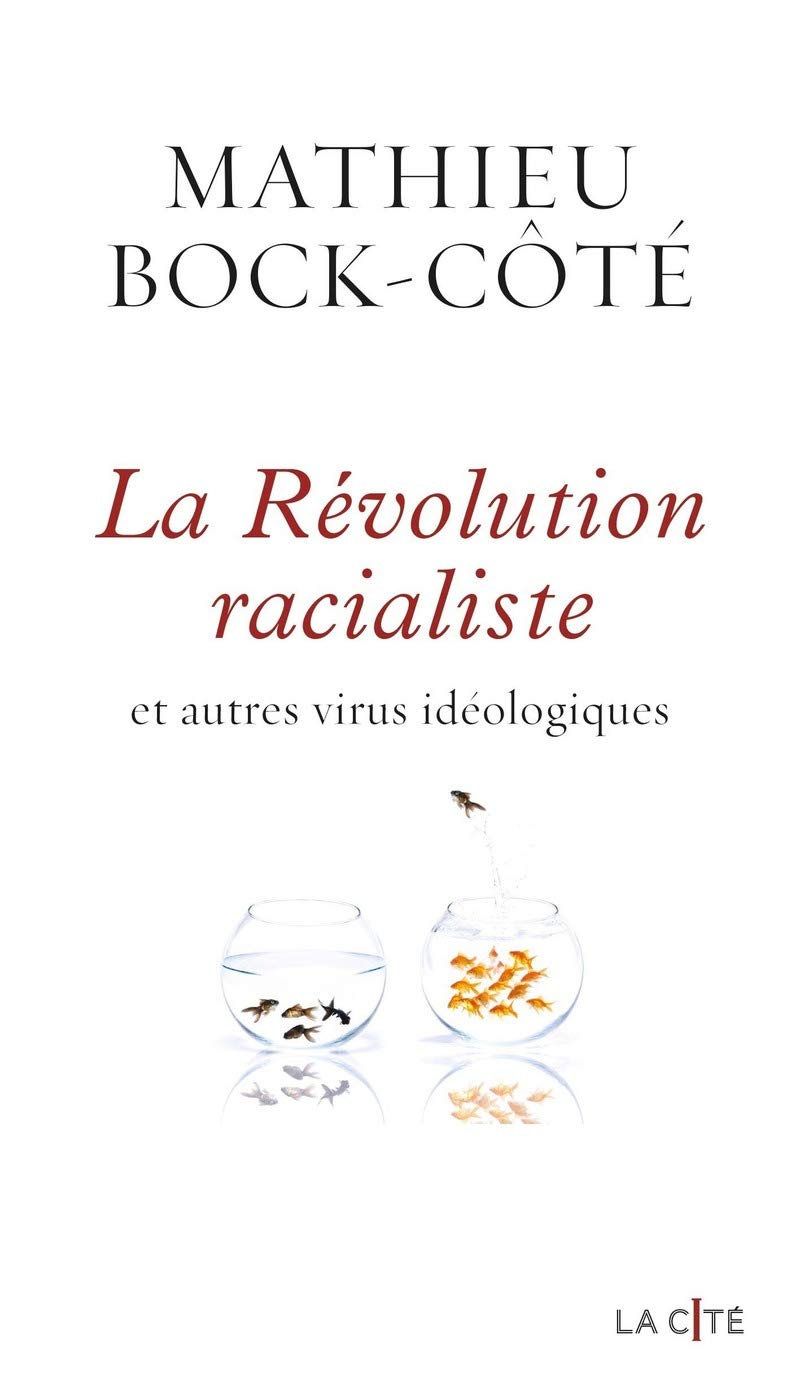
Mathieu Bock-Côté
The racialist revolution (and other ideological viruses)
Presses de la Cité
2021
238 pages
You'll also like




 French
  German
  English
Leave a comment