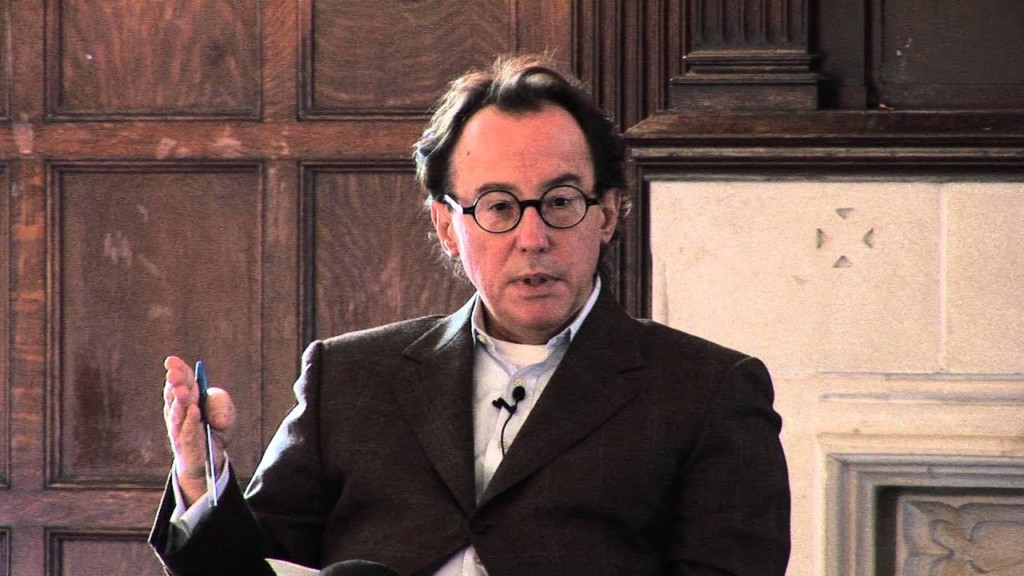
LONG FORMAT ARTICLE, Antoine Bernhard | To understand the ideology currently reigning in some universities, it's worth looking at the recent history of the United States, where this ideology was born. In 2017, the enigmatic Donald Trump was sworn in for four years as head of the world's leading power. Today, it's time to take stock. While all the media agree in decrying Trump's disastrous policies, few analyze the context that has enabled the triumph of a new American populism. Thirty years during which the left has retreated into an increasingly individualistic and anti-republican ideal, disregarding the need for a real political vision. This is what left-wing intellectual and Columbia University professor Mark Lilla analyzed in his 2018 book «The Identity Left».
He has at least thirteen hats on his head, as many as the stars on his cantonal flag. At the very limited level of French-speaking Switzerland, he represents a (small) public voice. He proposes his way of seeing the world to anyone who will listen: through the Appel Citoyen movement he co-founded, the Foraus think tank he vice-chaired or the ethics laboratory he still co-directs. He also unpacks his values on 19h30 when he is invited to talk about fundamental freedom, on Le Temps when he conducts a questionnaire on sustainability, or on his blog when he analyzes current events while presenting the object of his research. And when you're a philosopher, «the object of your research» is vast. And diluted.
Thirty-two-year-old Julien Rochedy is a former rising star in French politics. As a member of the Front National, the young Ardéchois achieved his highest responsibilities by becoming Marine Le Pen's political advisor for the 2012 presidential campaign, and then by becoming director of the Front National de la Jeunesse the same year. However, the ideological evolution of Marine Le Pen and the party gradually disgusted him - as he explains in a long-form video posted on his YouTube channel. So, in 2014, Julien Rochedy gave up all political involvement. Today, he is fully committed to metapolitics, where, he says, the aim is to lead the fight on the terrain of ideas. To this end, he publishes books, gives lectures and posts videos on the Internet. It was on the internet, without knowing anything about his political commitment, that I discovered Julien Rochedy before asking him for an interview.
Anti-ideologism, nothing but a posture
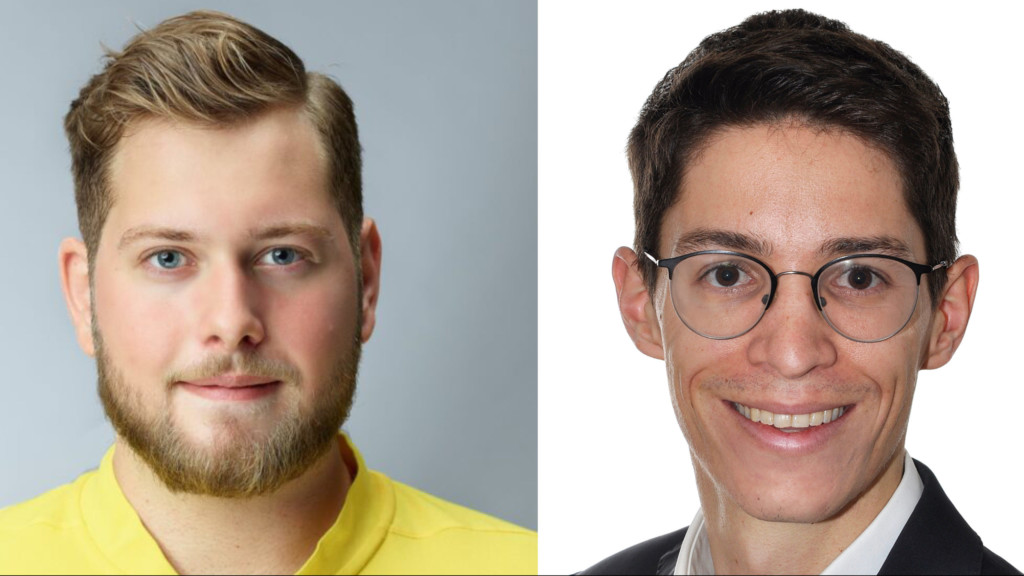
At the start of 2021, the Swiss political landscape undergoes a major turning point. The historic Christian Democratic Party (CVP) welcomes into its ranks the young Bourgeois Democratic Party (PBD). This merger, mainly in German-speaking Switzerland, is accompanied by a veritable earthquake as the party changes its name to Le Centre. Nathan Bender of the Jeunes démocrates-chrétiens (JDC) in French-speaking Valais and Sascha Zbinden of the Jeunes bourgeois-démocrates (JPBD) in Bern cross swords, sharing their visions and thoughts on this new party and the challenges it will face in the coming years.
LONG FORMAT ARTICLE, Clément Guntern | Now that Donald Trump's term in office is coming to an end, the question arises: what will he leave as a legacy to his country's history? His personality and political actions may have shocked or impressed, but he is nonetheless perpetuating a trend that has long been present: the national disunity and international decline of the United States.
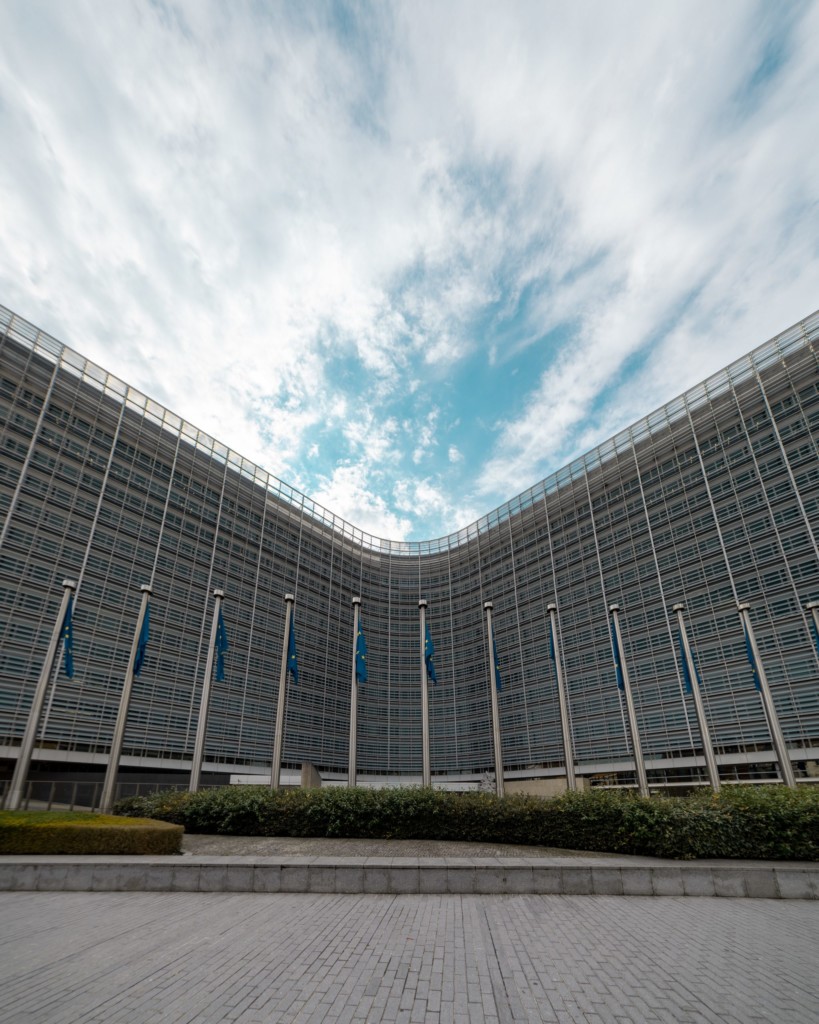
ARTICLE LONG FORMAT, Clément Guntern | When Switzerland embarked on the bilateral path in the early 2000s, it thought it had found a form of cohabitation with its European neighbor that would be profitable and adapted to Swiss particularities. From the outset, however, this path was in reality a political dead-end. It remains so today, and can be explained by a series of deep-rooted Swiss myths. To get out of this cul-de-sac, it is up to the Swiss people to finally have a European project. An act requiring courage and modesty, and one that would strengthen our national identity.
Editorial by Jonas Follonier
The year 2020, in addition to having seen a pandemic of immeasurable impact, has marked the return, or rather the rebirth, of a notion that was once thought to be obsolete, unsuitable and even dangerous: that of sovereignty. In the space of a few months, the issue has once again become central. But an anachronistic vocabulary tends to overshadow what is really at stake: not the withdrawal of nations into themselves, but the pursuit of balanced regulation of globalization.










 French
  German
 English