




«Impression, rising sun»
Le Regard Libre N° 21 - Loris S. Musumeci
Gone are the days of worked and reworked details; Impressionist painting represents only the dazzle of the first glance. This is not to everyone's taste, especially not at the bedtime of a XIXth.th century dominated by fine, delicate and polished artistic romanticism. Precisely because of a pungent critic, the Impressionists have given themselves this name, which suits them so well.
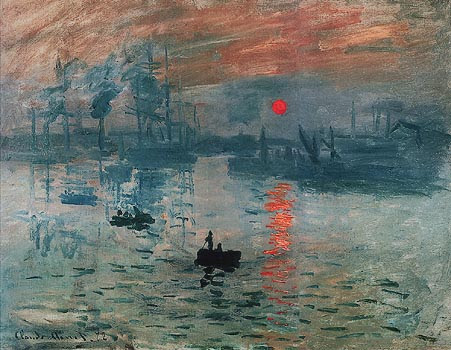
It all started with the canvas Impression, Sunrise by Claude Monet, also known as the Prince of the Impressionists. When it was presented in 1874 at the exhibition of the newly formed Société anonyme coopérative d’artistes-peintres, sculpteurs, graveurs et autres in Paris, the painter and writer Louis Leroy did not hold back in his harsh criticism of Le Charivari. «Impression—I knew it! I was just thinking to myself, if I’m impressed, it’s because there’s an impression here. And what freedom, what lightness of touch! A piece of wallpaper is more elaborately crafted than this seascape.»
From then on, the Impressionists decided to call themselves by that name. This choice was further encouraged by another art critic who supported this renewal in painting. «If one were to characterize their intentions in a single word, one would have to coin the new term »Impressionists.’ They are Impressionists in that they do not reproduce a landscape but rather the impression it conveys.”
Beyond the story that unfolds behind the painting in question here, it remains fascinating to analyze its subtlety, which ultimately results in a beautiful work of art. The line. Through predominantly horizontal brushstrokes, it is omnipresent. Set against a palette of bluish-gray tones, the thick black lines of the boat blend beautifully with the delicate reddish hues of the rising sun over the port of Le Havre. The two elements highlight each other. The lines of the boat—the darkest element in the painting—draw the eye toward the red floating on the ocean. The lines of the sun refer back to the black from which their light emanates. The boat is, in fact, nothing more than a shadow, for the sun is rising.
The background is no less interesting. The vertical lines of the chimneys, in a country in the midst of the Industrial Revolution, weave a connection between the melancholically hazy sky and the waves on the water. The waves, in turn, meet the boat and rise up toward the red orb of the sun through its reflections. The painting maintains a profound sense of unity.
As for the impression itself, it is fully revealed in this oil on canvas. It is as if we were seeing a Monet who, after a night of revelry, wakes up at the harbor, opens his eyes—still half-closed from fatigue—and immediately paints the impression of the scene before him, around seven o’clock on an autumn morning. The steam from the factories and boats even seems to rise out of the frame and reach the face of the viewer, who stands motionless, observing the scene. There is also the scent of damp cold that fills the nostrils—fresh with the morning air, dreaming of the open sea.
Monet wants to transport us into a whole new atmosphere here. He invites us on a journey. Although the wallpaper could have been more elaborately rendered, the young Claude seems to have achieved his goal. A new era began in painting. His influence is still very much present today. And that’s not just an impression.
Write to the author: [email protected]
You'll also like

 French
  German
  English
Leave a comment