




For a sustainable Valais (Interview with Isabelle Darbellay-Métrailler)
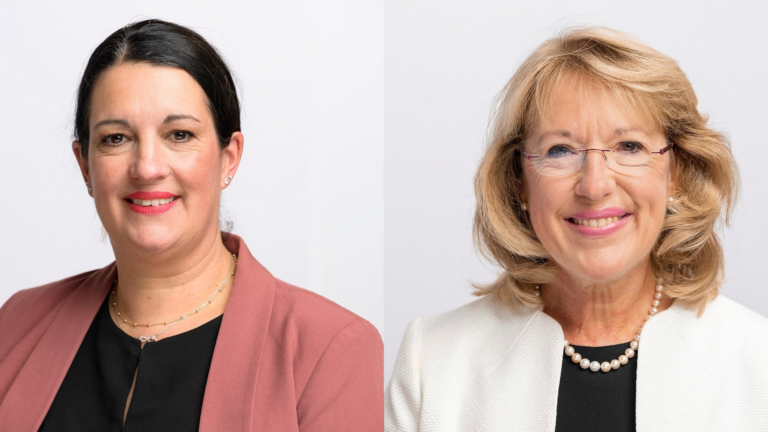
Isabelle Darbellay-Métrailler, the current president of the Valais-based association Avenir Ecologie, agreed to answer our questions and share her vision for the canton. Very active within the Valais Liberal-Radical Party (PLR) for the past decade, she has served as president of the Valais Liberal-Radical Women and as head of the Valais Office for Equality.
Le Regard Libre: Please tell us about the Avenir Ecologie organization that you chair.
Isabelle Darbellay-Métrailler: Avenir Ecologie is an association founded in 2011 in connection with the national elections, for which it fielded a slate of candidates in alliance with the PLR. Our association advocates for responsible environmentalism that reconciles ecology and the economy. We believe that environmentalism has many strengths that should be better highlighted. This is the only way to ensure sustainable development for our country and our planet.
What led you to take this stance within your own party?
My party advocates responsibility, and environmental responsibility is one of the most important forms of responsibility there is. Our commitment to sustainable development is therefore an integral part of our party’s mission. It should also be noted that in Valais, environmental concerns are firmly established among the party’s priorities, thanks in particular to pioneers such as Narcisse Crettenand. Avenir Ecologie, for example, holds a seat on the Executive Committee.
Some people will tell you that liberalism—or capitalism—is, by its very nature, at odds with environmentalism: the free market drives infinite growth, whereas environmentalism seeks to set limits on population growth or the use of natural resources. How would you respond to that?
I don’t believe that capitalism is at odds with environmentalism. Every good capitalist knows that you have to invest to secure future income. And environmentalism is nothing more than an investment in the future! Just as capitalism has evolved in terms of social rights, it is evolving in terms of environmental protection. No one in Europe today would accept the working conditions that existed at the beginning of the last century. Liberalism has evolved, incorporating social rights such as vacations, the five-day workweek, and so on. I believe the same is true of environmentalism. Sustainable development, in fact, encompasses this social aspect as well, in addition to its ecological and economic dimensions.
One of the major concerns of environmentalists is factory farming, which causes suffering to billions of sentient beings each year. Are you personally in favor of banning this type of agriculture, or of regulating it through strict laws?
I am, of course, in favor of restricting these practices for ethical reasons (to prevent animal suffering), health reasons (to limit the risk of disease and improve the quality of our food), and economic reasons (high-quality production also generates significant added value).
Local agriculture is a key focus for Avenir Ecologie. What policy measures can be taken to put it into practice?
That’s one more reason to limit industrial livestock farming! Small, local farmers are actually doing increasingly well. Consumers appreciate high-quality products and are willing to pay more for them. Whether it’s meat, fruits, or vegetables, local production has major advantages and will continue to grow. Politically, the main focus is on establishing a regulatory framework, but the bulk of the work must then be done by the producers themselves. And I believe that Valais is by no means lagging behind, contrary to certain preconceptions.
Take, for example, the movement to support an organization like La Potagère, which has recently gained momentum. Ultimately, citizens have a vital role to play. In the end, the choice is ours! Choosing to buy local, high-quality products benefits our health, the environment, and the economy. Sustainable development is truly everyone’s responsibility.
Renewable energy plays an important role in your agenda. To what extent does Valais have the potential to transition to new energy sources?
In Valais, things are unfortunately often complicated… The lobbies are powerful and struggle to see the potential of new energy sources. The hydropower lobby, for example, struggles to understand that the development of renewable energy is its greatest asset. Dams are essential for storing wind or solar power. But the reverse is also true. When there is no longer cheap nuclear power available at night, water pumping will have to rely on other energy sources. And I’m not just talking about pumped-storage facilities. The water collected throughout the Valais Alps to be channeled to the dams isn’t gathered solely by gravity. It’s therefore particularly unfortunate that Valais is struggling to reform and envision its future with new renewable energy sources. We were pioneers when we built the large dams in the last century. But that visionary spirit is missing today, even as we could become Europe’s energy powerhouse thanks to dams, sunshine, and wind. Instead, everyone is fighting to defend their water rights, their subsidies, and their vested interests. As optimistic as I am about our fellow citizens’ growing environmental awareness, I am just as pessimistic about the Valais region’s ability to reform. At least as long as defending the status quo continues to drain all our energy—because we must innovate to build the future. We can only hope that the establishment of energy research chairs as part of the EPFL Valais-Wallis cluster will bring a breath of fresh air…
Are you, above all, a radical or an environmentalist?
Both! For me, individual responsibility is the core value, and it includes radical commitment, feminist commitment, and environmental commitment.
Write to the author: [email protected]

You'll also like




 French
  German
  English
Leave a comment