




David de Pury: artistic dialogue rather than debunking
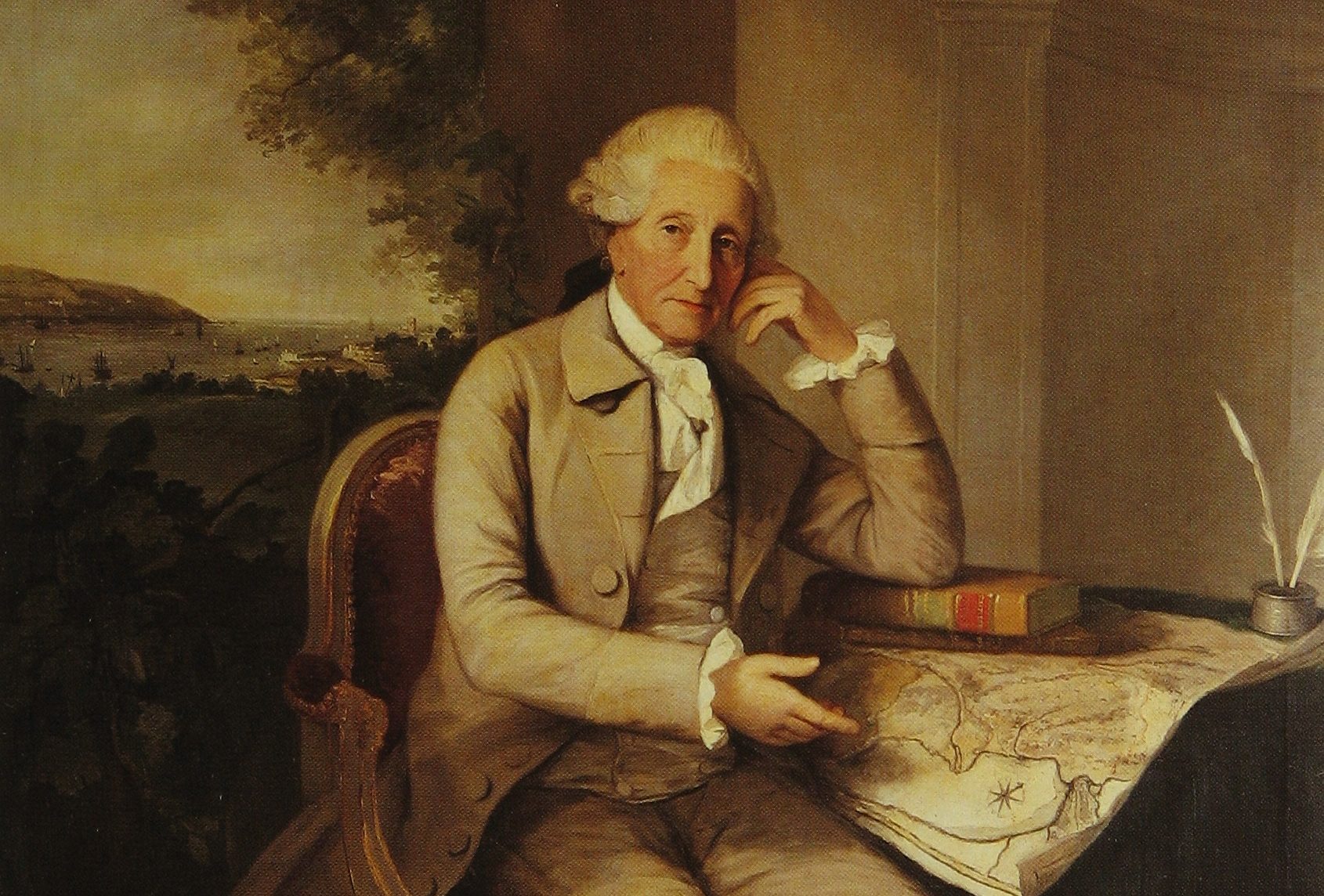
The merchant David de Pury (1709-1786) © Thomas Hickey / Hôtel de Ville de Neuchâtel
On Neuchâtel's Place Pury, there are now two statues of the same David de Pury: one erected in 1855, the other in 2022. The latter responds to recent criticism of the memory of the businessman who made his fortune through slavery. Clever!
On the night of July 12, 2020, the bronze statue of David de Pury in the square bearing his name was sprayed with red paint. As part of the international Black Lives Matter anti-racism movement, the perpetrators claimed to be taking action against the slave trade, from which the Neuchâtel merchant derived much of his wealth. This was followed by a petition demanding the statue's removal, and the town's response: a call for artistic projects to frame and counterbalance the controversy.
Two years later, the first of the two chosen works was unveiled. They are Great in the concrete by Mathias Pfund. A few metres in front of the original statue, a small bronze depicts David de Pury, head down, set into the concrete base. An iconoclastic gesture! In this way, the Genevan artist seeks to shift our gaze and show us «great men» in a less glorified light. The result is a skilful play of mirrors that presents the city's benefactor in two guises: one very dedicated, in the purest tradition of commemorative sculptures; the other more effaced and overtaken by colonial history.
Rather than debunking statues, debunk metaphors
Mathias Pfund's work can also be seen as a metaphor: the adage «dwarfs perched on the shoulders of giants», illustrating the importance of relying on previous generations to understand the world, is turned on its head here. The quarrel between old and new has been turned on its head. It's no longer a question of following the example of earlier figures, but of turning the past on its head.
Both works are accompanied by an explanatory booklet which briefly describes the life of this 18th century merchant.th century and the posthumous erection of the statue. «It's also a tribute to the people deprived of their freedom, exploited and dehumanized in the triangular trade,» explained Thomas Facchinetti, local councillor in charge of social cohesion.
Next spring, it will be the turn of Neuchâtel artist Nathan Solioz to exhibit Ignis Fatuus, a light installation evoking the souls of slaves who died crossing the Atlantic by boat, still haunting today's societies.
A global approach to lighting
These two works are part of the town's commitment to raising awareness and questioning its history, as other initiatives are soon to be launched to provide a better understanding of Neuchâtel's participation in the colonial slave trade, such as the interactive educational trail «Neuchâtel, empreintes coloniales», which was inaugurated on March 22.
Rather than give in to popular demands for the removal of the offending statue, the city has chosen to shed light on some of the darker aspects of its history through an artistic dialogue. An intelligent, measured response to the cancel culture (editor's note: the culture of annulment, to which the debunking of statues and the censorship of works of art contribute). While the shocking method of vandalizing a public building is highly regrettable, it has nonetheless shaken things up and given rise to a whole process of reflection within the municipal authorities.
In the end, it's a real achievement when a subject like this enters the public debate. Even if it had to be done in the midst of an «aggressive» action... The only positive thing to be retained from this controversy is its merit in bringing history back to the fore, for better comment.
Write to the author: [email protected]
You have just read a commentary from our WOKISME folder, published in our print edition (Le Regard Libre N°95).

You'll also like



 French
  German
  English
Leave a comment