




An introduction to the complexity of American roots

Former Federal Councillor Pascal Couchepin. Drawing by Nathanaël Schmid
In his column, former Federal Councillor Pascal Couchepin shares a book that has left a lasting impression on him. This month, he explores the origins of the United States through James by Percival Everett.
«I know the United States well, I worked there for several years.»This phrase, heard on television from commentators asked to comment on America, President Trump and the country's political and economic development, leaves me wondering. Does even a long professional stay in this country make you an expert capable of grasping all the facets of American reality? This country is huge, even if it doesn't reach the dimensions of the Russian empire. It is the product of many voluntary and forced immigrations. Its history is complex. Its economy is constantly transforming it.
Gold takes place in the second half of the 19th century.th century in California, where technology giants now reign. Can literature help us better understand the United States?
That's the question I asked myself as I finished reading James by Percival Everett. The hero of this novel is a black slave, living in a Southern state at the start of the American Civil War, which pitted the slaveholding South against the anti-slavery North in a bloody conflict from 1861 to 1865. But James is not a novel about war, even if its protagonists know that it is taking place nearby, on the other side of the great Mississippi River.
Read also | Le Regard Libre in the United States
James recounts a few months in the life of a slave, probably in his thirties, who chooses to flee because he has learned that his masters intend to sell him, thus separating him permanently from his wife and daughter. He is joined, by chance, by a young white man fleeing a father who treats him with inexplicable hatred and brutality. The two runaways know each other and have a certain friendship. But James or Jim - the first name of a slave is not defined - is a slave, and this creates a fundamental difference. The duo flee, letting themselves be carried down the river as circumstances dictate.
This novel has been described as picaresque. This is true, thanks to the many adventures of the two runaways, who are threatened by posters that put a price on the slave's recovery. James escapes thanks to what he has secretly learned on his own, including the language of the whites, which is different from that of the slaves. He even knows how to read and write, which he hides, because if it were discovered, his lynching would be certain. A well-educated slave who is of no use to his masters is a dangerous rebel who deserves death to save the system. Slaves are trained, like animals, to obey. The whip reminds them of their situation.
Read also | Switzerland as a postcard from the United States
Is the novel's ending a happy ending, like in the cowboy movies? Readers will make up their own minds, as the book's final chapters are full of twists and turns that shed light on some of the questions that arise when reading it.
Read Jamesdoes not, of course, make the reader a connoisseur of America, but it does introduce you to the complex historical roots of the United States of America in the 21st century.th century.
Pascal Couchepin, a former federal councillor, shares a monthly reading that has made a lasting impression on him. To his previous columns.
You have just read a column from our print edition (Le Regard Libre N°124).
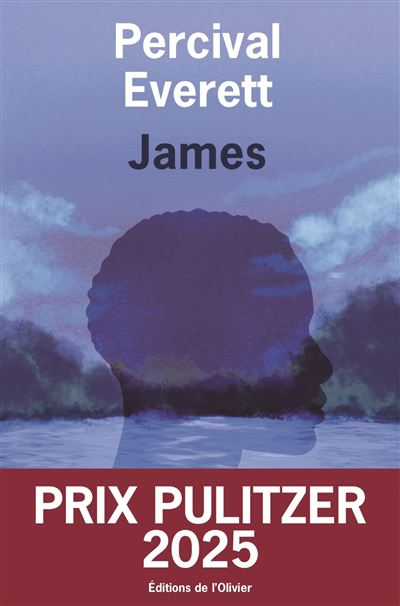
Percival Everett
James
Ed. de l'Olivier
August 2025 (February 2024 in English)
Trans. by Anne-Laure Tissut
288 pages
You'll also like



 French
  German
  English
Leave a comment