




«Foxtrot», between absurdity and humanity

Fribourg International Film Festival – Jonas Follonier
Foxtrot is one of the outstanding wines featured at the 32nd edition of the Fribourg International Film Festival (FIFF). Yesterday, the festival awarded the Grand Jury Prize to Black level. As for the audience, they voted for the feature film What will people say?. Foxtrot, which was praised by both international critics and audiences in Fribourg, deserved to be among the winners.
The film’s opening scenes follow a military vehicle as it travels along a narrow road in the middle of a desert landscape. This is also where the feature film will end, revealing the key to the story in a truly tragic and elegant way. Foxtrot, is an unfiltered look at his country by Israeli filmmaker Samuel Maoz. While its obvious political message may give viewers pause, its artistic dimension—which is more significant—demonstrates a perfect command of the big screen.
The Unease in Israeli Society
The film is captivating; the film is unsettling. Against the backdrop of the Israeli-Palestinian conflict—which is more tense than ever—Samuel Maoz’s trilogy has the merit of questioning the limits of the current Israeli government’s security policy. Drawing on a family’s grief and the absurdity of a young soldier’s life at a checkpoint, the film reveals the unease of an entire people—a people whose hopes are fading.
Read also | Israel: a bill that raises democratic questions
However, the anti-militarism so clearly expressed by the director in his second feature film has its flaws. The criticism of Benjamin Netanyahu’s policies aligns with a view that is currently very much in vogue—in this respect, the film does not add much nuance to the discussion—and even tends to reinforce, through the emotional power of cinema, a certain Manichaeism in which Palestinians are seen as victims and the Israeli army as a domineering force.
Breathtaking aesthetics
Setting aside the political aspect, which is ultimately secondary, Foxtrot stands out for its aesthetic quality. In this film, emotions are not expressed through the main character; they are expressed through the imagery. And there is much to be said about that. The cinematography excels in every scene of the feature film, making use of the desert’s orange-beige hues, suggesting boredom through a camera that lingers for a few seconds on water droplets, or capturing the nighttime atmosphere in various ways.
Certain sequences are particularly characteristic of what we would define as a masterpiece. Two of them take place in the second half of the film, at the checkpoint called Foxtrot. In both scenes, the viewer feels a sense of pain not simply because of the horror of the events they are witnessing, but because of the perfection of the nostalgic music associated with the rain, the meticulously crafted imagery, and the deeply moving performances of the actors. Foxtrot, it is the absurdity of fate set against the humanity of individuals.
Write to the author: [email protected]
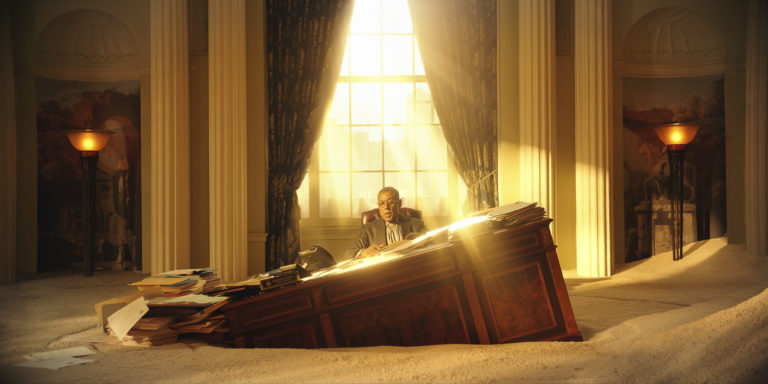
Photo credit: © Foxtrot

You'll also like

 French
  German
  English
Leave a comment