



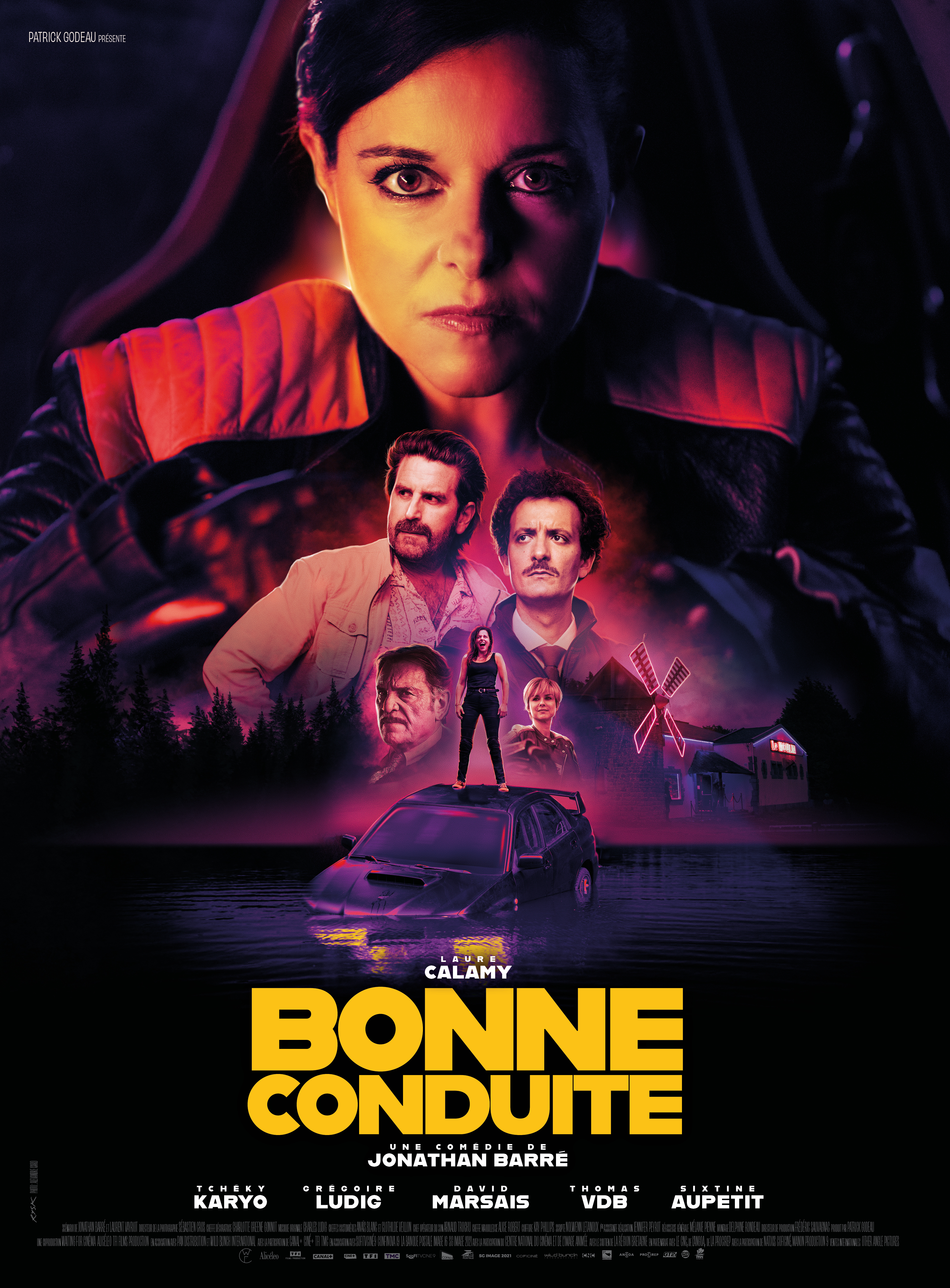
«Good Driving», a film that doesn't know which tire to dance on

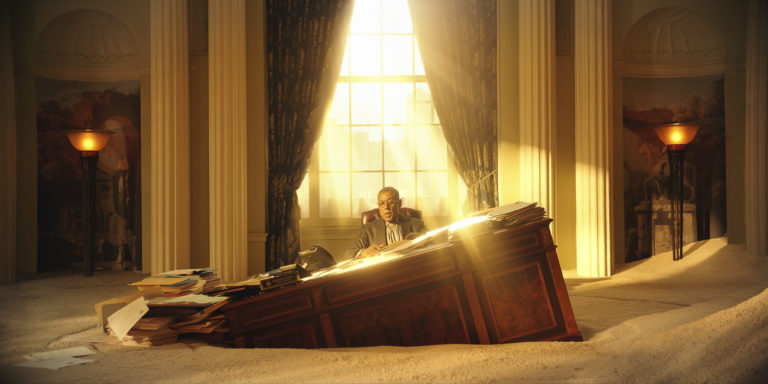
© Waiting For Cinéma / Aliceléo / TF1 Films Production
Jonathan Barré, best known for his work with Le Palmashow, is now embarking on a solo career, writing and directing his own story. A black comedy with an uneven direction, Good Conduct finds it hard to break away from the humor that made the famous troupe famous.
Pauline Cloarec is a psychologist at a driving school that helps drivers regain their license points. She uses her job to identify incorrigible reckless drivers and kill them on the road in anticipation of the upcoming release of the man who murdered her partner, who died five years earlier in an accident. But her well-oiled operation is about to hit a snag—all because of three main problems.
A good thriller or a good comedy is better than a bad comedy-thriller
First problem: the film doesn’t know what message it wants to convey. The story begins with polished shots and an aesthetic reminiscent of certain Nordic crime thrillers or a Nicolas Winding Refn film; the tension builds, the music is subdued—and then, suddenly, a joke. A heavy-handed and predictable one. And that completely disrupts the scene’s flow. What follows is an accident filmed by a drone in near-total darkness, accompanied by a slow-motion sequence that’s almost parodic—it pulls the viewer so far out of the scene. Welcome to Good Conduct, a road movie.
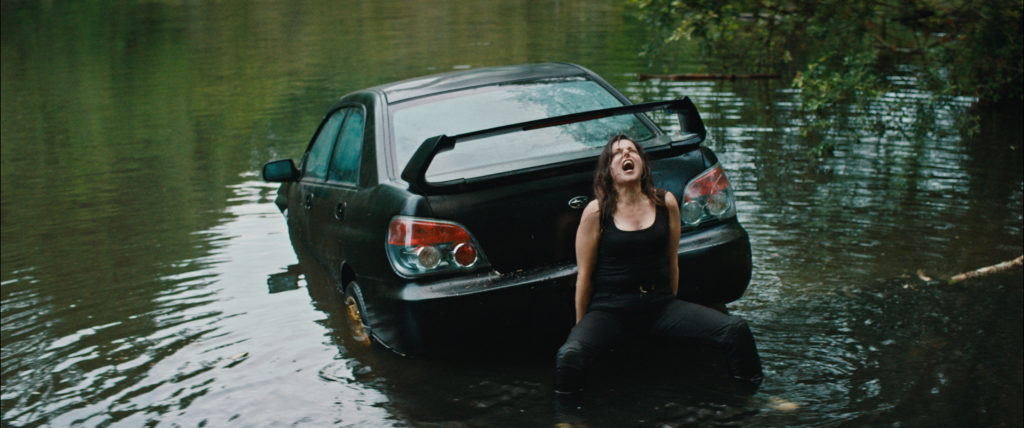
Next, we meet Pauline, played very awkwardly by Laure Calamy (a brilliant actress, by the way) and her gaggle of interns trying to earn back their driver’s license points, each one more caricatured than the next. Among them is Jean-Yves Lapick, played by a very talented Tchéky Karyo, who serves as the main antagonist. However, he is too grotesque to be taken seriously and gives a constant impression of parody. While Pauline tries to kill him the following evening, a moment of inattention—deeply stupid and unrealistic for the character—triggers a chain reaction. This sets off a ridiculous revenge-driven investigation that holds together only because of the characters’ widespread idiocy, and in which every tense scene is defused by a gag.
The desire to give friends a turn
The film’s second problem stems from its cast. Aside from Calamy and Karyo, the entire cast is part of the Palmashow troupe, which cut its teeth online with a series of unanimously acclaimed parody sketches. Even though David Marsais and Grégoire Ludig—the two lead comedians—are very good in their roles, they’re doing the Palmashow thing: accents, slapstick comedy, and offbeat, inept, and stupid characters. The problem is that the screenwriter entrusts the investigation to them—and the plot only lasts 1 hour and 35 minutes because they’re incompetent. As a result, the viewer loses all emotional investment and any «fear» for Pauline, since we know she’s in no danger.
Similarly, when we see Laure Calamy constantly out of sync, we wonder if Jonathan Barré knew what to do with her from the start. It’s actually very rare for him to cast someone who hasn’t appeared in a sketch before, and this shows in her performance. Too cheerful during dramatic scenes and reciting her lines too mechanically during the jokes, she unfortunately always seems out of place and prevents the audience from getting invested in the story.
Complicated writing
The third and final problem in Good Conduct, his main concern, in fact, is writing. In cinema, one of the fundamental rules is the Show, don't tell (Show, don’t tell.) If something needs to be explained to move the story forward, it must be done through the camera. Otherwise, write a novel. Where the film would have benefited from introducing its main character and the stakes through action, it instead relies solely on what’s called «expository dialogue»—which involves having a character recount all the background information necessary to understand the plot. But the result is always clunky—and often unnecessary.
So it is Pauline who, as early as the fifth minute of the film, tells her late partner (whom she keeps in an urn) the entire backstory leading up to the narrative—its goal, its methods, its reasons, and so on. The problem is that in real life, no one would ever act that way, for the simple reason that the characters are already in the know. It’s the syndrome of Experts who explain to their coworkers how to use their everyday work tools so that the viewer isn’t left in the dark. This makes the entire plot feel clunky; we’re acutely aware that we’re watching a movie (which is the worst thing that can happen in cinema), and we lose interest in the story.
All in all, while a few jokes save the day (especially the scene where they camouflage the car), Good Conduct It probably would have been better off as a true, no-holds-barred parody comedy. Unfortunately, it’s more of a two-faced film whose tension never really grabs you or stays funny for very long.
Write to the author: mathieu.vuillerme@leregardlibre.com
You've just read an open-access review. Debates, analysis, cultural news: subscribe to support us and get access to all our content!
You'll also like



 French
  German
  English
Leave a comment