




«La Voie de la justice», an overly Manichean voice
Cinema Wednesdays - Jonas Follonier
The violins are a little insistent at the start, but this doesn't detract too much from the overall effect. Actors who are just right, without being out of the ordinary. You don't get the story right the first time; everything moves too fast, and at the same time too slowly. It's in this half-tone cinematic atmosphere that the beginning of The Way of Justice, a film about the death penalty and institutional racism in Alabama - both of which are still with us today. Dialogue, however, quickly captures the viewer's attention and emotion. «A nigger's in charge, and if you ain't, you pay for your mates.» We quickly understand the violence of this injustice, which consists of a simple «double standard» based on skin color.
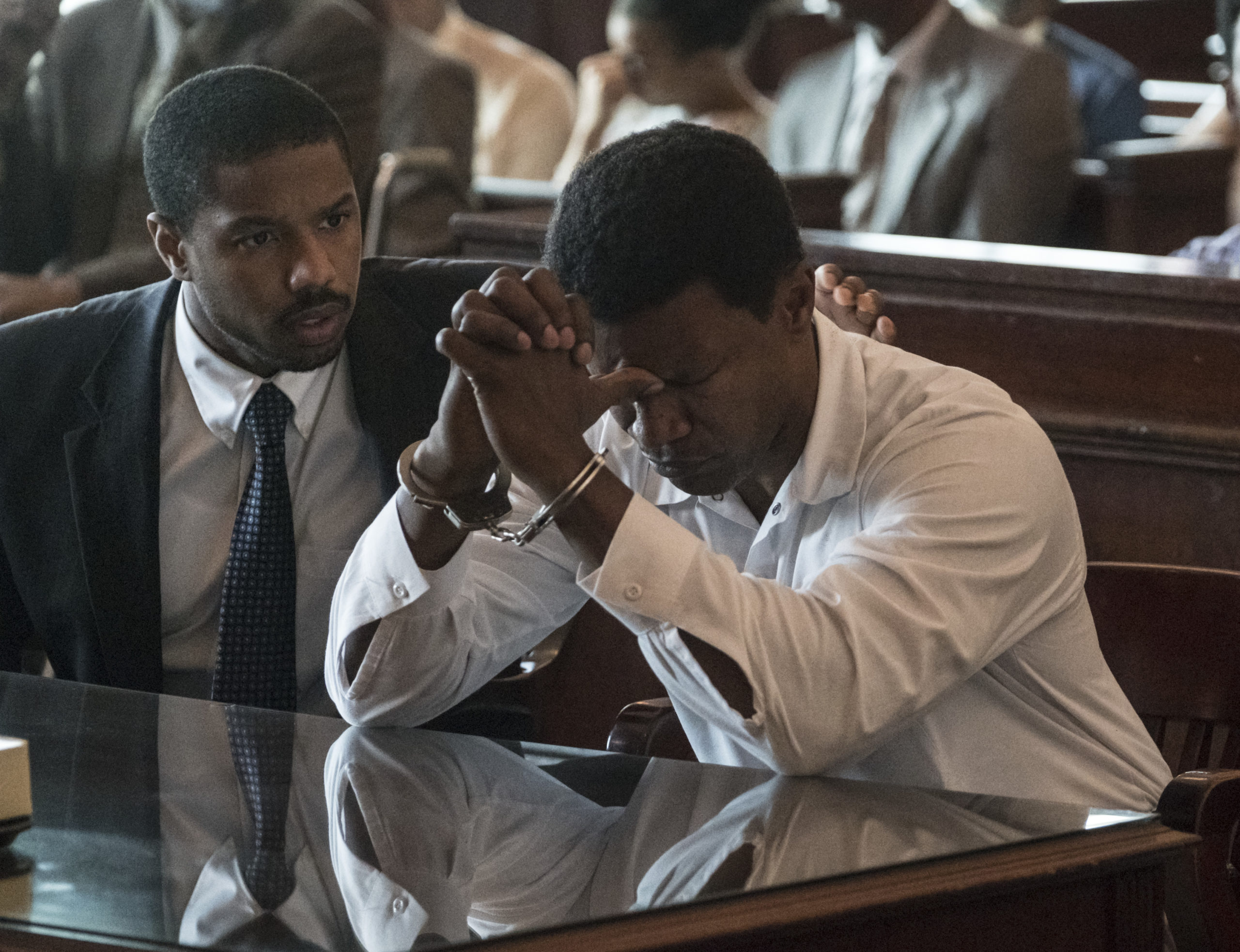
Walter McMillian (Jamie Foxx) is a black lumberjack arrested without evidence for the murder of a young white girl. A murder he did not commit. One African-American death row without any real investigation. investigation. Bryan Stevenson (Michael B. Jordan) is a young black lawyer who grew up in the same same neighborhoods as the condemned man. He chooses to go pro bono to defend Walter McMillian and the other African-American defendants in the state of Alabama who who deserve a defense. Searching for evidence of their innocence, he gradually uncovers evidence of racism in the police and the justice system, if the latter the latter deserves the name.
Read also: BlacKkKlansman: I infiltrated the Ku Klux Klan
The sense of profound injustice on the part of the young lawman and the death row inmates whose fate we follow is in turn felt by the viewer. The film easily succeeds. But at what cost? It's one thing to denounce facts that are still prevalent today in certain Southern states; it's quite another to do so against the backdrop of a Manichean face-off between good, innocent blacks and evil, corrupt whites. The film, a wellspring of elementary-school morality, makes no attempt to deliver anything other than a conventional and even exaggerated message. There's not a single guilty black person in all these tragic stories! This is a pitfall that could have been anticipated, so much so that it detracts from the realism of the situations and the complexity that a film such as this is supposed to convey.

Fortunately, if the film is rather lacking in what makes its essence and could have made its legitimacy, namely its message and subject, there is one point on which we can bow: the breath of the characters. For while the harsh, cruel phrases we hear create a tense atmosphere, as do the dark colors of certain sequences, it's through their breaths that the acting shines with excellence. The viewer holds his breath along with the protagonists, from the main hero to the deeply moving Hebert Richardson (Rob Morgan), who ends up in the electric chair. The best scene, without a doubt. In short, there's still something to be said for going to see this film, but it's more about the people than the script. Although it's always worth remembering the importance of justice and truth. We all agree.
Ecrire à l’auteur. [email protected]
Photo credit: © Warner Bros Entertainment


You'll also like

 French
  German
  English
Leave a comment