



Tartuffe in Poland
Cinema Wednesdays - Fanny Agostino
Forger, forger, can't you see any possible redemption? This seems to be the message of Polish director Jan Komasa's fourth feature film. Nominated for an Oscar, the film Communion (Corpus Christi for its original title) evokes the deceptive spiral in which a young delinquent masquerading as a priest becomes trapped. Does the habit really make the man?
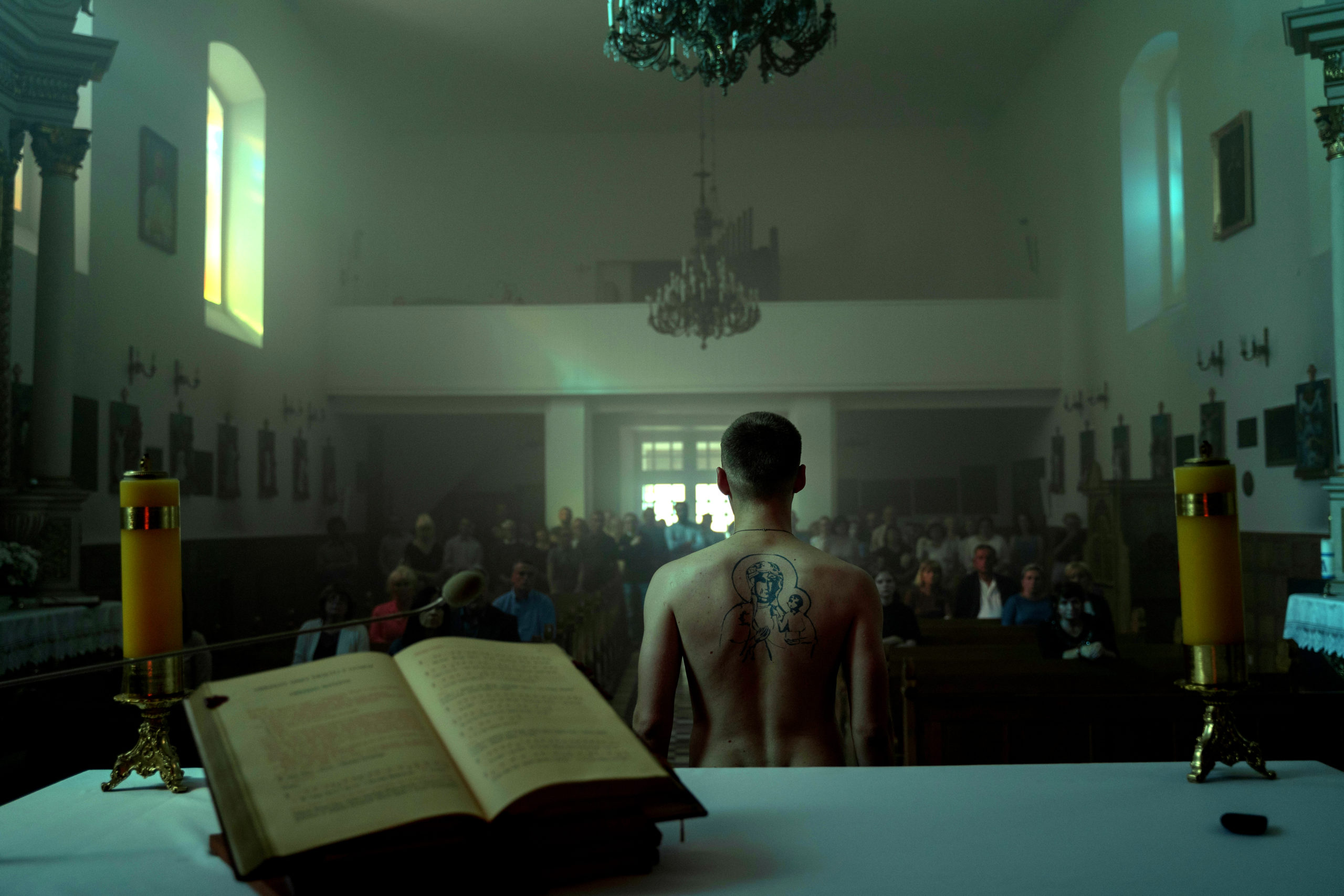
At just twenty-one years old, Daniel kills time at a rehabilitation center for young people. His daily life is marked by violence, threats, and the woodshop. He manages to survive thanks to his devotion; close to Father Tomasz, he serves as sacristan and spends his nights in prayer. As his permanent release from the center approaches, he faces the impossibility of entering the priesthood: his criminal record will prevent him from entering a seminary. Like his fellow inmates, he is therefore invited to go cut boards on the other side of the country.
Far from rejoicing at this prospect for the future, Daniel celebrates his release in style before setting out in the early morning on the road to his new prison in the woods. Upon arriving, he spots the village bell tower in the distance. Unintentionally, he takes advantage of the authority conferred by his cassock—tucked away in his Nike gym bag—to carve out a place for himself in the community, eventually replacing the small town’s alcoholic priest, needless to say. A new life on borrowed time begins.

The Job Market
Though still a relatively unknown actor, Bartosz Bielenia lights up the screen. He lights it up so much it’s mind-blowing. The direction makes the most of—though at times overuses—the range of expressions on this utterly mesmerizing, criminal, and youthful face. For while the protagonist uses deception to practice his vocation as a man of the church, he is also a victim of it. His identity crisis is etched on his face: at once exuding the allure of a lawless thug, then that of a child touched by grace, with eyes full of wonder. We then understand why these two aspects can coexist: with no future and no purpose, this seized opportunity can only have come from heaven.
A sign, a call not to give up, to stubbornly persevere in a process that one knows is doomed to fail from the start. Conviction does the rest. A gifted orator, Daniel puts into practice what he observed in prison; he looks up the order of the Mass on his phone and brilliantly improvises before a congregation that is gradually won over by his speeches and his methods—which, while not very Catholic, are effective.

A Community That's Not So Christian
Far from being the film’s sole narrative device, the presence of our impostor serves to reveal the wounds that plague the village: isn’t the sinner best able to recognize his fellow man? By meddling in the affairs of the parish community, our young priest challenges the judgments and condemnations leveled at certain parishioners. He manages to root out the hatred and recriminations that his predecessor had chosen to bury. At the same time, the parish priest’s dominant role in village life comes into focus, curtailed by the political powers represented by the mayor and his carpentry shop, which exploits former inmates so the mayor can drive around in a fancy sports car.
Although marred by a rushed and abrupt ending, Communion shines because of the ambivalence of its main character, both in his faith and in his acting. It certainly owes a great deal to Bartosz Bielenia’s spellbinding performance, and we look forward to seeing him again very soon.
Write to the author: [email protected]
Photo credit: © Xenix Film


You'll also like





 French
  German
  English
Leave a comment