



«Les choses qu'on dit, les choses qu'on fait»: when lyricism and desire intertwine
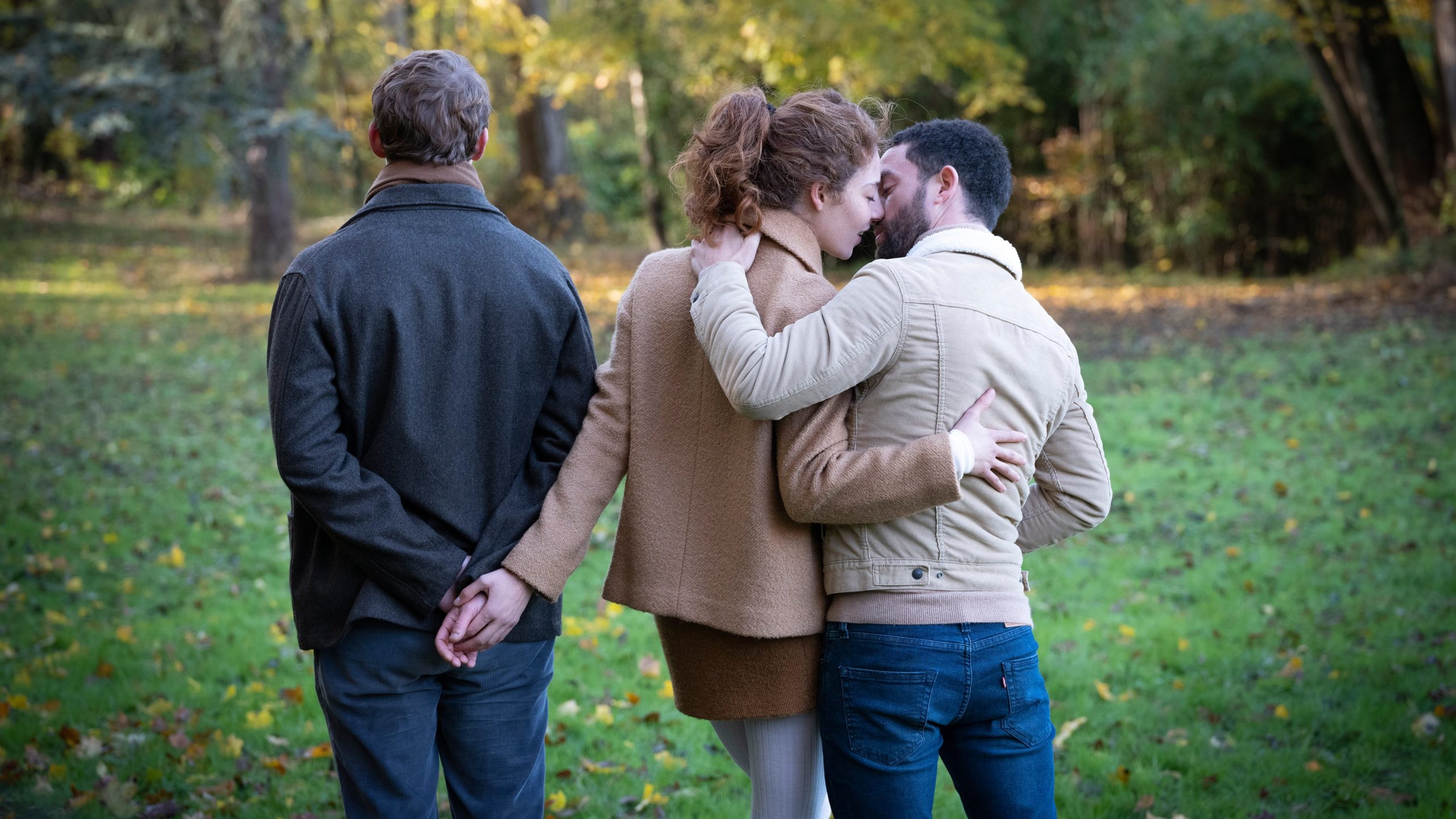
Freshly awarded the «Masque et la Plume» listeners' prize and nominated in almost every category of the 46th César ceremony 2021, The things we say, the things we do written and directed by Emmanuel Mouret, is no slouch in the face of the coronavirus crisis. A gentle, humble film, it brings a breath of fresh air to a time when we could still desire and love without masks.
Emmanuel Mouret's tenth feature film deals with the same themes as his previous works: love, feelings and desire. Far from the psychological thriller that would fix an evil immanent to human existence, the director from Marseilles takes a tender look at the human being, almost in love with forgiveness in the face of his own contradictions. Acts as reprehensible as jealousy, deceit or the desire to murder are stripped of their seriousness, and become part of the pile-up of inevitable vicissitudes.
Mouret, or the director of sentiment
Intelligent romance and its satellites have become her trademark, notably in Mademoiselle de Joncquières (2018), a romantic drama set in the 18th centuryth and his first film in costume, in which the Marquis des Arcis (Edouard Baer) and Madame de la Pommeraye (Cécile de France) have an ambivalent relationship and engage in some of the most delightful verbal jousting. Another landmark film in his filmography, The Art of Loving (2011), whose title could serve as a banner for his cause, and which features a sentimental and burlesque tumult where characters cross paths, meet and also collide. Overall, it's the same scenario in The things we say, the things we doMaxime (Niels Schneider) spends a few days at the country house of his cousin François (Vincent Macaigne), where he meets Daphné (Camélia Jordana), François' girlfriend, who is three months pregnant.
This is the backdrop for the story of Maxime's and Daphne's love affairs. What follows is a tangle of stories in which we plunge with the protagonists into a series of flashbacks, juggling present and past.

A force named desire
While the film's «Parisian bobo-intellectual» appearance may turn some people off, to dwell on this aspect would be reductive. Certainly, the characters have all the characteristics to deserve this label: bourgeois, navigating between their provincial home and the glossy parquet floor of their Parisian apartment, using their time to rant more about their sentimentality than their non-existent financial problems. Nevertheless, the film's universal appeal lies in the filmmaker's desire to illustrate René Girard's theory of mimetic desire through the characters' behavior. This theory, according to which human beings always desire as a function of the Other's desire, takes on the role of puppeteer, pulling the protagonists' strings to their great misfortune. They become the playthings of their own sensations, their own bodies and their own desires. While La Bruyère wrote that there's a sense of freedom in following one's whims, there's also a downside: infidelities, lies, murderous desires, grief and cruelty become inescapable events. Far from being Hitchcockian characters with enigmatic psychological profiles, their good faith is almost touching. Maxime (Niels Schneider) and Daphné (Camélia Jordana) are kind, humble, shy and awkward in their gestures and speech, and they share their stories with each other, creating a directly familiar, authentic atmosphere that's easy to identify with.
Read also | When Xavier Dolan plays with love
Through realistic acting and warm lighting, we're invited to get up close and personal to the intimacies revealed, to listen to the hesitant dialogues about sentimentality, and to witness the human weaknesses in the face of the’Eros. In the end, Emmanuel Mouret paints a picture of human complexity that is in no way moralizing, a kind of anti-conformism of feelings whose watchword is: we don't know.

Lyricism and romance
For some, cinema is a place of doubt, where the invisible can be captured. The things we say, the things we do is a veritable broth to stimulate the viewer's imagination, thanks to its excellent mastery of cinematographic tools. Cinematography, music and dialogue are all carefully crafted. Sequence shots in the dialogue scenes create space and fluidity, and a certain realism that immerses the viewer in the intimacy of the dialogues. But this «realism» is softened by shots in very sober, autumnal colors, closely resembling Impressionist paintings. A pleasure for the eyes, in short. But the ears are not left out: Chopin, Debussy, some of the big names in Romantic music, cover the scenes with a lyricism and lightness, accentuated by dialogues spoken in sustained French. If in Mademoiselle de Joncquières, While this choice may be understandable given the era, it can be disconcerting at first glance in this feature-length film, as it is out of step with its contemporary setting. But it's precisely this - almost anachronistic - contrast between eras that makes us want to give in to reverie. Here, no SMS, no Netflix & chill, just poetry.
In the two stories by Maxime and Daphné, through their voices off and flashbacks These back and forth between past and present coexist, unmasking the romantic lies of romantic truth: the things we say aren't necessarily the things we do.

You'll also like

 French
  German
  English
Leave a comment