




Is the minimum wage a bad idea?

Le Regard Libre N° 23 - Nicolas Jutzet
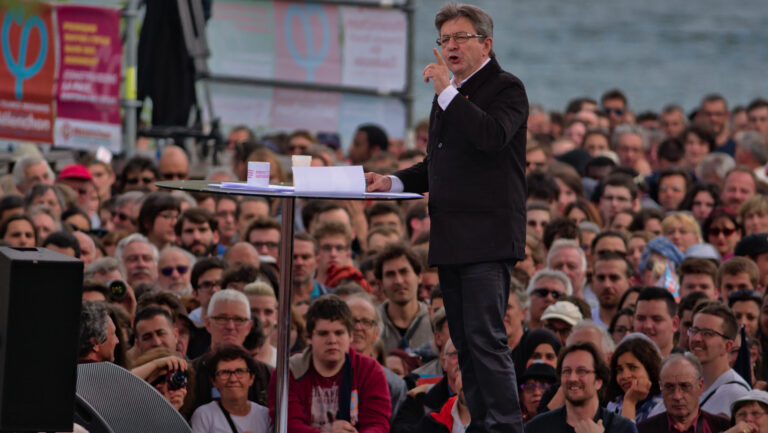
For those who followed the last elections in the United States, today's topic is a familiar one. Throughout the campaign, it was a veritable one-upmanship. And surprise! For once, it wasn't businessman Donald Trump, but Vermont Senator Bernie Sanders, a populist in his spare time, who emerged victorious. The forty-fifth President of the United States appears to be wise with his proposal for a federal wage of 10$ / hour. By contrast, Hillary Clinton proposed 12$ and the man who proudly assumes his status as a socialist in a country that is usually hostile to this doctrine even 15 $. It's with these kinds of proposals that the likeable Bernie has, for a time, made his party tremble, thanks in particular to his ability to rally young people behind him (a great success for the septuagenarian's slogan «Our Revolution, a future to believe in»). For a brief moment, the party feared that the Establishment candidate would bite the dust in the primary. Had they known...
A closer look at Google Trends statistics reveals that the word «populism» saw a sudden explosion in its number of searches, between November 6 and 12, 2016. These dates coincide with Trump's election. Far be it from me to blindly defend our new «leader of the free world», but it has to be said that sometimes he has shown common sense, and that populism is a discipline practiced by many of his fellow politicians around the world. And the minimum wage is a magnificent example.
Promising a pay rise to help the most vulnerable is easy, altruistic and probably even sincere, but oh so dangerous. The examples are numerous, and they all point in the same direction: setting a minimum wage at national level, without taking into account the differences in terms of jobs, standard of living, infrastructure, etc., that separate the different regions of a country, is a bad idea. The productivity of a nation's different zones is such that it enables California, for example, to implement a minimum wage of 22 $/hr as early as 2022, which would simply be untenable for a less fruitful region like Alabama. Looking at a ranking of states according to median household income, we see that the least productive states all, without exception, voted for Trump! Even though the candidate opposite boasted of offering them greater assistance. Strange? No, it's simply logical: the voters understood that the gifts didn't exist. In these states, the minimum wage would have destroyed jobs, just as the popular initiative «For the protection of fair wages», widely rejected in May 2014, would have eliminated jobs in the Jura arc or in SMEs in early Switzerland.
In their fascinating book Le négationnisme économique, the duo Pierre Cahuc and André Zylberberg sum up the problem of the minimum wage perfectly. Introducing a minimum wage potentially creates jobs as long as it is lower than the employee's productivity (which leaves a margin for the company), as it can motivate unemployed people to take more trouble to find a job. On the other hand, it becomes harmful as soon as it exceeds it. For in fact, it excludes from the labor market a host of people who, unfortunately, produce work whose substance is less than what they cost. It is as a result of this kind of ’offering« that nations find themselves with structural unemployment, particularly among the young, where the many long-term unemployed have absolutely no chance of finding work, even with the best will in the world. As our beloved politicians are often more adept at social science (not to say »electoral science«) than economics (it's worth remembering that economists use social science to conduct their studies), their pretty promises end up looking like Pyrrhic victories.
The best solution to help people cope better is what Emmanuel Macron theorizes on the other side of the border: make the labor market more flexible and fluid on the one hand, and individuals more secure on the other. We therefore need to invest in «human capital», i.e. in continuing training, and facilitate access to it, rather than constantly looking after the «insiders» by concretizing their rights, which de facto makes access to the market more difficult for those wishing to enter it. Ideally, pay rises should be negotiated within companies themselves, or via branch agreements and collective labor agreements which, thanks to their closeness to the field, are full of a pragmatism lacking on a national scale. Subsidiarity is our best weapon against populism on all sides.
Write to the author : [email protected]
Photo credit: © Infodimanche.com

You'll also like




 French
  German
  English
Leave a comment