



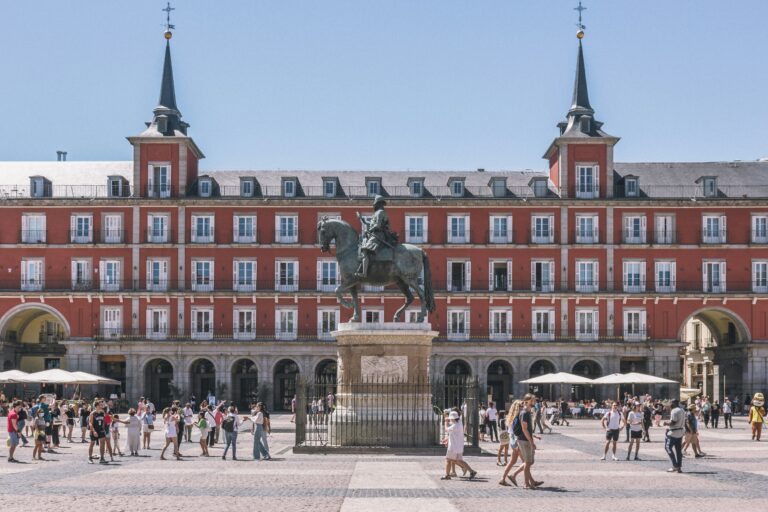
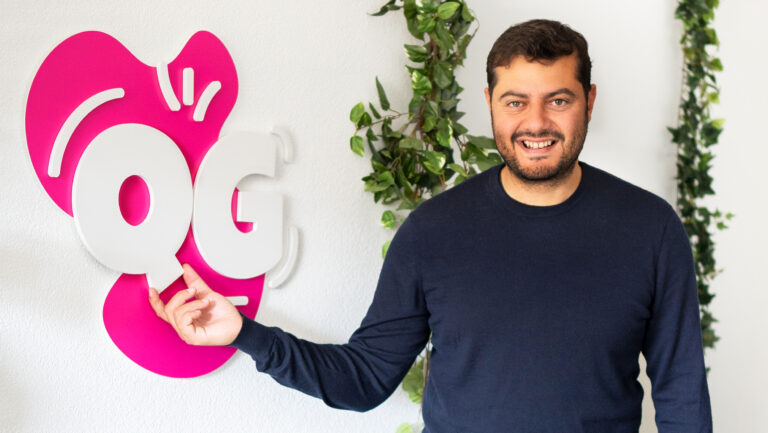
Pierre Bessard: «The effects of containment show precisely where our prosperity comes from».»

According to Pierre Bessard, there is no doubt: capitalist globalization, which creates wealth, helps mitigate the negative effects of epidemics. The former director of the Liberal Institute discusses globalization in the context of the coronavirus and addresses broader questions about liberalism in Switzerland and around the world.
Le Regard Libre: A significant segment of the population—supported by much of the intellectual left—has viewed the COVID-19 crisis as a sign that our societies have gone too far with globalization and is generally calling for greater moderation within society. As an advocate of capitalism, what is your take on this?
Pierre Bessard: This helps highlight the benefits of globalization. Thanks to the liberalization of previously stifled economies, the proportion of people living in extreme poverty has fallen from 37% to less than 10% worldwide over the past thirty years, even as the population has grown by 2.2 billion people during that same period. This once again demonstrates the extraordinary power of the market economy. That said, globalization has not only reduced poverty but has also raised living standards more broadly by increasing the purchasing power of households in advanced countries.
You have published on the Liberal Institute's website Various contributions from researchers and professors highlighting the benefits of globalization in terms of scientific research, increased well-being, and even individual health. If you had to summarize these unconventional analyses, what facts would you consider most important?
The resilience of populations, thanks to medical and pharmaceutical research—which is highly international—as well as the greater prosperity resulting from globalization, has mitigated the effects of the disease. Thanks to the wealth generated by global trade, we can afford to invest much more in healthcare systems and care. Nutrition, a key factor in good health, is also positively correlated with standard of living: all these factors reduce the impact—admittedly dramatic—of an epidemic.
Read also | Everything Covid-19 won't change
That said, we must nevertheless acknowledge that the short-term focus—which is inherent in the spirit of innovation and humanity’s desire to satisfy its needs—can lead to a lack of foresight on the part of individuals and nations. This crisis has shown that, hasn’t it?
The current pandemic is akin to a natural disaster: it is a phenomenon that is difficult to predict in terms of time and space. However, the probability of its occurrence was known. Therefore, this is not a case of a lack of foresight, but rather a strategic failure on the part of governments. Risk analyst Nassim Taleb, philanthropist Bill Gates, and numerous experts had warned about the lack of preparedness and the much higher costs that would result. In Switzerland, a new law on epidemics went into effect in 2016. However, the plans on paper were not followed up with action. A spirit of innovation is part of the solution. The problem lies more in short-term thinking and a lack of policy focus.
In an article, you advocate for a healthcare system that is more market-oriented. Please explain why the example of Singapore, in particular, interests you.
Nassim Taleb had advised the Singaporean government on the strategic response to an epidemic and the implementation of a system for early warning, containment, and mitigation. Thanks in large part to this system, the city-state—despite its geographical exposure—was largely spared in the current situation. However, Singapore’s healthcare system interests me for another reason: its designers originally conceived it as the antithesis of the British socialist system. Singapore has established a system based primarily on personal responsibility, with individual health savings accounts for routine expenses, supplemented by health insurance for major risks—that is, serious or chronic illnesses. Thanks to this system, Singapore spends 4% of its GDP on healthcare, compared to 12% in Switzerland, for example, where the third-party payment system—which operates like an all-you-can-eat buffet—encourages an oversupply and excess demand for unnecessary services.
While Christianity was a unifying force in medieval society, globalization has clearly created winners and losers—at least in terms of how people perceive it. Isn’t there something utterly scandalous, for example, about the policy of recent decades of bringing in immigrants to drive down wages?
Economic globalization has only one category of losers: those excluded by the market economy. North Koreans, for example, who depend on humanitarian aid for their survival, are among the losers. Globalization actually benefits low-income households the most: just think of how affordable furniture, clothing, computers, and cell phones are today. These are exceptional qualitative gains in human history, not to mention life expectancy compared to the Middle Ages. As for the claim that the arrival of immigrants drives down wages, it has no factual basis. The lowest wages are the ones that have risen the fastest over the past twenty years.
Read also | Covid-19, positive
Donald Trump seems to be the product not only of the American people, but of that whole spectrum of Western individuals who are fine with liberalism within nations, but not between them. Little by little, geopolitics is reflecting this trend, with power returning to the forefront at the expense of the principles of international law and free trade. What are your thoughts on this?
This is a collectivist instinct that is problematic in many ways. Local patriotism is certainly a good thing: it encourages people to care about the well-being of communities, the effectiveness of public policies, and the promotion of entrepreneurship and wealth creation. However, political nationalism reflects a herd mentality, in which the individual seeks to elevate themselves through the collective. For politicians seeking to expand their power with minimal effort, it is easy to stigmatize «foreigners» without risking alienating the electorate, while giving the impression that they take the public’s concerns seriously. Mr. Trump’s problem is that he does not understand the logic of international free trade: he has been complaining about U.S. trade deficits for decades, thereby revealing, above all, his economic illiteracy.
In the NZZ On April 25, philosopher Martin Rhonheimer rightly argued that, with this crisis, The government has shown more of its weaknesses than its ability to solve problems. Do you agree?
First of all, I see that you’re well-read. The statist reflex is indeed by far the greatest danger posed by this pandemic, as it sets in motion a decline in our standard of living and quality of life. Yet the effects of the lockdown show precisely where our prosperity comes from: productive work, trade, and savings—not from central banks’ inflationary money printing or government bailout spending, which, by its very nature and in terms of its financing, is a parasite on the market economy. As I have already mentioned, the scale of the current crisis is attributable to a failure of the state—in particular, the lack of preparedness on the part of public health and civil protection agencies, which nevertheless employ hundreds of civil servants: what do they do all day?
Many Swiss citizens, although critical of the government, expect it to take charge of numerous areas of policy. Is the Swiss people as liberal as people say? Has it ever been?
Liberalism is, above all, an attitude and an ethic rooted in individual freedom and responsibility. In the Swiss context, it is inextricably linked to Protestantism and the Enlightenment, which emphasized the individual capacity for reason, the sciences and the professions, the dignity of the bourgeoisie, private autonomy, and skepticism toward authority. Of course, not all Swiss are liberals: liberalism has always competed with other ideas, and in a pluralistic society, it cannot be otherwise. Switzerland’s great fortune was that the liberal, bourgeois elite of the 19thth Over the course of the century, it consciously instilled its values in the population—with great zeal—through the press, the arts and literature, scholarly societies, and schools. If we are today, objectively speaking, in an enviable position by international standards, we owe it to the liberal characteristics of our society.
How can we explain the way most media outlets in French-speaking Switzerland blindly follow the government?
The current climate of public opinion in French-speaking Switzerland is a tragedy, given that our region has a long tradition of liberal thought and media. Less than a century ago, daily newspapers such as the Lausanne Gazette and the Geneva Journal had opposed the «statist» and «centralist» AVS project, for example, which they deemed incompatible with the ethics of individual responsibility and the market economy. Today, the French-speaking Swiss media are at the forefront when it comes to advocating for paternity leave or other such measures.
Why do you think that is?
There are three reasons for this phenomenon: the first is the virtual monopoly on journalism held by supporters of socialism, environmentalism, or at least social democracy; the second is the small size of the French-speaking Swiss media market, which was unable to cope with the rise of socialists within liberal newspapers, which were destroyed from within; the third is the intellectual influence of France, which remains deeply imbued with Marxism.
It is possible to be a socialist without blindly following the government. Does liberalism, in the broad sense, bear some responsibility for the rise of political correctness—a concept championed by self-proclaimed progressives who, paradoxically, are only fond of freedom of expression for themselves and not for others?
Political correctness isn’t necessarily a bad thing, as long as it promotes civil discourse and isn’t accompanied by legal censorship or violence aimed at preventing other opinions from being expressed. Freedom of expression comes with a responsibility to express oneself appropriately, and racist, sexist, xenophobic, or homophobic remarks, as well as gratuitous insults and the like, add no value to the debate. No one is obligated to provide a platform for this type of expression. Of course, it would be just as wrong to ban such speech as long as it does not constitute public incitement to hatred or violence or defamation, since those who utter such remarks discredit themselves. I believe that liberalism would be diminished if it defended freedom of expression without responsibility: liberals are, first and foremost, humanists who recognize the freedom and dignity of every individual.
Does being a liberal today mean being a reactionary—that is, nostalgic for a time that was more pluralistic and less obsessed with inclusive language, veganism, and the like? Shouldn’t liberals be more aggressive in challenging today’s left-wing “right-thinkers,” just as they were in the 19th century?th century-long struggle against conservative, right-wing moralists?
Once again, as long as these are individual choices that are not imposed on others by force of law, liberalism has no reason to oppose dietary preferences or fashion trends that may be fleeting. These are precisely expressions of pluralism. Social conservatism would be ill-suited to liberals. Of course, the compromises made by partisan «liberals» with opposing ideas are particularly troubling, and there is nothing to prevent those who are more openly committed to individual freedom and responsibility from taking a more assertive stance in the debate.
Write to the author: jonas.follonier@leregardlibre.com
You have just read an interview from our feature «COVID-19 and Globalization», published in our print edition (Le Regard Libre No. 63).

You'll also like




 French
  German
  English
Leave a comment