



Between Iranian and Afghan lands, the tragedy of flight
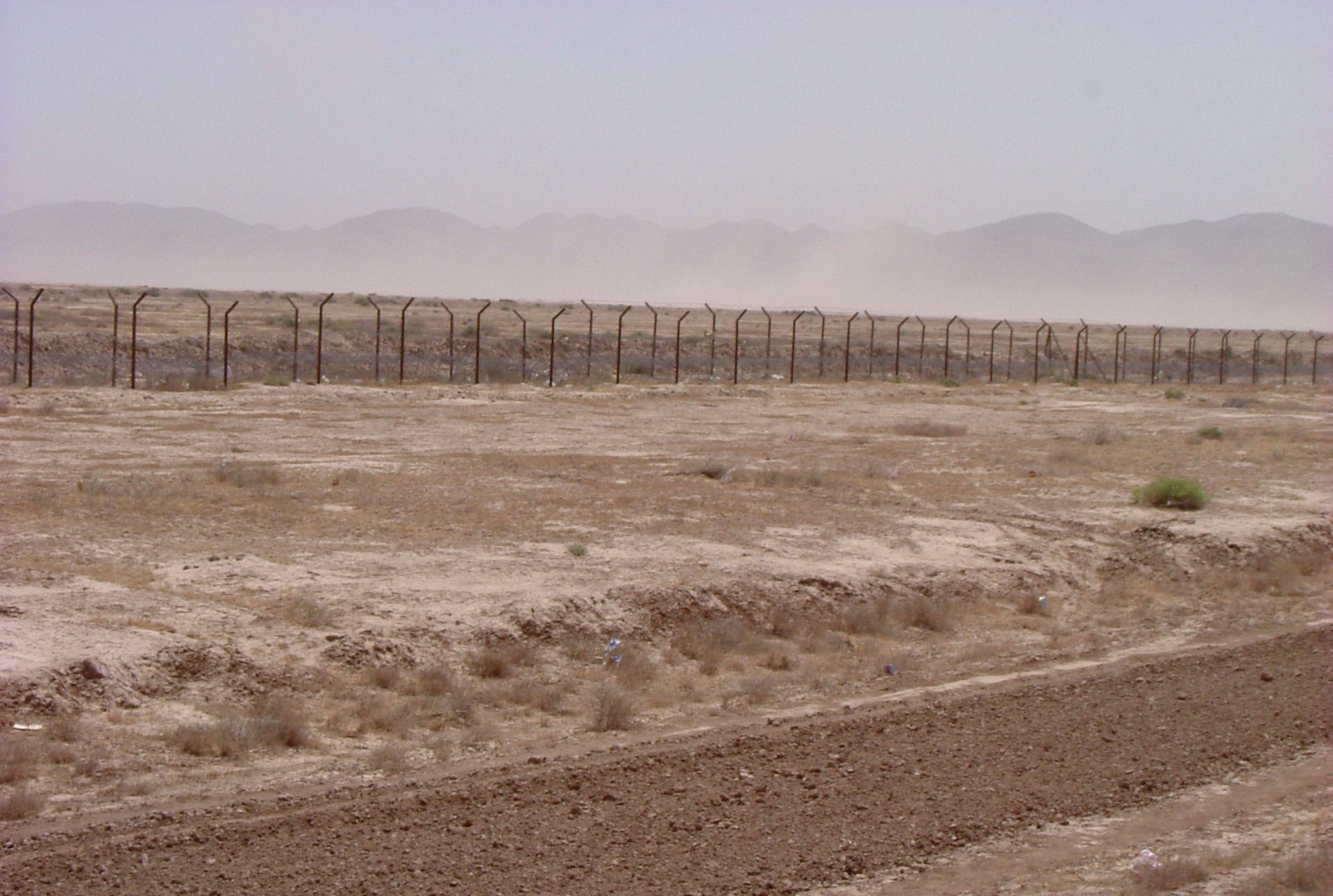
Afghan border, Iran © Wikimedia CC 3.0
The first French translation of Aliyeh Ataei's work, Iranian writer and journalist, The Forgotten Frontier, his fifth publication, paints a picture of bitter-tasting exiles, in nine short stories. Chilling.
In the evening, in a village on the edge of Iran, almost in Afghanistan, the women had taken to polishing the cartridge cases, one by one, until they were shiny enough for them to be dutifully stored in the magazine. Will the bullets contained in these beautiful, ready-to-use cartridges be of any use? Perhaps they will. Maybe they'll find their way into a body, whether a supporter of the Islamic Revolution or not. Because «war doesn't care about convictions, and it takes men dying to make us wonder whether it was because of their ideals or because of a mistake».
Mahboubeh is witnessing this ritual for the first time - from a distance, because she has personal convictions and feels strongly about them. In states where politics interferes in the slightest social interaction, every gesture, even the most intimate, can lead to your downfall. And the few meters of distance Mahboubeh chose to impose on herself that evening make up a gesture that cannot, under the Islamic regime, remain without consequence.
Escape as the last freedom
The story of Mahboubeh is one of the cornerstones of this collection of stories that paint a portrait of people living on the borders of war. For it is war, first and foremost, that this population is close to. Their children are brought up with the sound of bullets and the sight of battered bodies. Aliyeh Ataei has decided to tell the story of these images, which they will never be able to get rid of, and to which no one can ever get used. At the same time, she tells the story of her own personal journey, from the Afghan border to the capital.
What Iranians and Afghans have in common, apart from the border they share, is what Ataei symbolically calls «the gene of unhappiness», a generational transmission of pain. This gene is formidable. It affects a people who have been subjected to successive regimes, each as murderous and repressive as the next, for decades.
For the writer and her characters, running away is the only freedom they have left. Flight becomes exile, and the inner conflict is born. Whether chosen or suffered, exile is always synonymous with heartbreak and identity crisis. Numerous authors, such as Hugo, Camus and Zweig, to name but a few, have recounted this experience. But when you flee Afghanistan to find refuge in Iran, exile has an even more bitter taste, and is tinged with revolt.
«It's as if, for the exile, the homeland was nothing more than a container without contents that he was desperate to fill.»
A committed Persian writer
Translated from the Persian, The Forgotten Frontier is a cry of defiance for freedom, against the regime, and above all for the people. In her foreword, Ataei writes: «A life steeped in danger and the climate of fear that has persisted for all these years has given rise to the image of the «oppressed woman» of the Middle East, but I have strived to write a text that breaks their silence.» With both poetry and harshness, the author gives voice to women—and men—from Iran and Afghanistan who are taking a stand and standing up to the regime. Far from being victims, women prove to be the driving force behind the opposition.
With her talent for storytelling, Aliyeh Ataei delivers a veritable manifesto of lives on the threshold between two territories, two regimes and multiple identities. Sabrina Nouri's translation brings out all the subtlety of the words that characterize the Persian language so well.
Write to the author: [email protected]
You've just read an unpublished, free-access interview. Debates, analyses, cultural news: subscribe to support us and get access to all our content!

Aliyeh Ataei
The Forgotten Frontier
Editions Gallimard
From around the world« collection»
Translated from the Persian by Sabrina Nouri
2023
149 pages
You'll also like


 French
  German
  English
Leave a comment