



Metin Arditi and the painting of souls

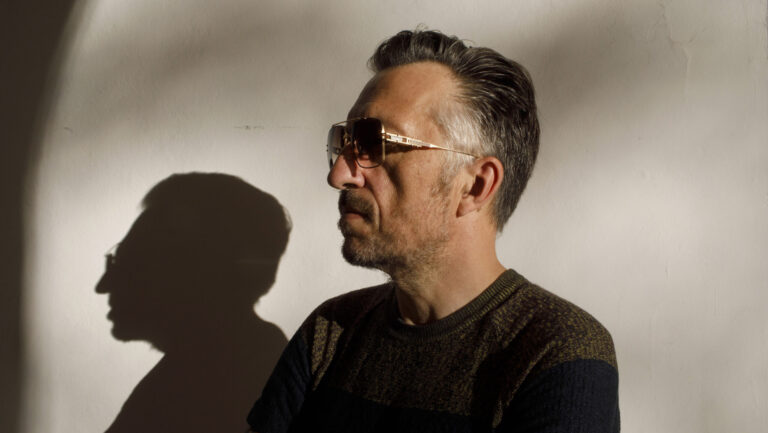
Metin Arditi in 2018 © Marina De Toro for Le Regard Libre
Unpublished article - Jonas Follonier
With The Man Who Painted Souls (Grasset, 2021), Metin Arditi once again demonstrates his great skill as a novelist, exploring his signature themes. The novel tells the story of a young Jewish teenager from Galilee in the late 11thth A 20th-century artist who became one of the great iconographers of his time, this Swiss author—born in Ankara—offers a poetic yet down-to-earth celebration of the beauty of peoples and individuals.
It's a book that could have been titled Consolation. Every human being needs comfort. But from what? For Avner, a young fisherman from Acre in Galilee in the year 1079, it means finding solace from his father’s harshness and the Laws of which his father is the guardian. He finds solace first and foremost in his surroundings—specifically, the monastery where the young Jewish boy delivers fish and receives in exchange a wineskin and figs coated in syrup. After making his delivery, beneath the wild fig tree, the teenager is intoxicated by the scent of the fruit as he listens to the monks’ chants and marvels at the butterflies fluttering above him.
Read also | Metin Arditi: «In all my books, I've sought my father's esteem».»
Here we see the importance of the senses—which are ever-present in Metin Arditi’s prose—as they lead to an understanding of the world and of oneself and, of course, are a source of pleasure. The first chapters of The Man Who Painted Souls paint a vivid picture in which the discovery of the arts (singing, and soon after, icons) goes hand in hand with the discovery of the transcendent, and in which the first stirrings of sensuality echo the initiation into sexuality. It is, in fact, in Myriam’s arms that the young Avner confesses his desire to study iconography—and thus to become a Christian—while admitting that he lacks faith:
«All these stories of miracles, kindness, love, and faith in humanity that Thomas or Anastase told him seemed to him to be made up to set themselves apart from the Jews. The Christians wanted to appear gentle where the Torah was uncompromising. Avner also felt that Anastase was exaggerating about the icons. Was it really writing? What he saw was a drawing, figures, real beings… But it didn’t matter what words the monks used. What mattered most was the comfort the icons provided.»
That consolation is also the one that the talented young man—now baptized—would later offer to the many pilgrims who came to ask him to draw their portraits. According to Christian tradition, an icon is not painted but «written,» for it is as much a matter of faith as of technique, and it is not, strictly speaking, an artistic representation; it is a divine object. But Avner, who became «Little Anastasius» thanks to the influence of both Christian and Muslim father figures, has this distinctive trait: he paints not what is human in God, but what is divine in human beings. “It was not the Lord he was offending, since he brought happiness. It was those who arrogated to themselves the right to speak in his name.” A path leading straight to heresy and expulsion. Metin Arditi offers us this gripping account.
But above all, it is the beauty of the various peoples of the Middle East—which is explored in depth throughout this literary adventure—that shines through. The individuals who make up these peoples are portrayed in their moral truth, their aesthetic uniqueness, and their psychological complexity—in short, in what they have to say about the human condition. With an Eastern musicality that is at once sensitive and distant, The Man Who Painted Souls It can, in fact, be understood as a metaphor for the art of the novel itself. One comes away from this book deeply moved, in awe of the crystalline depth with which Arditi weaves together the ultimate and most intimate questions of lineage, exile, and peace.
Write to the author: [email protected]
Photo credit: © Marina De Toro for Le Regard Libre
Metin Arditi will be interviewed by Jonas Follonier as part of a literary event hosted by the Alliance Française of Fribourg on Thursday, September 9, 2021, at 6:30 p.m. in the Rossier Room of the Fribourg City Library, located at 2 Rue de l’Hôpital.

Metin Arditi
L’homme qui peignait les âmes
Grasset & Fasquelle
2021
304 pages

You'll also like



 French
  German
  English
Leave a comment